
Free visual inspection and a written scope of work before any mitigation begins - photos, moisture readings, and drying logs go in your claim file
The scope we write is the scope we bill. Anything new gets shown to you, in writing, before we touch it.
 Before
 After
After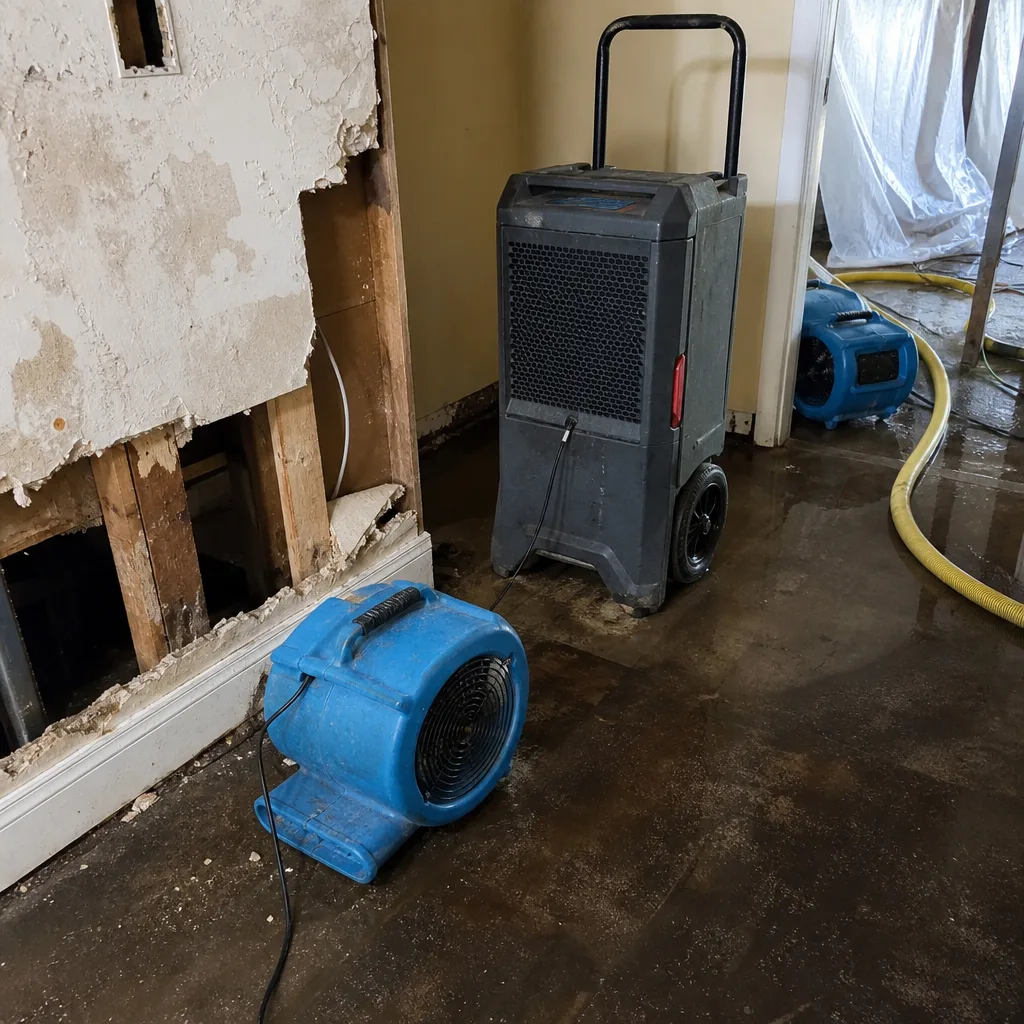 Before
 After
After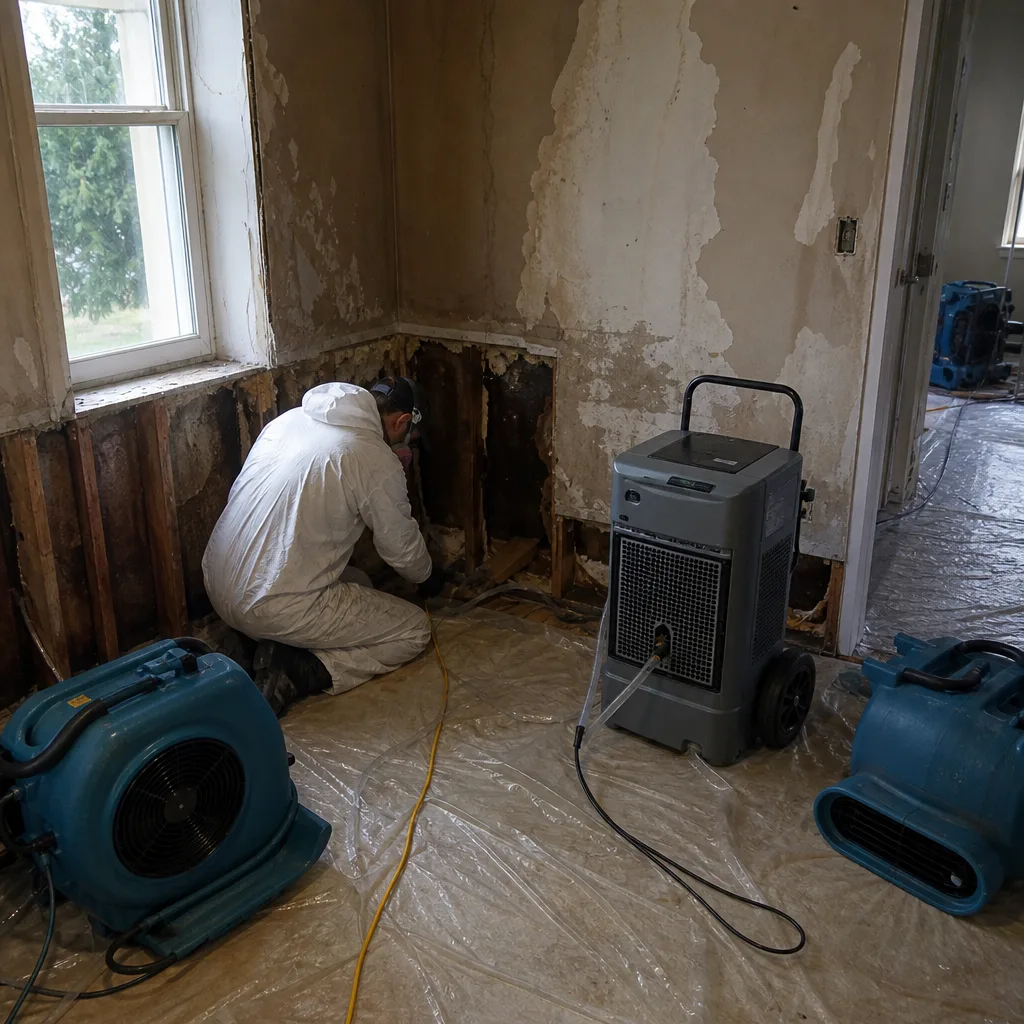 Before
 After
After24/7 Emergency Fire & Smoke Damage Restoration in Forest Hills
Fire damage in Forest Hills moves fast, and the first hour after the flames are out determines how much of your home can be saved. Smoke pushes into every cavity, soot bonds to plaster and wiring, and water from the fire department saturates floors and framing. The longer it sits, the deeper the damage runs. We answer live at (518) 627-5878, 24 hours a day, every day of the year. A dispatcher picks up on the first ring - not a recording - and a certified crew heads toward Forest Hills immediately. The visual inspection is free, and we bring the equipment to start mitigation on the same visit, not the next day.
Forest Hills is a neighborhood of two very different building stocks. The landmarked Tudor Revival homes of Forest Hills Gardens were built for permanence - original lime plaster, slate roofs, timber framing, masonry that predates the first World War. The brick co-ops along Queens Boulevard are equally permanent, but denser, with six or eight families stacked over every fire-damaged ceiling. Both contexts reward speed, but they demand very different restoration strategies. What works in a 1927 co-op unit on the north side of Queens Boulevard can be the wrong move entirely in a 1912 Tudor on Ascan Avenue. We know the difference because we work both sides of the neighborhood weekly.
If you’re standing in a smoke-filled living room in 11375 right now, call us. We’ll walk you through the first steps on the phone while the crew is already mobilizing.
Understanding Fire & Smoke Damage Restoration Severity in Forest Hills Properties
Fire damage is never just what burned. It’s also what the smoke touched, what the water soaked, and what the heat changed. In Forest Hills, the building’s age and construction determine how far each of those three threats penetrates. Pre-war lath-and-plaster walls are thick, nearly fireproof, and maddeningly absorbent. Hot smoke from a kitchen fire travels into wall cavities through lath gaps, electrical outlets, and the natural cracks that develop over a century of settling. That smoke carries oily soot, and in the older Tudor homes, the soot bonds with lime plaster’s porous surface within hours. Wipe it with a damp cloth and you’ll smear the stain deeper into the wall. This is why the first professional step is always containment and air scrubbing, not cleaning.
There are three classes of soot residue restoration crews deal with. Dry soot from a fast, hot burn - think paper or untreated wood. Wet soot from a smoldering fire that produced steam and oily residue - think kitchen fires involving grease. And protein soot, nearly invisible, from burned food, which clings to painted surfaces with a film that standard wet wipes can’t remove. Each type requires a different chemical process and a different sequence of operations. Applying the wrong cleaner to the wrong soot creates a sticky, smeared mess that is far harder to remove than the original damage. In a landmarked Forest Hills Gardens home, that mistake can trigger an LPC compliance review if original surfaces are altered.
Smoke migration is the hidden cost driver. Smoke does not respect walls. It follows the path of least resistance through stud bays, pipe chases, and the gaps around cast-iron drain stacks that every pre-war building in Forest Hills still has. In co-op buildings, a unit fire on the fourth floor sends smoke into the fifth-floor unit’s floors and the third-floor unit’s ceilings. We map that migration with thermal imaging before we ever pull out a cleaning agent.
Why Forest Hills Property Owners Choose Floodline Restoration Co.
- 45-minute response commitment to Forest Hills. Our dispatch board tracks crews by location, not by region. The closest certified tech gets the call, and the clock starts the moment you hang up.
- 24/7 live answer, every single time. A real person answers at (518) 627-5878 at 2 a.m. on Christmas. No phone tree, no answering service, no callback.
- IICRC-certified crews with WRT and FSRT credentials. Water restoration and fire/smoke restoration technicians are trained to the standards your insurance carrier expects, and every tech on site is background-checked and uniformed.
- Free visual inspection and a written scope before work starts. You’ll see exactly what we found, what we recommend, and what it costs. No pressure, no upsell, no surprises.
- Direct insurance billing, including adjuster coordination. We send the documentation, the photos, the moisture logs, and the scope directly to your carrier. You are never the messenger.
- One team from the first board-up to the final coat of paint. We don’t hand your house off to a different contractor after mitigation. The crew that starts your job finishes it. That’s the Floodline way.
We are led by Curt Bowman, who founded Floodline Restoration Co. in 2010 around a simple idea: dispatch crews, not salespeople. The 90-Day Done Right Promise backs every job we do. If it’s not done right, we make it right. In writing. No paperwork battles, no arguing. That’s the Keystone Standard, and it applies to every fire job in Forest Hills, from a small kitchen fire to a full structural rebuild.
Our Fire & Smoke Damage Restoration Process
Inspection & Assessment
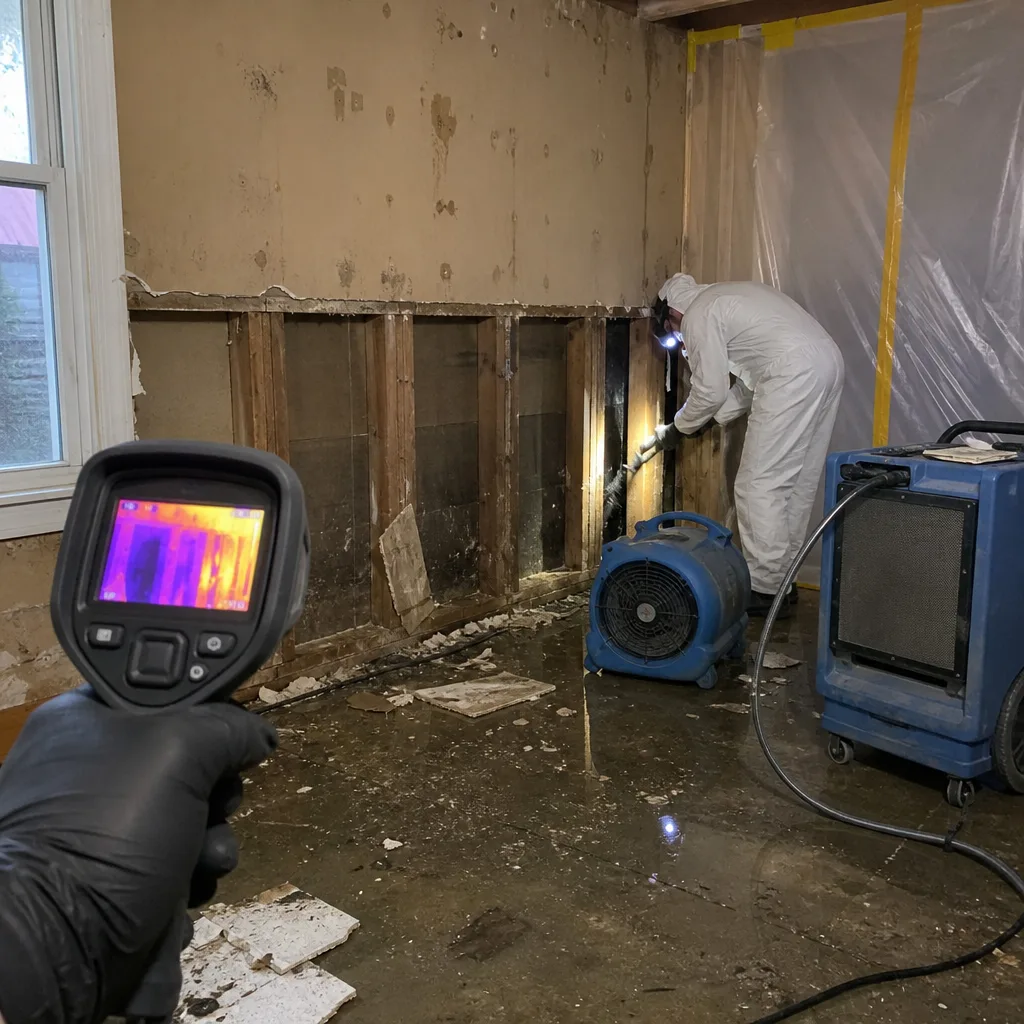
We map the fire’s path, the smoke’s migration, and the water’s saturation. Thermal imaging shows heat-affected framing. Moisture meters show how far the fire department’s water traveled. For Forest Hills Gardens jobs, we document every original surface that was damaged - that documentation matters later for LPC compliance.
Emergency Board-Up & Tarping
We secure the property the same hour. On a Tudor in the Gardens, that means protecting stone surrounds, original window sashes, and slate roof sections while we work. On Queens Boulevard co-ops, it means securing common-area access points without disturbing the co-op’s entry systems.
Water Extraction & Structural Drying
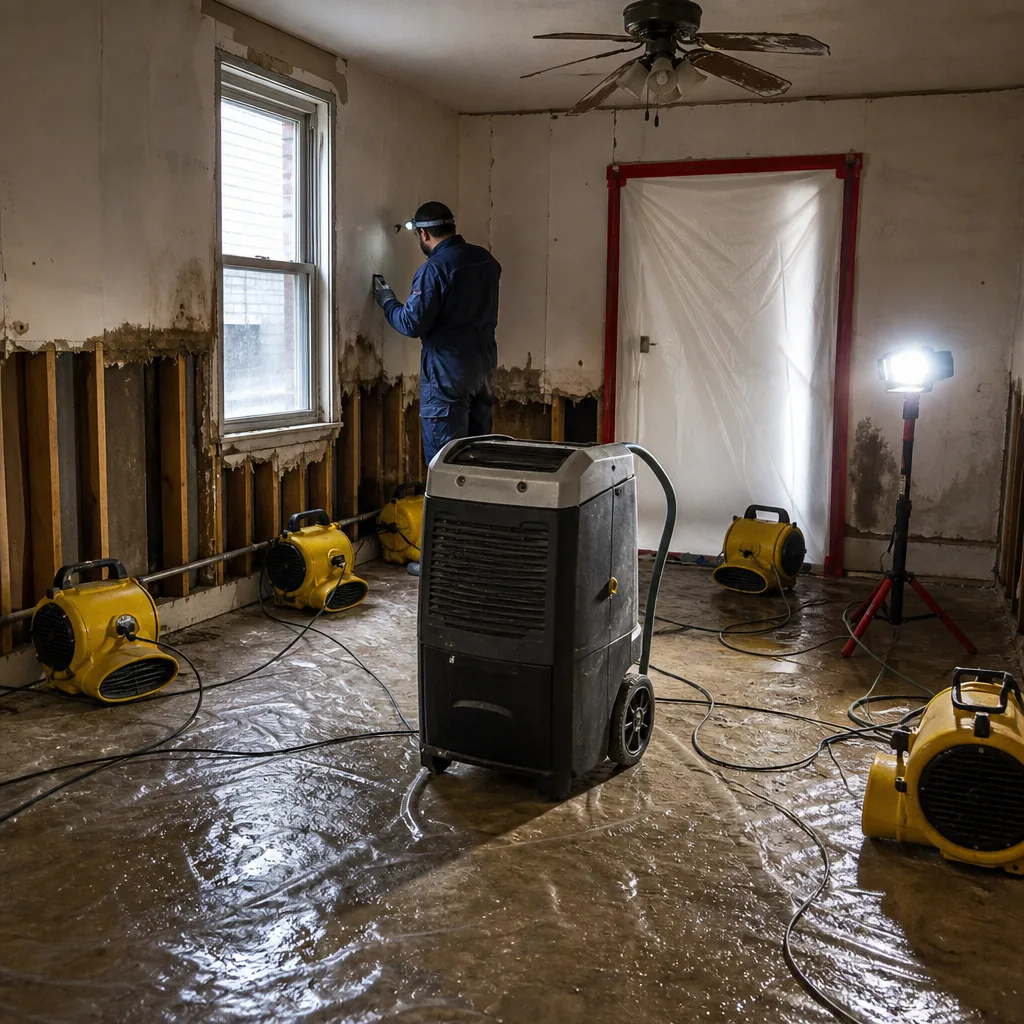
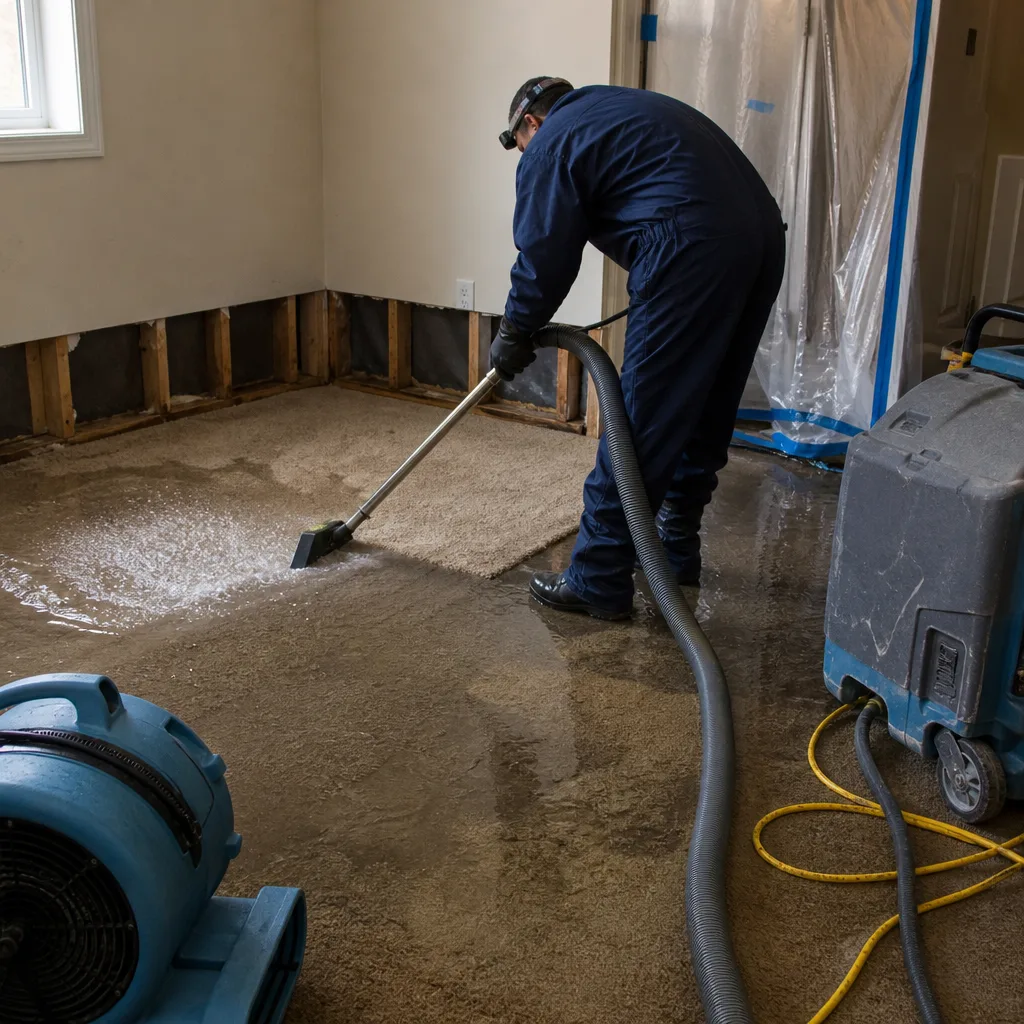
Fire hoses deliver hundreds of gallons. We pull standing water, then run Dri-Eaz and Phoenix air movers with dehumidifiers until framing reaches the dry standard. Daily moisture readings get logged and sent to your carrier. Nothing gets rebuilt over damp wood.
Soot & Smoke Residue Cleaning
Containment goes up first. Negative air pressure keeps soot from migrating to clean rooms. Then we clean surfaces based on soot type - dry soot with dry sponges, wet soot with chemical agents matched to the residue, protein soot with specialized degreasers. HEPA vacuums capture what we loosen.
Odor Removal & Deodorization
Smoke odor is not surface-level. It lives in plaster pores, behind baseboards, inside ductwork, and within wall cavities. We deploy thermal fogging, hydroxyl generators, and carbon-filtered air scrubbing to destroy odor molecules at the source - including the brick pockets where aging masonry traps smoke in Forest Hills pre-war buildings.
Structural Fire Repair & Reconstruction
Charred framing gets sistered or replaced. Fire-damaged lath and plaster gets repaired with lime-based mixes where LPC rules require it. Slate roofs get matched to original quarries. We rebuild to pre-loss condition and close the job with the 90-Day Done Right Promise in your hands.
Need Emergency Fire & Smoke Damage Restoration in Forest Hills Now?
Crews minutes away, answering live 24 hours a day. The sooner we start, the less it costs.
Working With Your Insurance Company
The insurance conversation starts the moment the fire is out, and it works best when the contractor handles it directly. We document the loss from the first hour: photos of every affected room, thermal imaging of hidden heat damage, moisture readings logged daily, and a line-item scope of work that matches the industry-standard estimating software your carrier uses. You get a copy. The adjuster gets a copy. When the adjuster has questions, we answer them. You don’t chase paperwork, and you don’t negotiate line items. That’s our job.
Forest Hills claims come with unique paperwork. A fire in a co-op on Queens Boulevard triggers the building’s master policy, the unit owner’s policy, and often the co-op board’s review process. A fire in Forest Hills Gardens triggers the carrier, the Landmarks Preservation Commission, and the Forest Hills Gardens Corporation. We’ve handled both stacks, and we know what each requires.
What We Provide Your Insurer
- Thorough documentation of the loss
- Photos of all damage, room by room
- Moisture readings and drying logs
- A detailed, line-item scope of work
- Direct coordination with your carrier
Built for Forest Hills’s Loss Calendar
Forest Hills’s fire-damage calendar runs on two tracks. The first is seasonal. Winter brings space heaters, overloaded outlets in pre-war co-ops, and the occasional chimney fire in a Tudor that has not been swept in a decade. Spring and summer bring cooking fires on grills and stovetops, and electrical fires in aging breaker panels that were installed before anyone in Forest Hills had an air conditioner that pulled fifteen amps. The second track is the water that follows firefighting. During the remnants of Hurricane Ida in September 2021, record flash flooding swamped finished basements across Forest Hills - a pattern tied to Queens’ clay-heavy subsoils and near-total impervious surface coverage. When the fire department fights a fire during a nor’easter, the water damage compounds. We’ve seen it all, and our crews know the rhythm of this neighborhood’s emergencies.
What matters most is that you don’t have to know which category your damage falls into. You call. We sort it out, document it, and get to work. That’s the whole point.
Fire & Smoke Damage Restoration Across Forest Hills’s Neighborhoods
Forest Hills is not one neighborhood. It’s several distinct pockets, each with its own building stock and its own loss patterns. In Forest Hills Gardens, the Tudor Revival homes south of Queens Boulevard date from 1909 through the 1930s - original slate roofs, hand-troweled lime plaster, stone surrounds, and a Landmarks Preservation Commission designation that governs every repair. A kitchen fire in the Gardens is never just a kitchen fire; it’s a regulatory event. On Queens Boulevard itself, the pre-war brick co-ops rise six, eight, twelve stories. A fire on any floor migrates smoke through vertical pipe chases and horizontal return-air ducts, affecting units above and below. Working there means coordinating with co-op boards, supers, and sometimes the building’s own restoration vendor. Austin Street, the commercial spine of Forest Hills, brings restaurant and storefront fires that send smoke into the residential units above. The mixed-use buildings there demand fire-rated separations and rapid odor control so tenants can return. Along Continental Avenue near Station Square, the density of apartments and the age of the building systems combine for electrical fires and kitchen incidents that require fast, discreet mitigation while residents remain in neighboring units.
We know the clearance issues: narrow garden paths where a truck can’t park, co-op service elevators that need to be booked in advance, and landmarked facades where a single misplaced ladder can crack a 1920s stone sill. We plan for all of it before we arrive.
Specialized Fire & Smoke Damage Restoration Services We Offer in Forest Hills
Fire Damage Cleanup
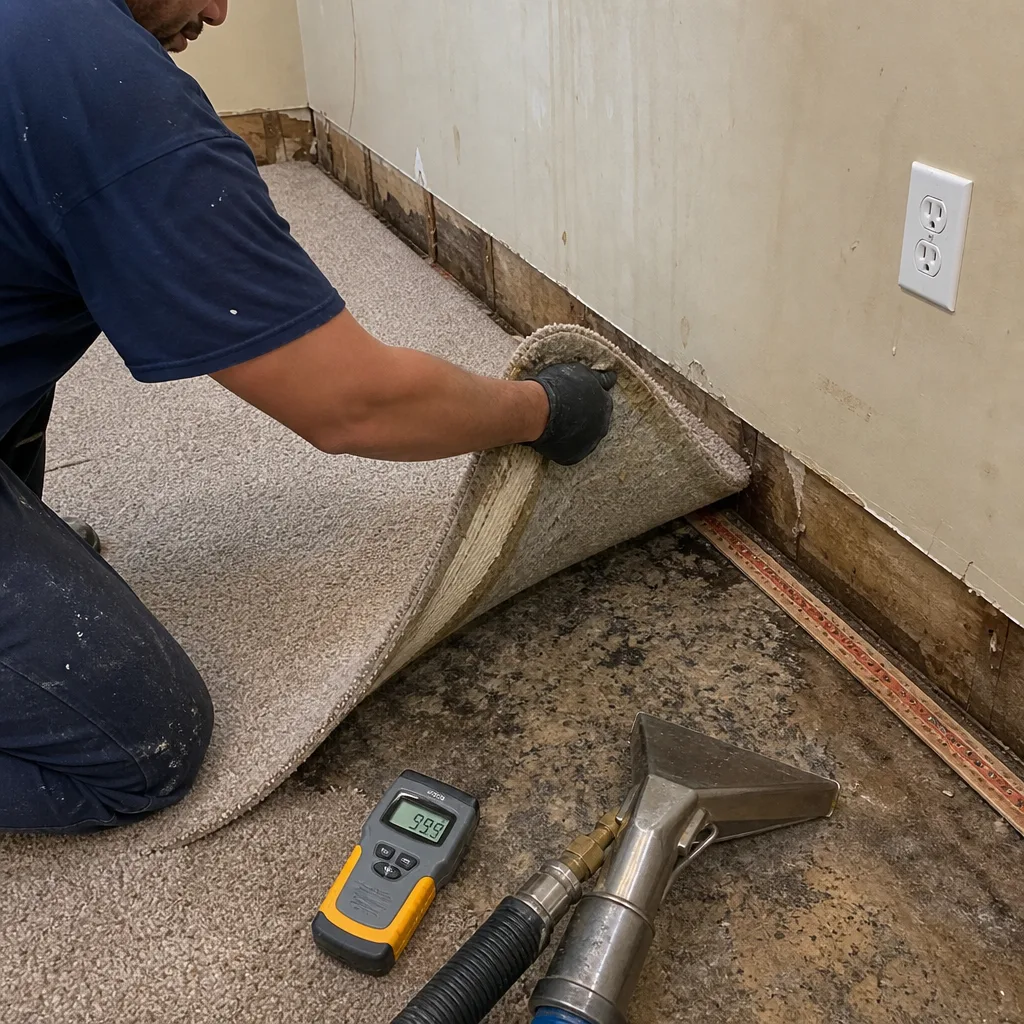
Fire cleanup is the systematic removal of charred material, water-damaged finishes, and compromised contents. In a Forest Hills Tudor, that means cataloging original millwork before disposal. In a pre-war co-op, it means protecting common-area finishes while we work. We clean what can be saved, dispose of what cannot, and document every step for your carrier.
Smoke & Soot Removal
Soot removal in older buildings is a chemistry problem as much as a cleaning problem. Lime plaster from 1915 absorbs soot like a sponge. We use dry-chem sponges for dry soot, solvent-based agents for oily soot from grease fires, and always test on an inconspicuous area first. Rushing this step smears the damage deeper, and in the Gardens, that can mean a mandatory LPC redo.
Odor Removal & Deodorization
Smoke odor lingers in Forest Hills pre-war buildings long after visible soot is gone. The reason is structural: original plaster walls and aging brick absorb odor molecules into their pores. Thermal fogging forces deodorizing agents into those same pores, neutralizing the smell at the source. Hydroxyl generators scrub the air without requiring evacuation. We use both, plus sealed encapsulation for charred framing. We also run XPOWER air movers with carbon filtration to pull odor out of enclosed spaces. This is the work that separates a home that smells clean from one that smells like the fire happened yesterday.
Contents Cleaning & Pack-Out
Your belongings absorb smoke just like the walls do. We handle contents on-site where possible, and pack out when needed to our cleaning facility. Every item gets documented, cleaned, and returned with a manifest. For the Forest Hills homeowner who has lived in the same house for twenty years, that means the desk from the den, the photo albums from the living room, and the rug from the dining room all come back - not thrown in a dumpster because it was easier.
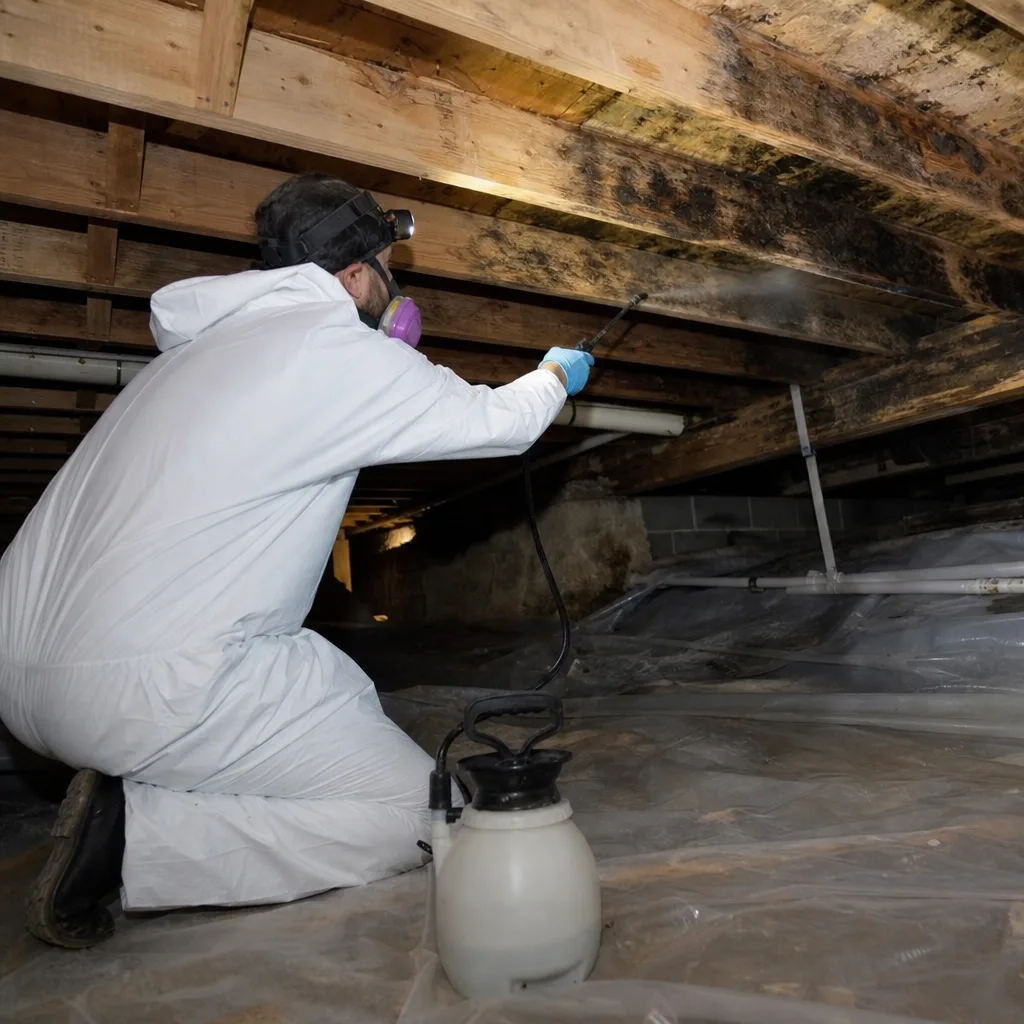
Emergency Board-Up & Tarping
A burned-out window in the Gardens is an invitation for weather, animals, and worse. We board it up the same hour, protecting the stone surround with non-marring fasteners and weather sealing. A compromised slate roof needs tarping that will hold through a nor’easter, not just until morning. We carry the materials on the truck because we know a fire at midnight in January means the roof must be covered by 2 a.m., not 9 a.m.
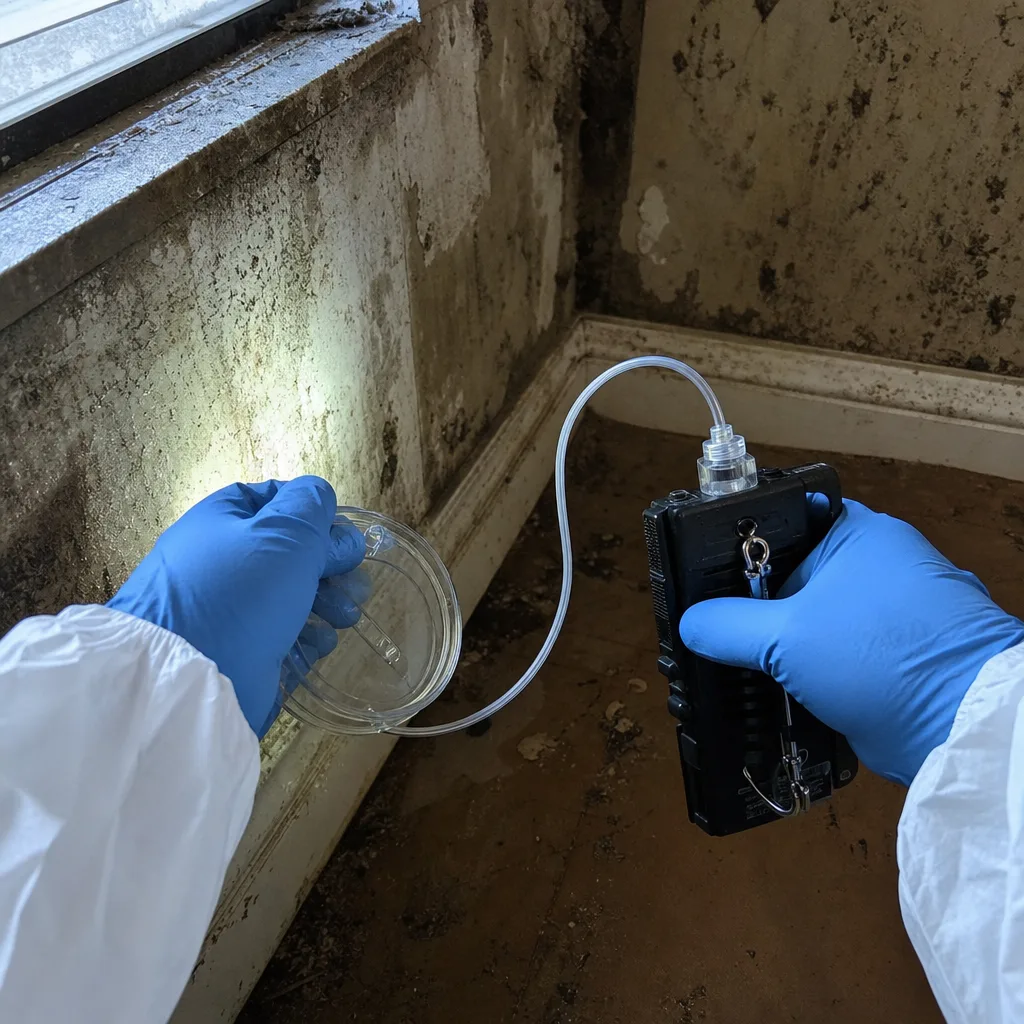
Structural Fire Repair
When framing is charred, it gets replaced. When a slate roof is blistered, it gets matched. When a limestone lintel is cracked from heat, an LPC-approved mason repairs it. Our structural crews work under the same roof as our mitigation crews, so the transition from tear-out to rebuild is seamless - not a handoff to a different company with a different standard. That’s the Floodline difference, and it shows up strongest in a gutted kitchen on Ascan Avenue being rebuilt to match the 1923 original.
What happens when you call
- 1
A real person answersNo phone trees - you reach a local pro.
- 2
You get an upfront price rangeHonest numbers before anyone is dispatched.
- 3
A background-checked tech heads outLicensed & insured, dispatched right away.
- 4
You approve before work beginsNothing starts until you say go.
Fire & Smoke Damage Restoration Costs in Forest Hills, NY
Forest Hills pricing reflects the neighborhood’s building stock. Here’s what we typically see. Emergency board-up and tarping in Forest Hills runs $400-$900 depending on window count, access, and whether slate roof work is involved. Smoke and soot removal from a contained kitchen fire runs $2,500-$6,000 for a single room, $8,000-$18,000 for a full floor. Full structural fire repair and rebuild starts around $15,000 and climbs with scope; a gutted Tudor kitchen with original plaster restoration can reach $50,000-$80,000 when LPC materials are required. The wildcard in the Gardens is always the landmarks documentation and material matching - that adds 10-20% to the bottom line versus a similar home one block outside the boundary.
Most fire-loss jobs in Forest Hills are insurance-covered. Your carrier expects a detailed scope and daily logs, which we supply. Out-of-pocket work, like a small kitchen fire below your deductible, gets the same written scope, the same crew, and the same guarantee. The free inspection is the path to a firm number - you’ll know the cost before you sign anything, not after. We also honor $50 off any repair over $250, and a senior and veteran 5% discount, always.
We Also Serve Cities Near Forest Hills
Our crews serve all of central Queens, including Richmond Hill, Woodhaven, Fresh Meadows, and Ozone Park. The same live dispatch, the same certified technicians, and the same 90-Day Done Right Promise apply everywhere we work. Forest Hills is our home base for this part of Queens, and we know these neighborhoods block by block.
Serving Forest Hills, NY - Our Local Coverage Area
We’re based in the Forest Hills area and know this community well. Use the map below to see our service coverage - if you’re nearby, we can almost certainly help.
Forest Hills Fire & Smoke Damage Restoration Questions, Answered
Does smoke damage inside Forest Hills Gardens require Landmarks Preservation Commission approval before cleanup can begin?
Cleanup itself typically does not require LPC approval, but any repair, replacement, or alteration of original fabric does. If we are removing charred lath, replacing damaged plaster, or touching original slate, we file the LPC documentation and coordinate with the Forest Hills Gardens Corporation before that phase begins. Call (518) 627-5878 and we’ll map out exactly what your specific fire requires.
How do you handle fire smoke in a pre-war brick co-op on Queens Boulevard without disturbing neighboring units?
We set containment with negative air pressure to prevent smoke migration during cleanup, coordinate with the co-op board on equipment access and service elevator scheduling, and run HEPA air scrubbers rather than opening windows that would push odor into common areas. We’ve done this work at every hour of the day without a single complaint from a neighboring unit.
Can soot from a Forest Hills kitchen fire be fully removed from original plaster without replacing it?
In most cases, yes. Lime plaster is porous, which means soot penetrates deeply, but it also responds well to dry-sponge cleaning followed by HEPA vacuuming and, when necessary, a lime-compatible sealant. Replacement is only needed when the plaster is cracked, delaminated, or heat-scorched. We preserve original plaster whenever the material can be saved.
Why does smoke odor linger in Forest Hills pre-war buildings long after visible soot is wiped down?
Smoke odor molecules embed in porous materials: the lime plaster, the aged brick behind it, the wood lath, the original millwork. Wiping visible soot removes the stain but not the absorbed odor. We treat the source with thermal fogging that penetrates those same pores, plus hydroxyl generation for the air. That’s why our odor work comes with the same 90-Day Promise as everything else.
How fast can you board up a fire-damaged Tudor window in Forest Hills Gardens without damaging the stone surround?
Same hour, in most cases. We carry non-marring board-up hardware that attaches without drilling into original stone or brick. The crew arrives with the materials on the truck, measures the opening, and secures the property before leaving. For a 2 a.m. call, that means the window is covered by 3:30 a.m., not next afternoon.
How fast can a crew actually reach my Forest Hills home after I call?
Our dispatch board assigns the closest available certified crew the moment the call comes in. In Forest Hills, that usually means 45 minutes or less from your front door. We tell you the tech’s name and ETA when you call, and we update you if anything changes. No one waits around wondering.
Will my homeowner’s insurance cover fire and smoke damage restoration in Forest Hills?
Most standard policies cover fire, smoke, and the water used to fight the fire. The deductible still applies, and coverage limits vary. We bill your carrier directly, provide every document the adjuster needs, and handle the back-and-forth so you’re not on the phone with an insurance company while your house is still wet. Send us your policy, and we’ll read it with you.
What should I do in the first 30 minutes after a fire in my Forest Hills home?
Call your carrier, then call us at (518) 627-5878. Do not wipe soot, and do not run your HVAC system - both spread contamination. Do not plug electronics back in. Keep foot traffic to a minimum. If windows are broken, the crew will handle board-up when they arrive. If it’s safe to wait outside, do that. We’ll be there fast.
Our crew worked a smoke-damaged Tudor on Ascan Avenue where hot smoke had forced soot deep into original lime-plaster walls and blistered a slate roof section. We set containment around the work area, ran HEPA air movers with carbon filtration for smoke residue, and coordinated with an LPC-approved plasterer to match the historic lime-based mix before any structural drying logs were closed - ensuring pre-loss condition was restored without triggering a landmarks violation. That’s the standard we hold on every Fire & Smoke Damage Restoration job in Forest Hills.
If you’re dealing with fire or smoke damage in Forest Hills, call us at (518) 627-5878. A person answers. A crew follows. And the work is done right, backed in writing, with the 90-Day Done Right Promise in your hands. That’s how Floodline Restoration Co. has done it for over 42 years, and that’s how we’ll do it for you.
Written by Curt Bowman, Owner at Floodline Restoration Co., serving Forest Hills and all of Queens.