
Free visual inspection and a written scope of work before any mitigation begins - photos, moisture readings, and drying logs go in your claim file
The scope we write is the scope we bill. Anything new gets shown to you, in writing, before we touch it.

 Before
 After
After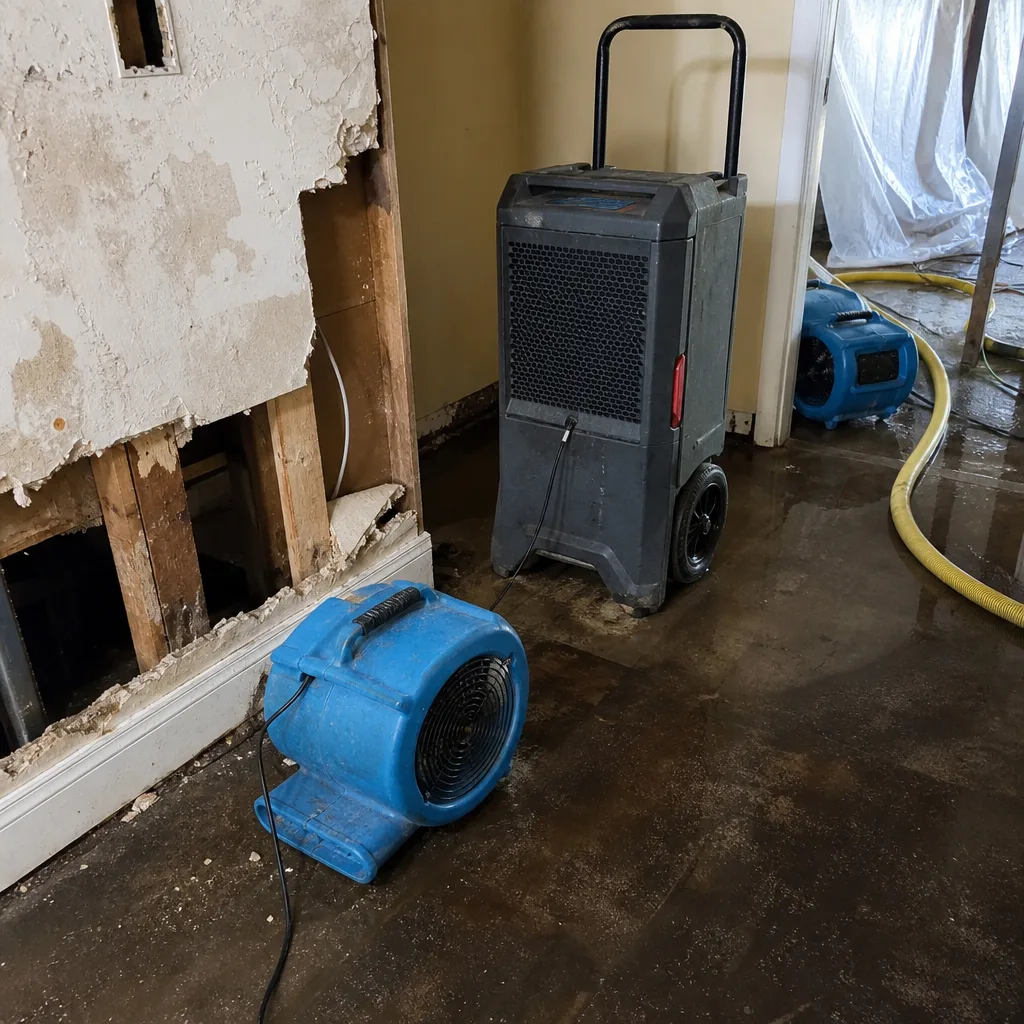 Before
 After
After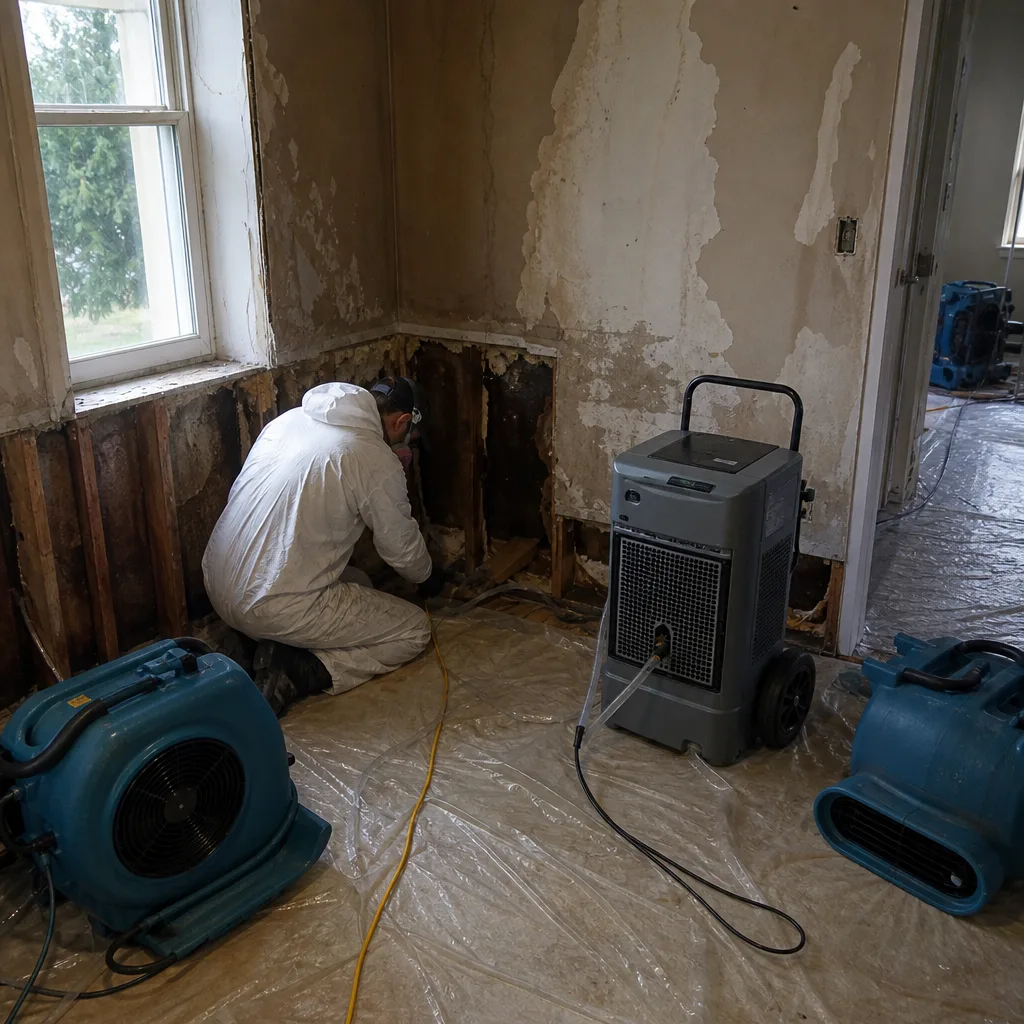 Before
 After
After24/7 Emergency Mold Remediation in Springfield Gardens
Mold remediation in Springfield Gardens typically costs $1,800-$6,500 depending on how far the growth has spread and whether sewage backflow is involved, and our crews can usually start containment the same day you call. If you’re seeing black staining climbing your basement drywall or smelling that musty odor that won’t leave, call (518) 627-5878 now. A live dispatcher answers around the clock, not a recording, and we’ll have a certified technician at your door for a free visual inspection before the day is out.
Springfield Gardens sits low and wet. That’s not a knock on the neighborhood, it’s the geography. Homes here sit on filled-in wetland close to the water table, and when a nor’easter pushes storm surge up through Jamaica Bay, basements that have flooded before flood again. Mold follows water. The first 48 hours decide whether you’re looking at surface cleaning or a full containment job with drywall removal and air scrubbing. Waiting costs more money every day.
Understanding Mold Remediation Severity in Springfield Gardens Properties
Not every mold problem in Springfield Gardens is the same job. The industry separates mold work by how much water sat in the building and what kind of water it was. Category 1 is clean water, like a supply line leak. Category 2 carries some contamination, like dishwasher overflow. Category 3 is black water, sewage and storm backflow, the kind that comes up through floor drains when the combined sewer system can’t handle a heavy rain. In Springfield Gardens, Category 3 is common, because the neighborhood’s aging cast-iron drain lines and low elevation put raw sewage into basements during storms.
Then there’s how far the mold has actually spread. Surface mold on concrete can often be cleaned and treated. Mold behind drywall, inside wall cavities, or climbing the back side of baseboards requires containment: plastic barriers, negative air pressure, HEPA air scrubbing, and removal of the affected material. A 1920s cape cod on Springfield Boulevard with a finished basement behaves differently than a 1950s brick bungalow on a slab. The older wood-frame homes wick moisture up four feet fast. The slab homes channel water under the foundation and force it up through cracks. Both need moisture mapping before anyone touches a wall, not after.
Why Springfield Gardens Property Owners Choose Floodline Restoration Co.
- 45-minute response commitment to Springfield Gardens addresses. When you call, we dispatch immediately, and the crew keeps you posted on arrival time.
- 24/7 live answer. A real person picks up at 2 a.m. Not a phone tree, not a callback service. A dispatcher who can send help.
- IICRC-certified technicians trained to WRT, FSRT, and AMRT codes. That’s water damage, fire and smoke, and applied microbial remediation. Every tech on your job is background-checked and uniformed.
- Free visual inspection before any work begins. We walk the damage with you, explain what we’re seeing, and hand you a written scope. No obligation.
- Direct insurance billing. We document everything, send it to your carrier, and deal with the adjuster so you don’t have to play messenger.
- One team from first extraction to finished rebuild. Floodline Restoration Co. doesn’t hand your house off to a different crew halfway through. The people who pull the wet drywall are the same people who put your basement back together.
Our Mold Remediation Process
Inspection & Assessment
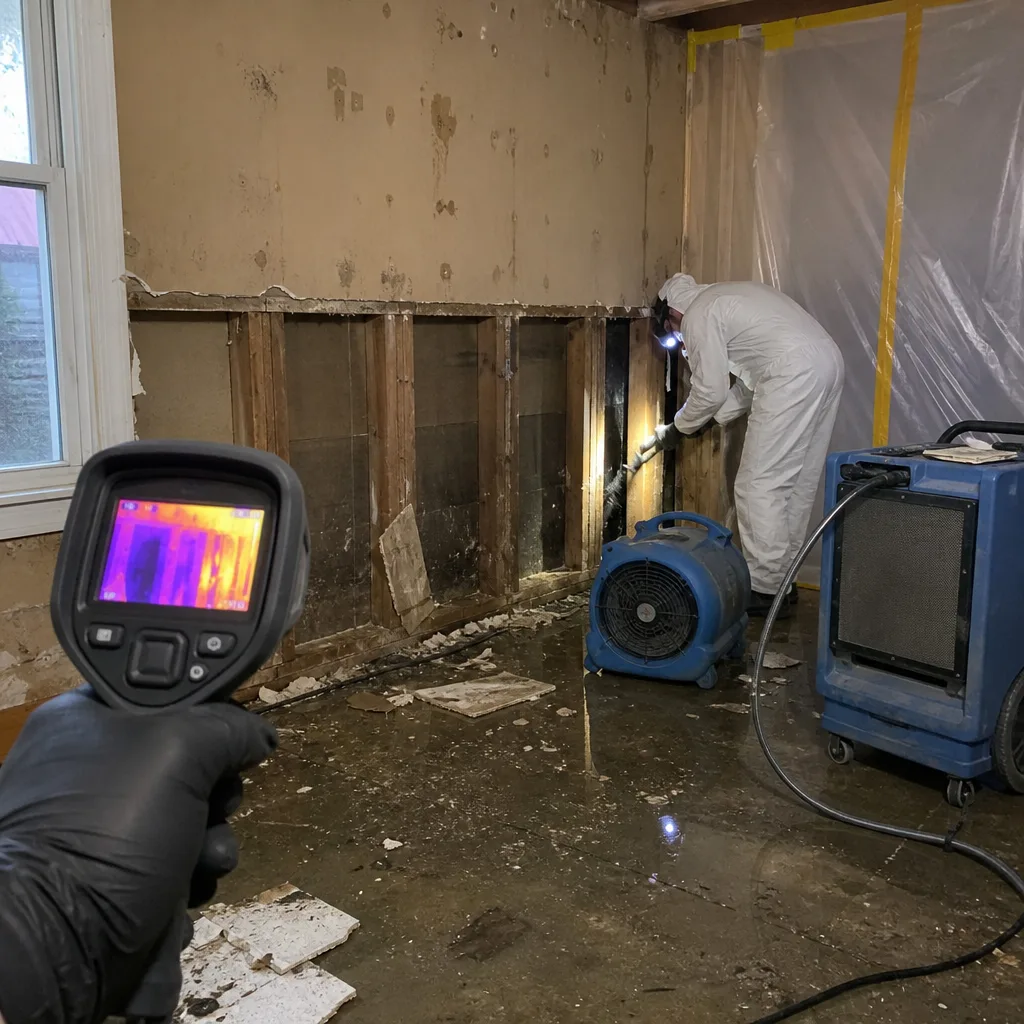
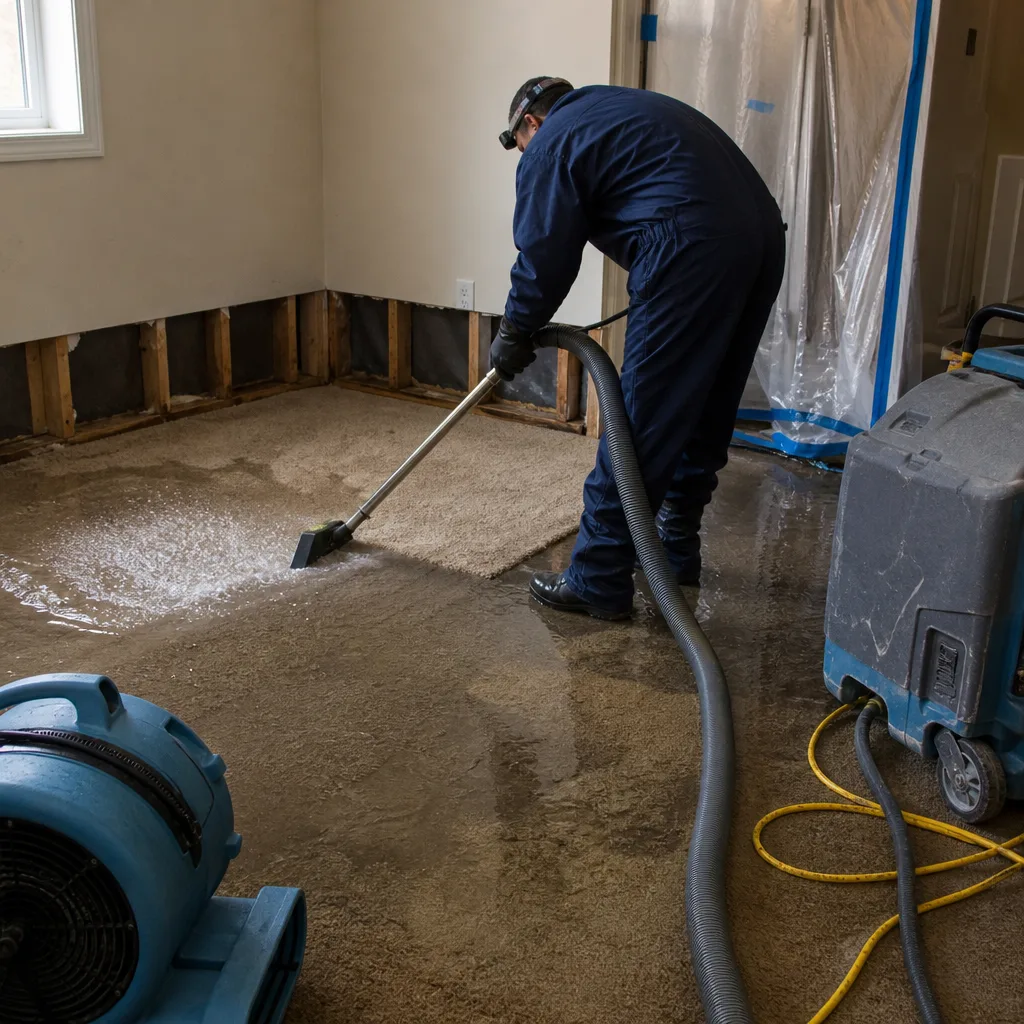
We start with thermal imaging and moisture meters across every affected surface. In Springfield Gardens basements, we check the sill plate, the bottom four feet of drywall, and under any finished flooring. You get a written scope before anything is removed.
Containment & Air Control
Mold spreads by spores. We seal the work area with plastic sheeting and run HEPA air scrubbers to create negative air pressure. This keeps mold from drifting into the rest of your house while we work.
Removal of Contaminated Material
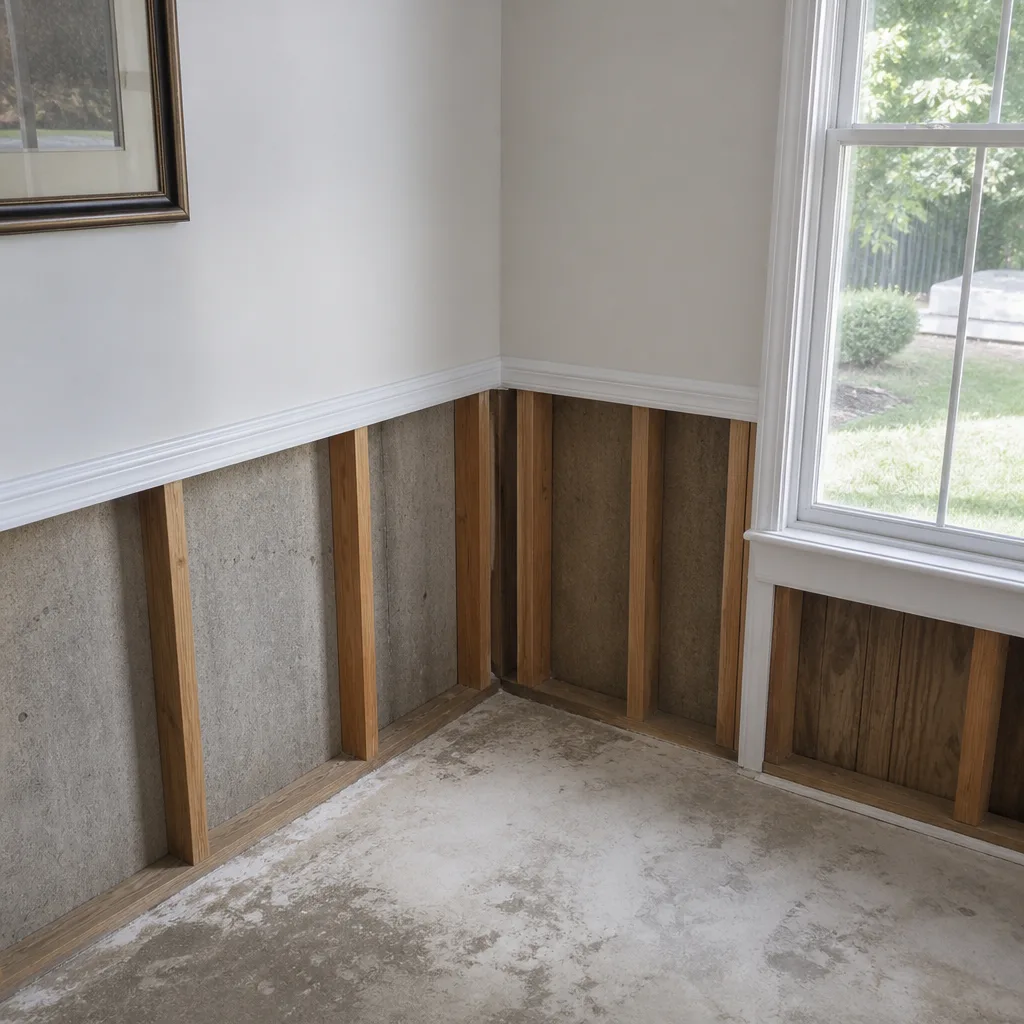
Drywall that’s wicked Category 3 water gets cut out and bagged for disposal. In wood-frame homes, we often remove baseboards, insulation, and sometimes sections of wood lath. Whatever can’t be thoroughly dried and cleaned comes out.
Drying & Dehumidification
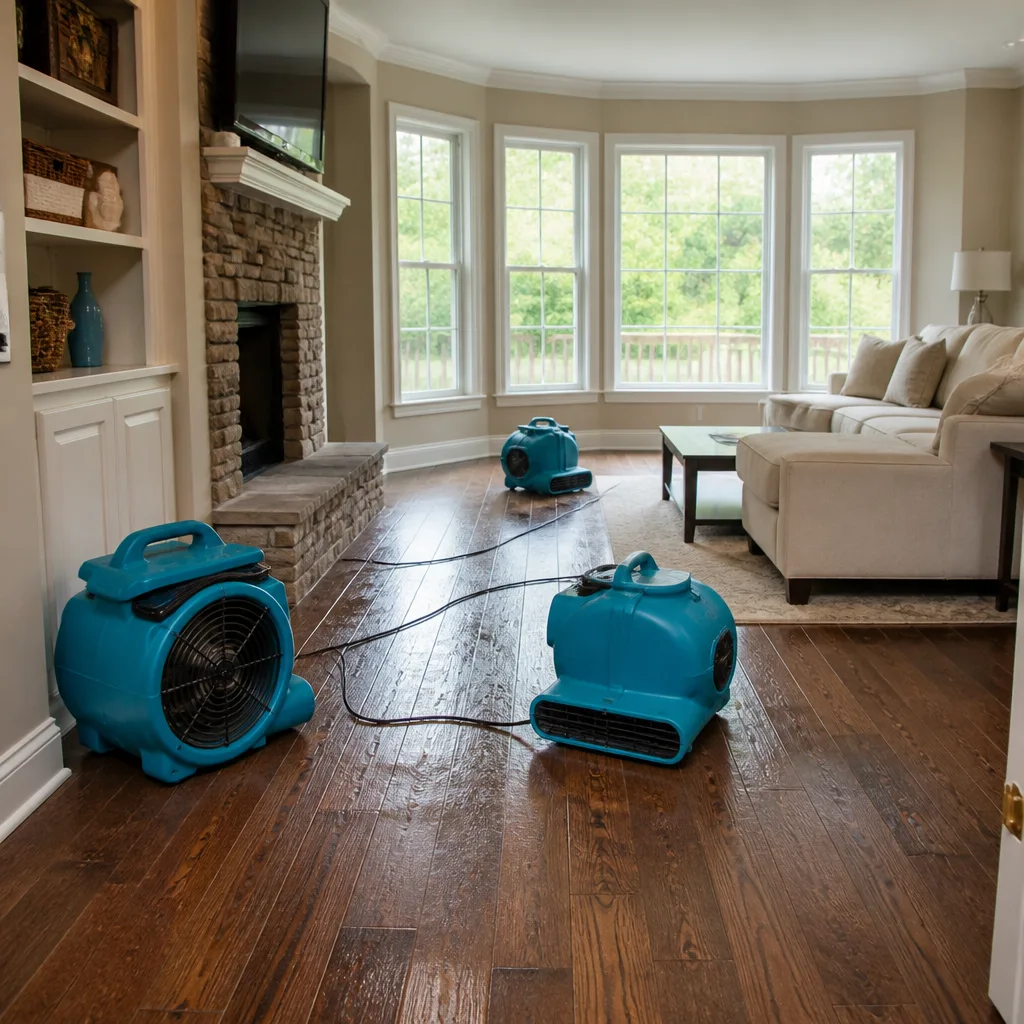
Dri-Eaz dehumidifiers and XPOWER air movers run until the moisture map shows we’ve hit the dry standard. We log daily readings and hand you the moisture log. In high water table areas like Springfield Gardens, this step takes patience and the right equipment.
Antimicrobial Treatment & Air Quality Restoration
After the affected material is gone and the framing is dry, we apply antimicrobial treatment to remaining surfaces. Then we scrub the air with HEPA filtration until clearance testing shows spore counts are back to normal outside levels.
Repairs & Restoration
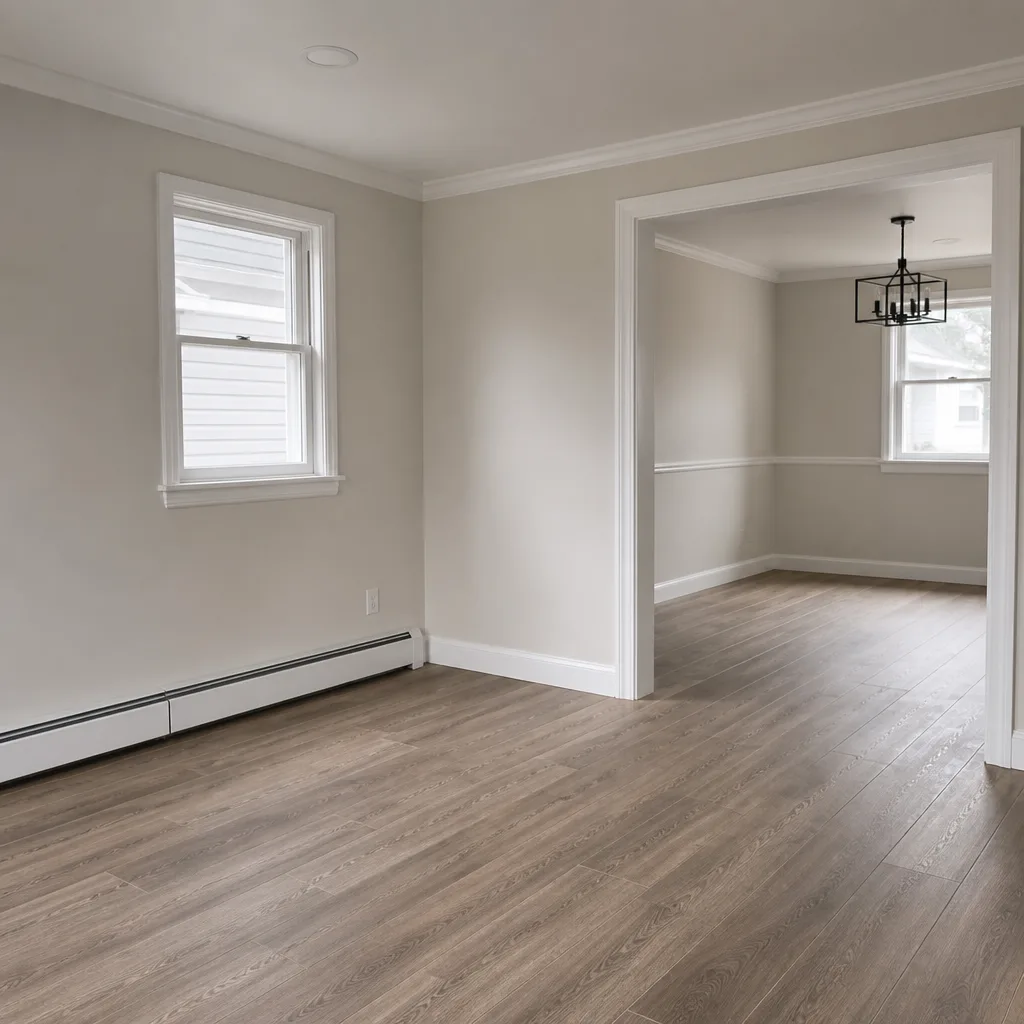
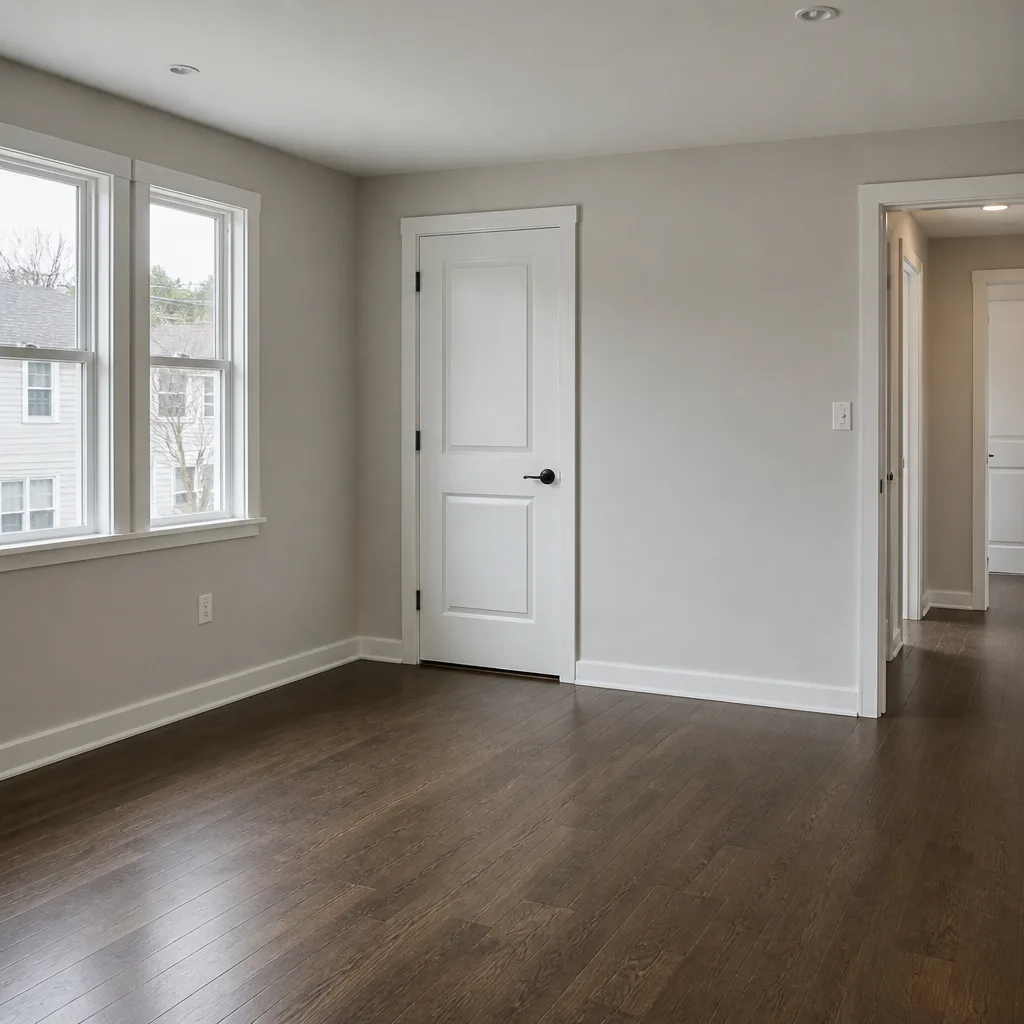
New drywall, insulation, paint, flooring, whatever was removed goes back in. Because we’re a full restoration company, the crew that did the remediation also does the rebuild. No handoff, no second contractor to chase.
Need Emergency Mold Remediation in Springfield Gardens Now?
Crews minutes away, answering live 24 hours a day. The sooner we start, the less it costs.
Working With Your Insurance Company
Mold remediation claims in Springfield Gardens get scrutinized. Carriers want proof that the mold came from a covered water event, not from long-term neglect. That’s why we document everything from the first hour. Photos of the original leak or backflow, moisture readings before and after drying, the full scope of demolition, every day of the drying log. Our team has handled hundreds of claims in southeastern Queens, and we know what adjusters need to approve the work. We speak their language and we send them the file directly, so you’re not forwarding emails at midnight.
What We Provide Your Insurer
- Thorough documentation of the loss
- Photos of all damage, room by room
- Moisture readings and drying logs
- A detailed, line-item scope of work
- Direct coordination with your carrier
Built for Springfield Gardens’s Loss Calendar
Springfield Gardens doesn’t have a mold season. It has a mold year. January and February bring deep freezes that burst supply lines in unheated basements. March and April, snowmelt and spring rain find every crack in a 1930s foundation. Summer thunderstorms drop two inches in an hour onto streets that can’t drain fast enough, and the combined sewer system backs up through floor drains. Autumn nor’easters push storm surge from Jamaica Bay across the low streets south of Merrick Boulevard. Then the cycle starts again.
That’s why this neighborhood generates more repeat moisture events than almost anywhere else in the borough. Homes get flooded, dried out, and flooded again before the drywall has fully cured. Each event leaves behind a little more mold in the framing. We’ve returned to the same block on 145th Avenue three separate times in five years, different houses, same story: sump pump couldn’t keep up, Category 3 water in the basement, mold behind the paneling. This is the reality of living in a FEMA-designated Special Flood Hazard Area. The question isn’t whether water will find your basement. It’s whether you’re ready when it does.
Mold Remediation Across Springfield Gardens’s Neighborhoods
Springfield Gardens runs from roughly Farmers Boulevard east to the Belt Parkway, and the housing stock changes block by block. The streets around Springfield Boulevard and 145th Avenue are heavy with wood-frame colonials and cape cods from the 1920s and 1930s. Those homes have dirt or shallow concrete basement floors and original sill plates that have soaked up decades of groundwater. Mold there tends to start at the base of the foundation and climb the drywall, and by the time you see it, the framing behind it is usually involved. That’s full containment territory, not just cleaning.
Over near Guy R. Brewer Boulevard, you’ll find more brick bungalows and semi-detached two-families from the 1940s and 1950s. The brick holds up better, but many of these homes have finished basement rooms built directly over the slab, with paneling and carpet that hide moisture for months. By the time we get called, the mold has often spread behind an entire wall of paneling and into the ceiling joists. The low-lying blocks south of North Conduit Avenue, closest to the flood zone, see the worst Category 3 events, where storm surge and sewer backflow arrive together. These are the homes where content disposal and structural drying become unavoidable.
Specialized Mold Remediation Services We Offer in Springfield Gardens
Mold Inspection & Testing
Before we recommend any remediation, we need to know exactly what we’re dealing with. We use thermal imaging to find moisture you can’t see, moisture meters to quantify it, and air sampling to identify spore types and concentrations. In Springfield Gardens, where previous flood damage is common, a proper inspection often reveals mold behind walls where the homeowner only sees a stain on the baseboard.
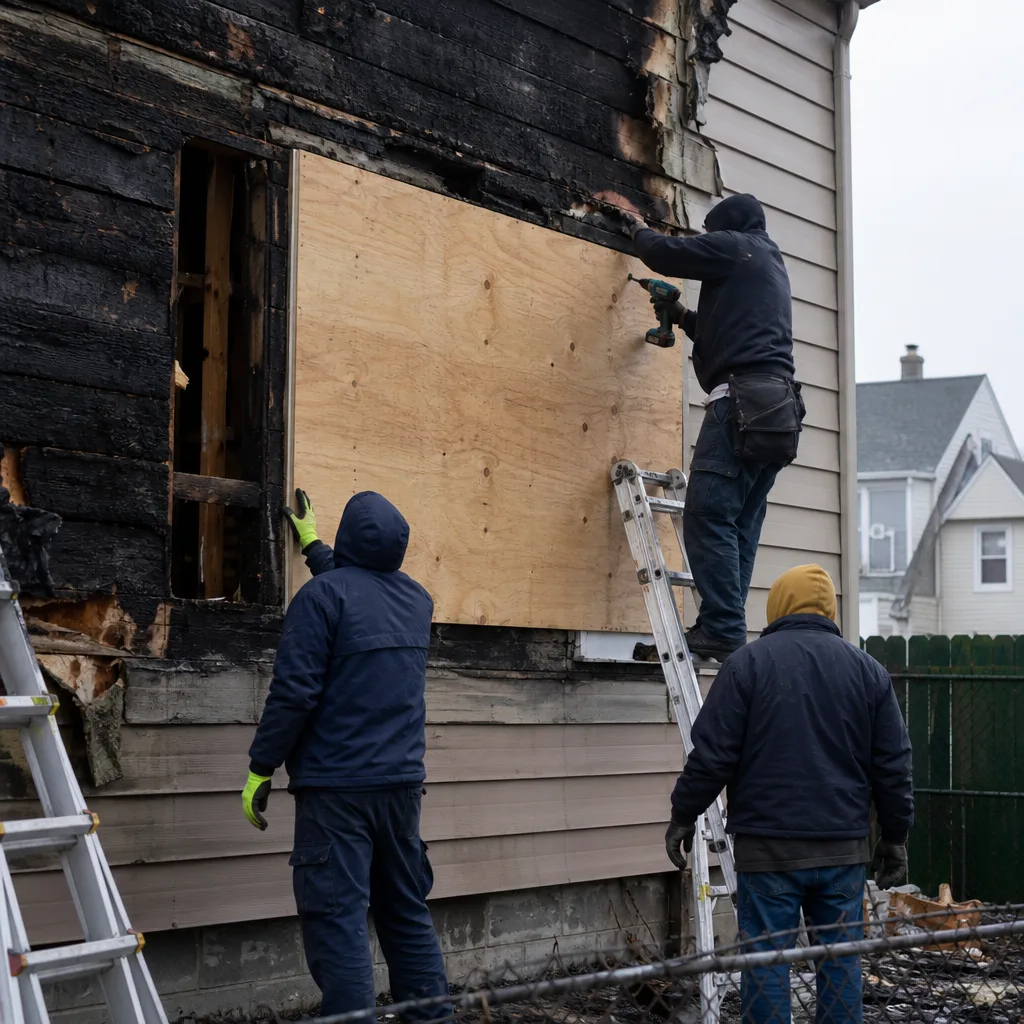
Mold Removal
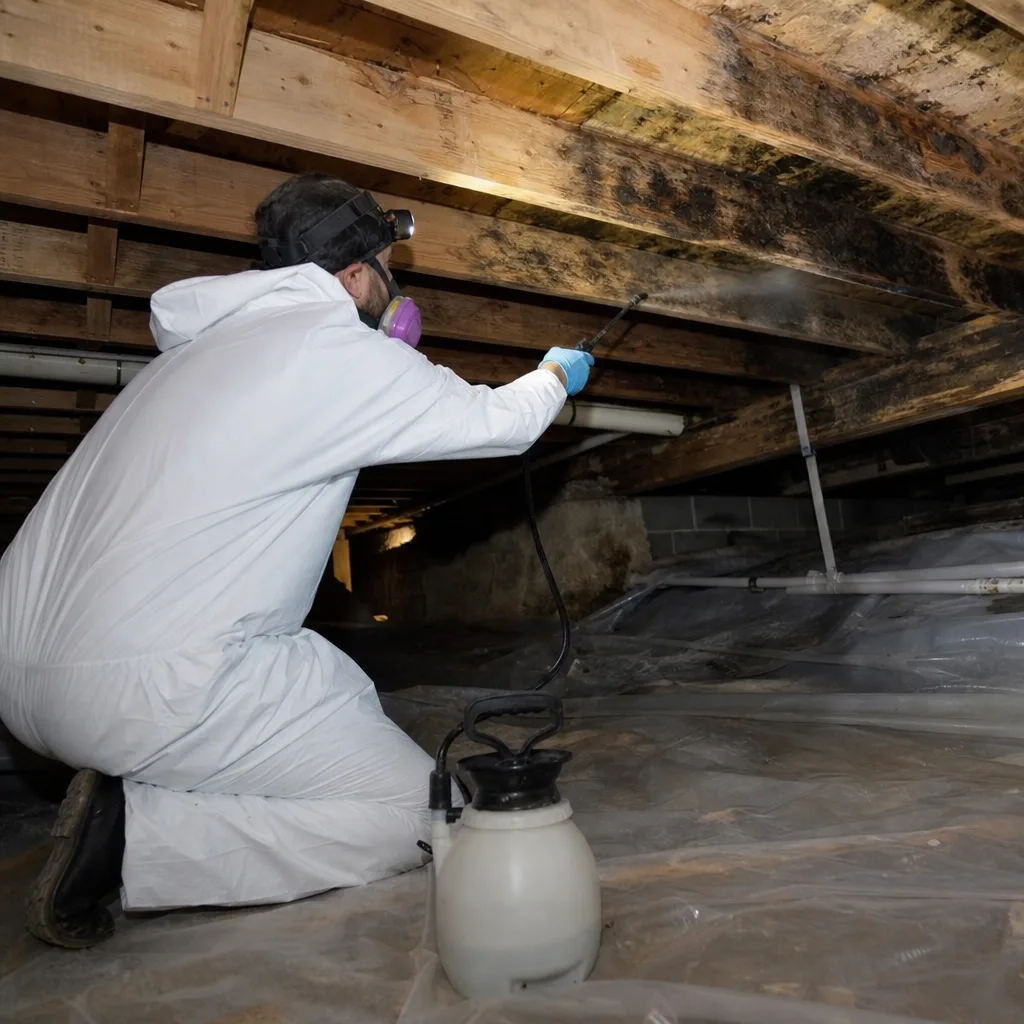
This is the physical removal of mold-contaminated materials. In a wood-frame colonial on Springfield Boulevard, that often means cutting out the bottom four feet of drywall, pulling wet insulation, and treating the exposed framing. On brick homes, it may mean removing paneling, carpet, and subfloor. We bag and dispose of everything on-site, following New York City guidelines for construction debris.
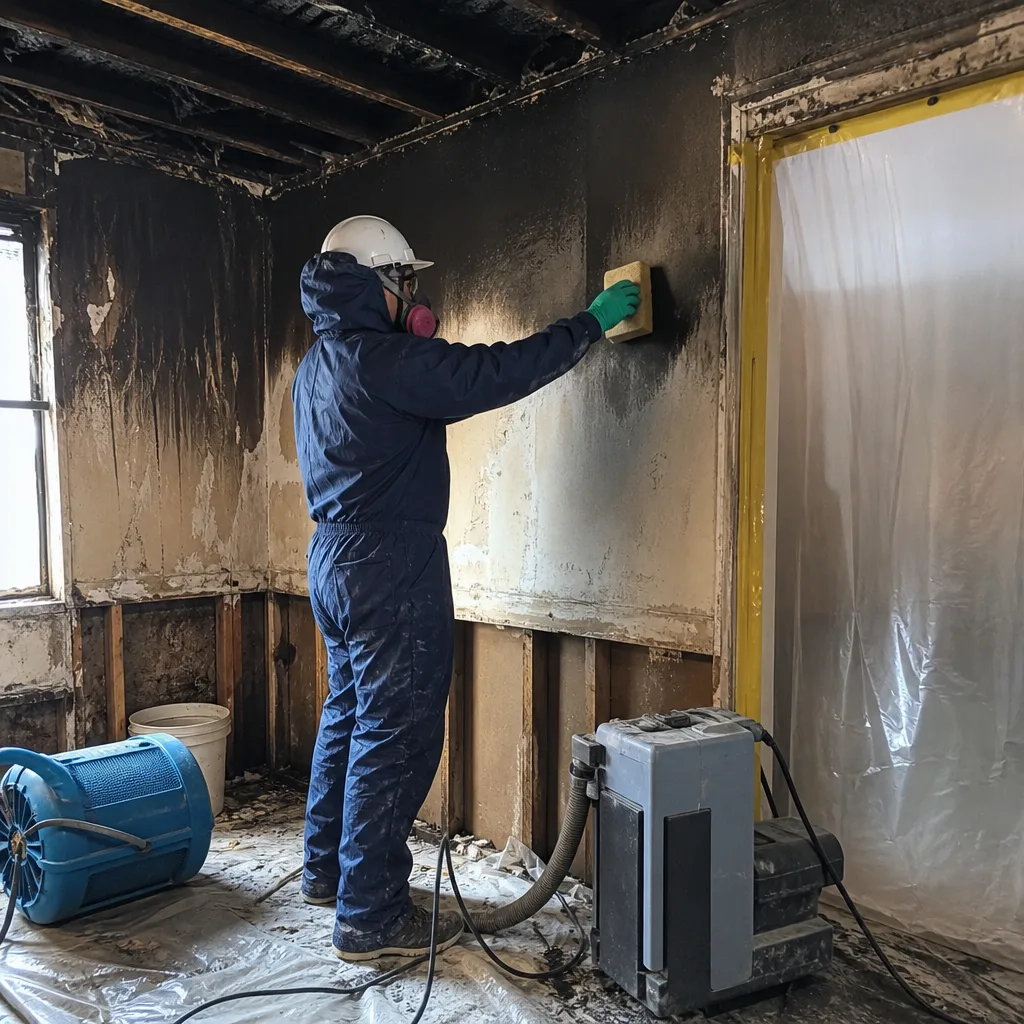
Black Mold Remediation
Stachybotrys, what people call black mold, grows on materials with high cellulose content that have stayed wet for days or weeks: drywall paper, wood, ceiling tiles. In Springfield Gardens basements where Category 3 water sat before anyone noticed, black mold is a real possibility. We treat it with full containment, HEPA air scrubbing, and complete removal of the affected material. No shortcuts.
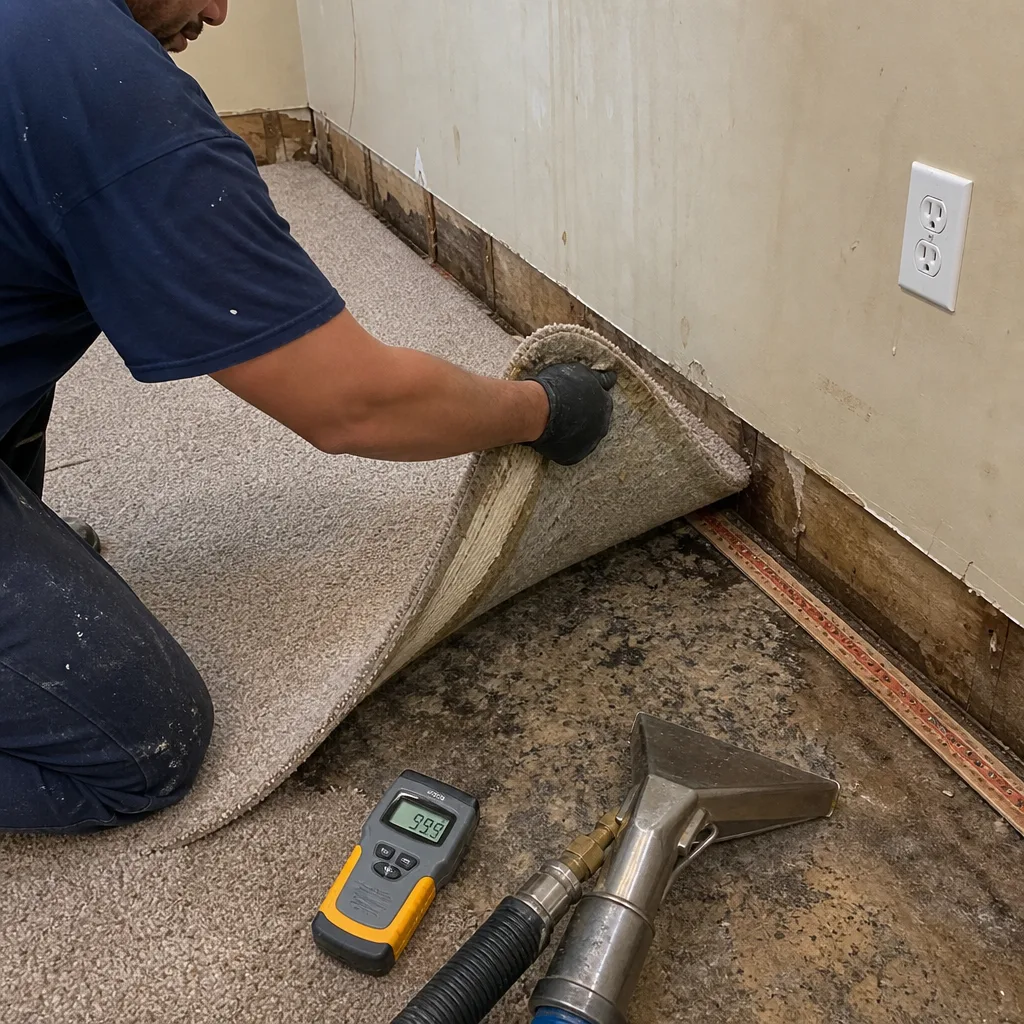
Air Quality Restoration
Mold spores don’t stay in the basement. They travel through floor joists, up stairwells, and into the HVAC system if the unit is in the basement, which it usually is in these older Springfield Gardens homes. After the mold is removed and the framing is dry, we run HEPA air scrubbers throughout the affected area and the connected living spaces until clearance testing confirms spore counts have dropped to normal levels.
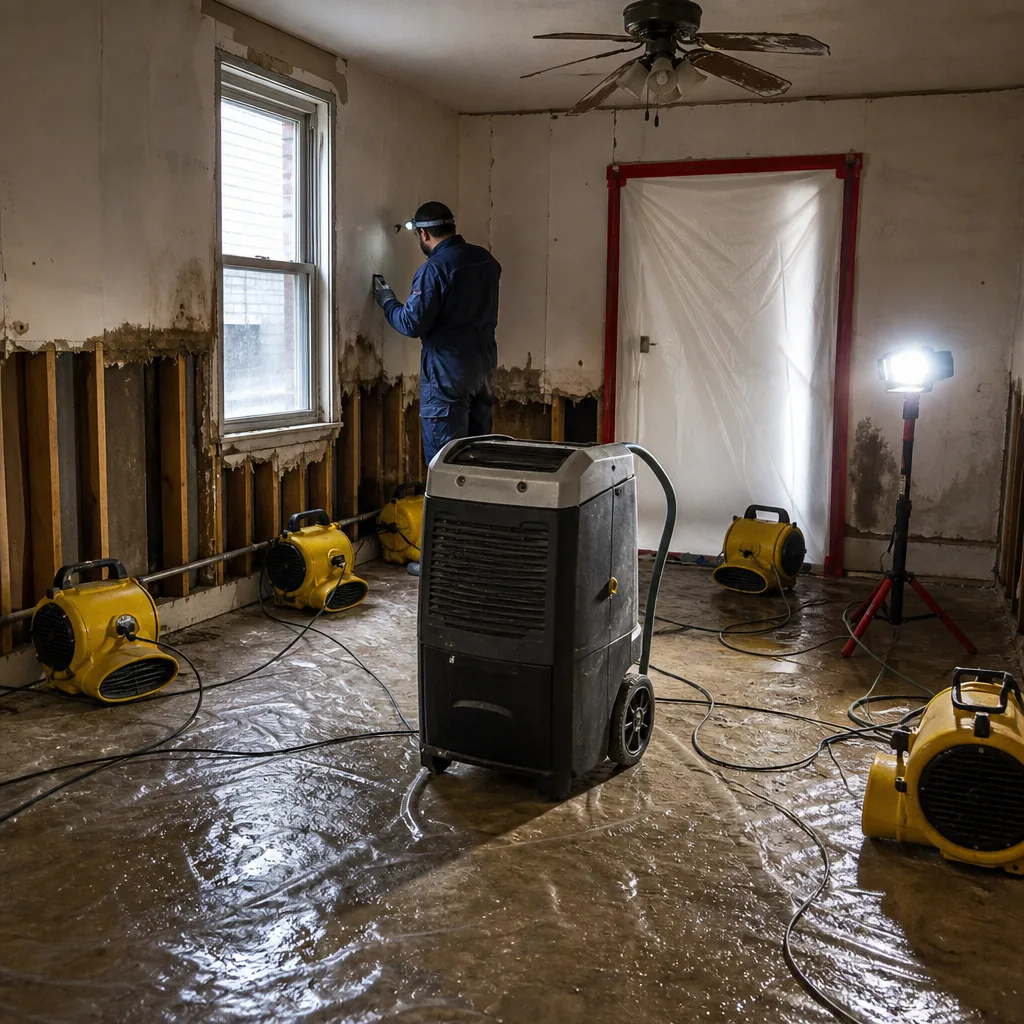
Crawl Space Treatment
Many Springfield Gardens homes still have crawl spaces rather than full basements, and crawl spaces here are damp almost year-round. The high water table means standing water under the house after every heavy rain. We seal and treat crawl space surfaces, install vapor barriers where needed, and address the moisture source so the space doesn’t re-contaminate the house above it.
Moisture & Humidity Control
In a neighborhood built on wetland fill, indoor humidity is a year-round enemy. We install and service dehumidification systems sized for Springfield Gardens basements, inspect sump pump discharge lines, and advise on grading and drainage fixes that pitch water away from the foundation instead of toward it. Some homes need a better pump. Some need a whole drainage strategy. We’ll tell you which one applies.
What happens when you call
- 1
A real person answersNo phone trees - you reach a local pro.
- 2
You get an upfront price rangeHonest numbers before anyone is dispatched.
- 3
A background-checked tech heads outLicensed & insured, dispatched right away.
- 4
You approve before work beginsNothing starts until you say go.
Mold Remediation Costs in Springfield Gardens, NY
You should know what you’re facing before you sign anything. A small, contained mold job in a Springfield Gardens basement, maybe six to ten linear feet of drywall removed and treated, runs $1,800-$2,800. A full basement with Category 3 sewage backflow and widespread mold, where we’re removing drywall, insulation, flooring, and treating framing, typically runs $4,500-$6,500. Whole-house mold spread that’s reached the first floor and HVAC system can exceed $8,000.
What moves the price: how much material comes out, whether sewage is involved, how long drying takes, and whether clearance testing requires a third-party lab. Insurance covers mold remediation when it results from a covered water event, which most Springfield Gardens flood and backflow claims are. Out-of-pocket, we keep pricing plain and written before work starts. The free visual inspection is the fastest way to know which category you’re in, no obligation. Call (518) 627-5878 and we’ll walk the basement with you.
We Also Serve Cities Near Springfield Gardens
Floodline Restoration Co. runs crews across southeastern Queens every day. If you’re near the Springfield Gardens line, we also handle mold remediation in Rosedale, Cambria Heights, South Ozone Park, and Hollis. Same live dispatch, same 45-minute response commitment, same Mold Remediation process from first inspection to finished rebuild.
Springfield Gardens Mold Remediation Questions, Answered
Why does mold keep coming back in my Springfield Gardens basement even after I run a dehumidifier?
A dehumidifier only removes moisture from the air. It doesn’t stop water from coming through your foundation or up through your slab. In Springfield Gardens, where the water table sits high and lots pitch water toward foundations, you have to address the moisture source, grading, drainage, sump pump capacity, or a vapor barrier, and then properly treat the mold that’s already in your framing. A dehumidifier alone won’t fix the problem. Call (518) 627-5878 for a free inspection and we’ll show you exactly where the moisture is entering.
If Hurricane Sandy flooded my basement with sewage backflow, can I just dry it out and spray mold killer?
No. If sewage backflow from the combined sewer system was in your basement, you have Category 3 black water. Materials that absorbed that water, drywall, insulation, carpet, need to be removed and disposed of. Antimicriobial spray doesn’t fix what’s inside the wall cavity. If Sandy water sat and mold grew, full remediation is the only responsible answer. We’ll document it properly for your insurer.
My 1940s brick bungalow has original cast-iron drain lines under the slab. Can I just replace the section that backed up?
You can replace the section, and we do that work as part of full restoration. But original cast-iron from the 1940s is near the end of its service life, and if one section backed up, the rest of that line is likely corroded and scaled. We’ll scope the line, show you what we find, and give you a recommendation. You decide. Replacing only the failed section is sometimes the right call, but if the whole line is compromised, you’ll be digging up the slab again in two years.
How fast does mold start in a Springfield Gardens basement after a heavy rain?
Colonies can begin forming in 24 to 48 hours when organic material stays wet and the temperature is above about 60°F. In Springfield Gardens basements during summer, with the high water table and limited air movement, you may smell it within two or three days and see staining within a week. Fast extraction and drying are the only way to prevent mold from taking hold. Call (518) 627-5878 the same day water appears.
My house sits in a low spot that collects water after every nor’easter. Should I waterproof the foundation or just keep extracting?
Long term, you need both. Extraction handles what got in. Waterproofing, grading, and drainage fixes keep it from getting in again. We regularly work with Springfield Gardens homeowners to design a plan: proper drainage away from the house, a correctly sized sump pump with battery backup, and foundation sealing where it’s practical. You can keep fighting water after every storm, or you can make the storm a non-event. The second option costs less over five years.
How fast can someone actually get to my Springfield Gardens house?
We commit to 45 minutes for emergency dispatch within Springfield Gardens. In practice, crews are often inside the neighborhood already. A live dispatcher answers the phone 24/7 and can tell you exactly where the nearest crew is. (518) 627-5878 is the number.
What certifications do your mold remediation technicians hold?
Our crews are trained and certified to IICRC standards, including the AMRT applied microbial remediation technician designation. We also train to RIA and IFA standards. Every technician on your job is background-checked and uniformed.
What should I do in the first 30 minutes after I find mold or flooding in my Springfield Gardens home?
Keep people and pets out of the affected area, especially anyone with asthma or respiratory conditions. Don’t run the HVAC system in fan-on mode, it spreads spores. Don’t sand or scrape the mold. If water is still entering, shut off the source if you can do so safely. Then call (518) 627-5878. We’ll guide you through the next steps and get a crew on the road.
Serving Springfield Gardens, NY - Our Local Coverage Area
We’re based in the Springfield Gardens area and know this community well. Use the map below to see our service coverage - if you’re nearby, we can almost certainly help.
Why This Matters in Springfield Gardens Specifically
Here’s the thing most national restoration companies won’t tell you about Springfield Gardens. Because much of this neighborhood was built on filled-in wetland, many lots don’t drain the way newer neighborhoods do. Water that falls on your property tends to sit or run toward the house instead of away from it. Combine that with aging cast-iron drain lines, a high water table, and the combined sewer system that backs up during heavy rain, and you get a scenario where a single failed sump pump during a summer thunderstorm produces a Category 3 black-water basement flood in under an hour. That means sewage. That means content disposal and full antimicrobial treatment, not just extracting water and running fans.
On a wood-frame colonial near Springfield Boulevard and 145th Avenue, our crew found mold climbing the basement drywall after the homeowner’s original cast-iron drain line backed up during a nor’easter. We set containment, pulled the wet drywall in a Category 3 scope of work, then ran Dri-Eaz dehumidifiers and air movers for five days while moisture mapping showed the sill plate finally drying to pre-loss condition. That’s the kind of job we do regularly here, because that’s the kind of house Springfield Gardens has been building since before the Second World War.
If you’re ready to get rid of the mold and keep it gone, call (518) 627-5878 for a free estimate. A live person answers. A certified crew arrives. And the job gets done right, with a written guarantee behind it.
Written by Curt Bowman, Owner at Floodline Restoration Co.