
Free visual inspection and a written scope of work before any mitigation begins - photos, moisture readings, and drying logs go in your claim file
The scope we write is the scope we bill. Anything new gets shown to you, in writing, before we touch it.
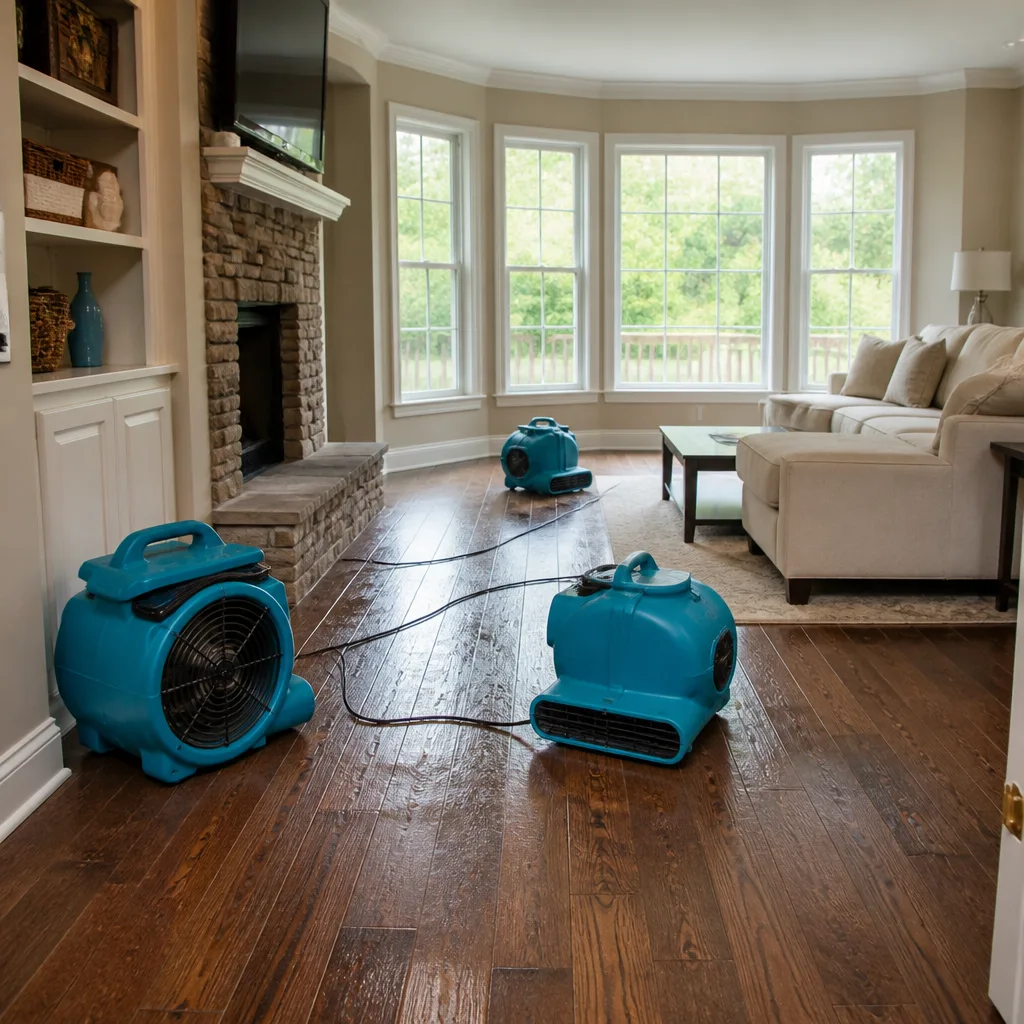
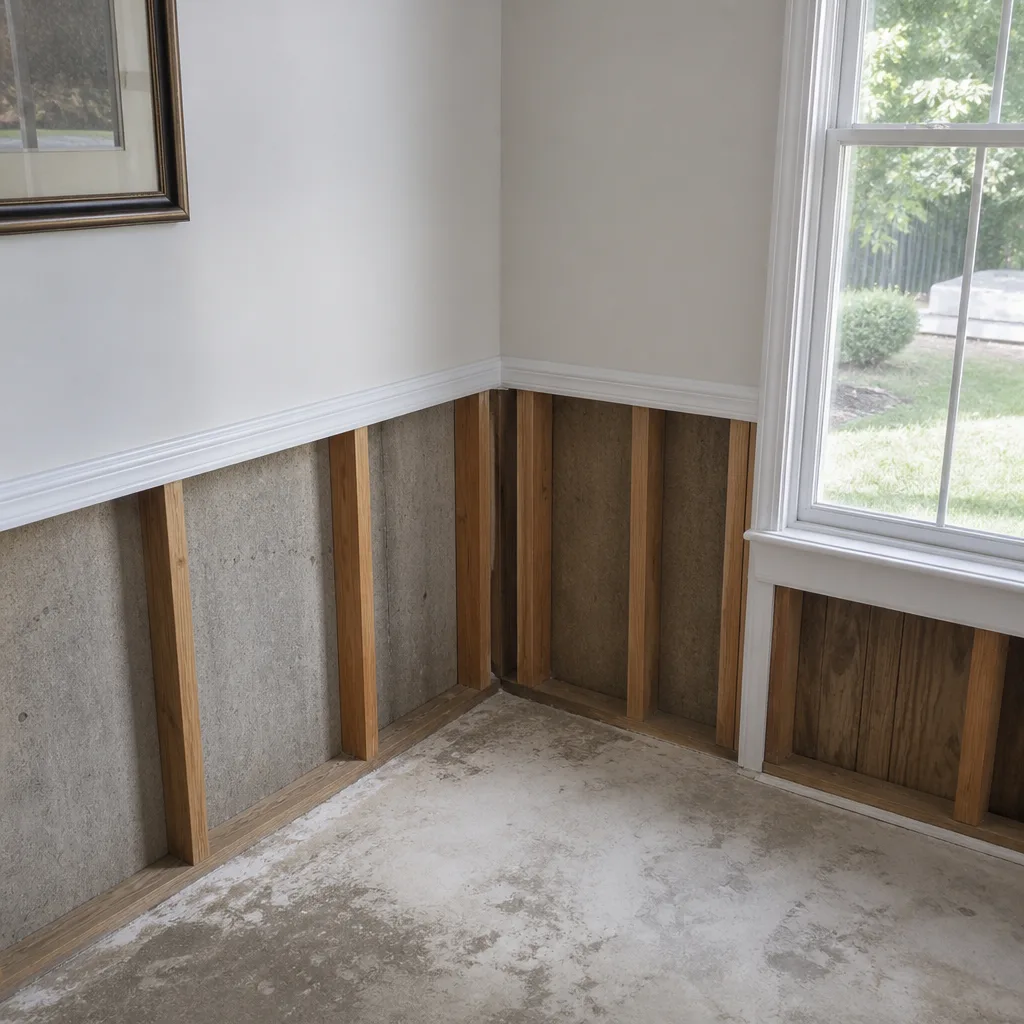
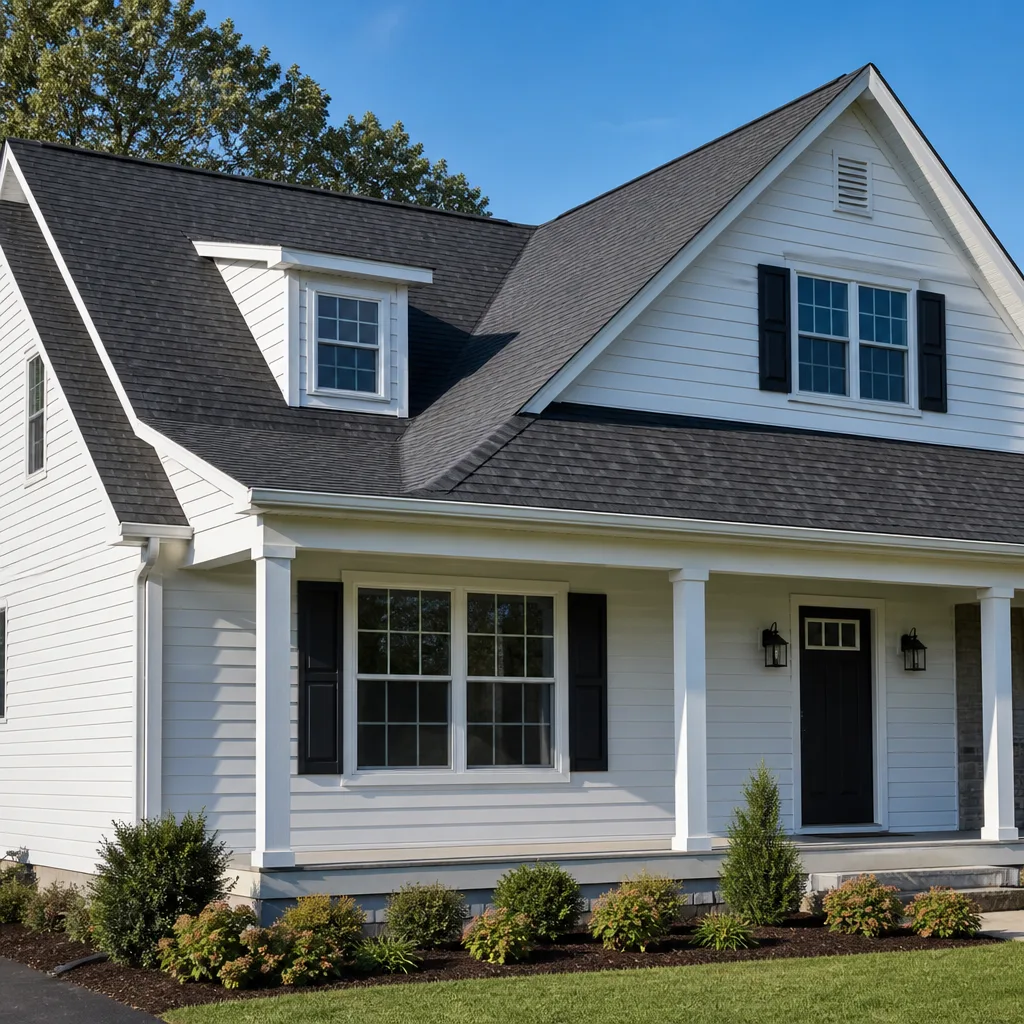
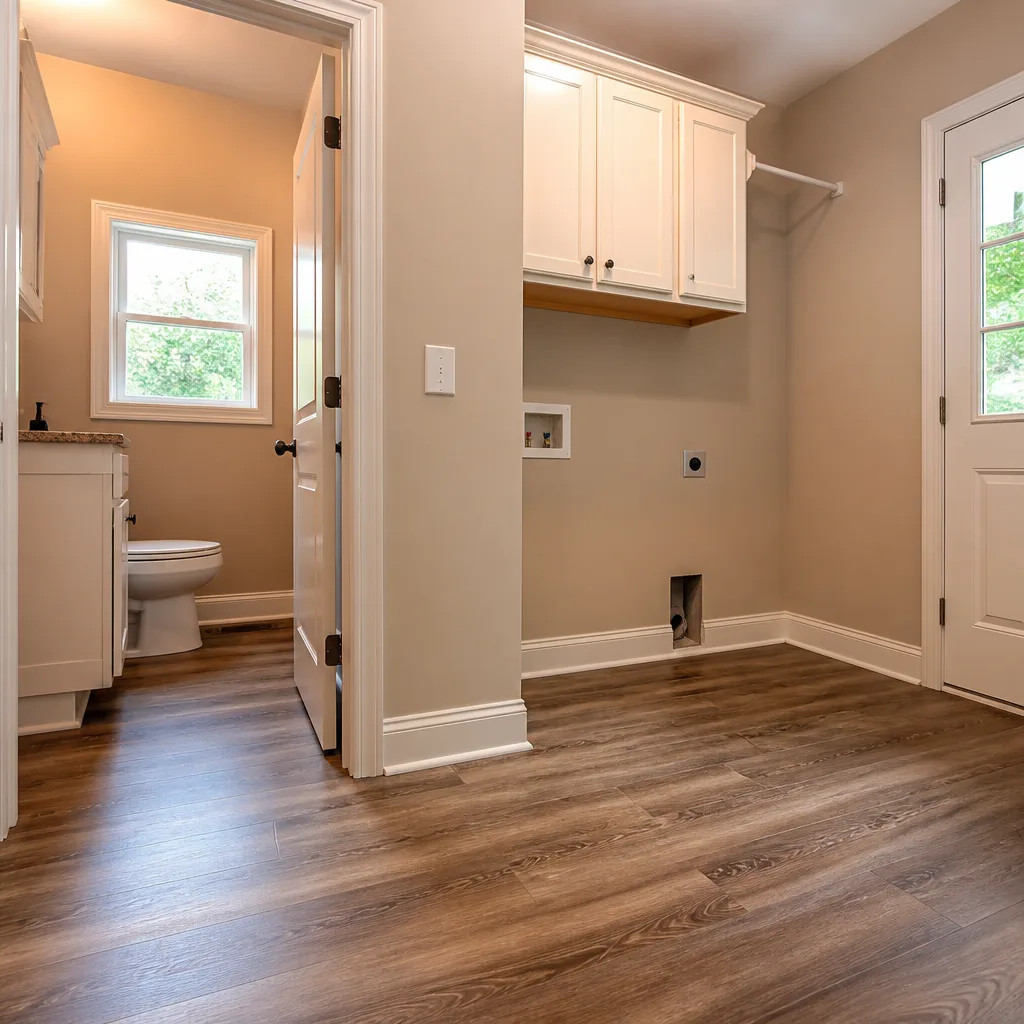
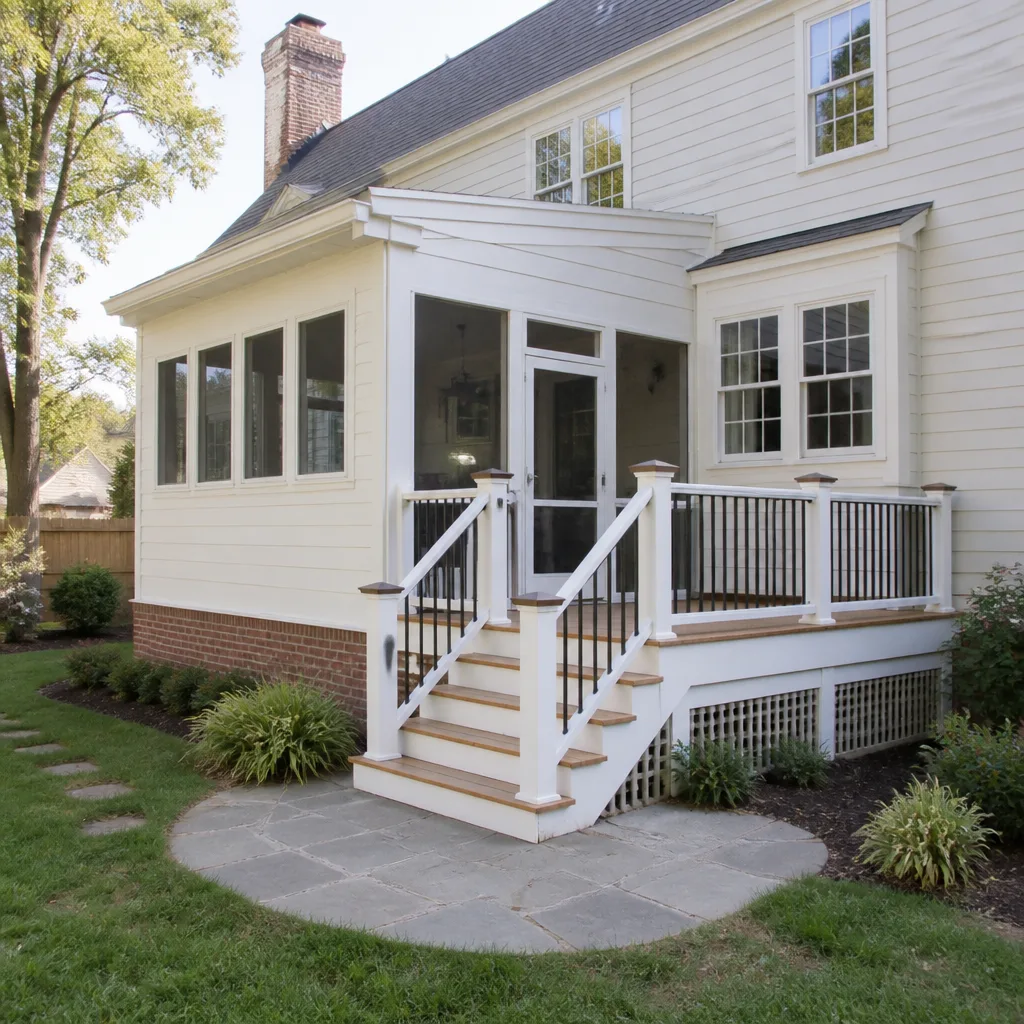
 Before
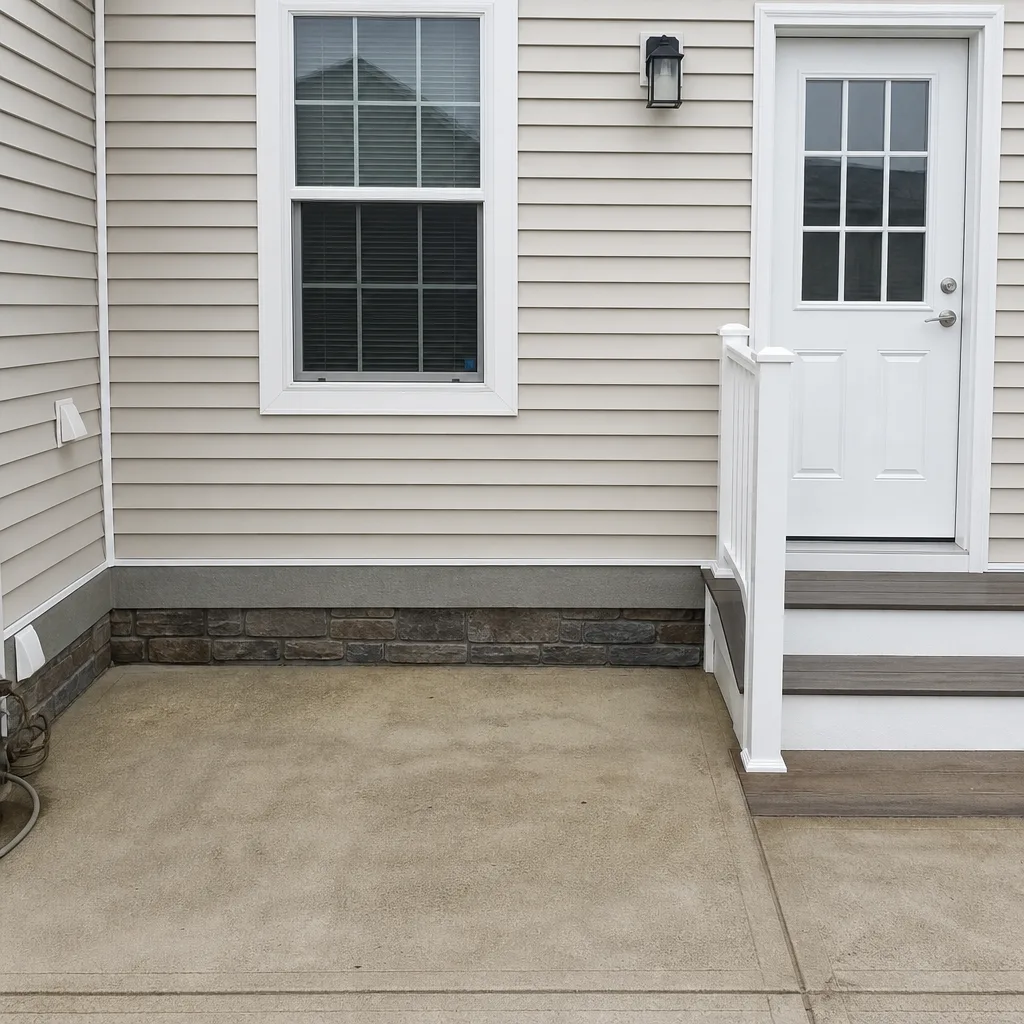 After
After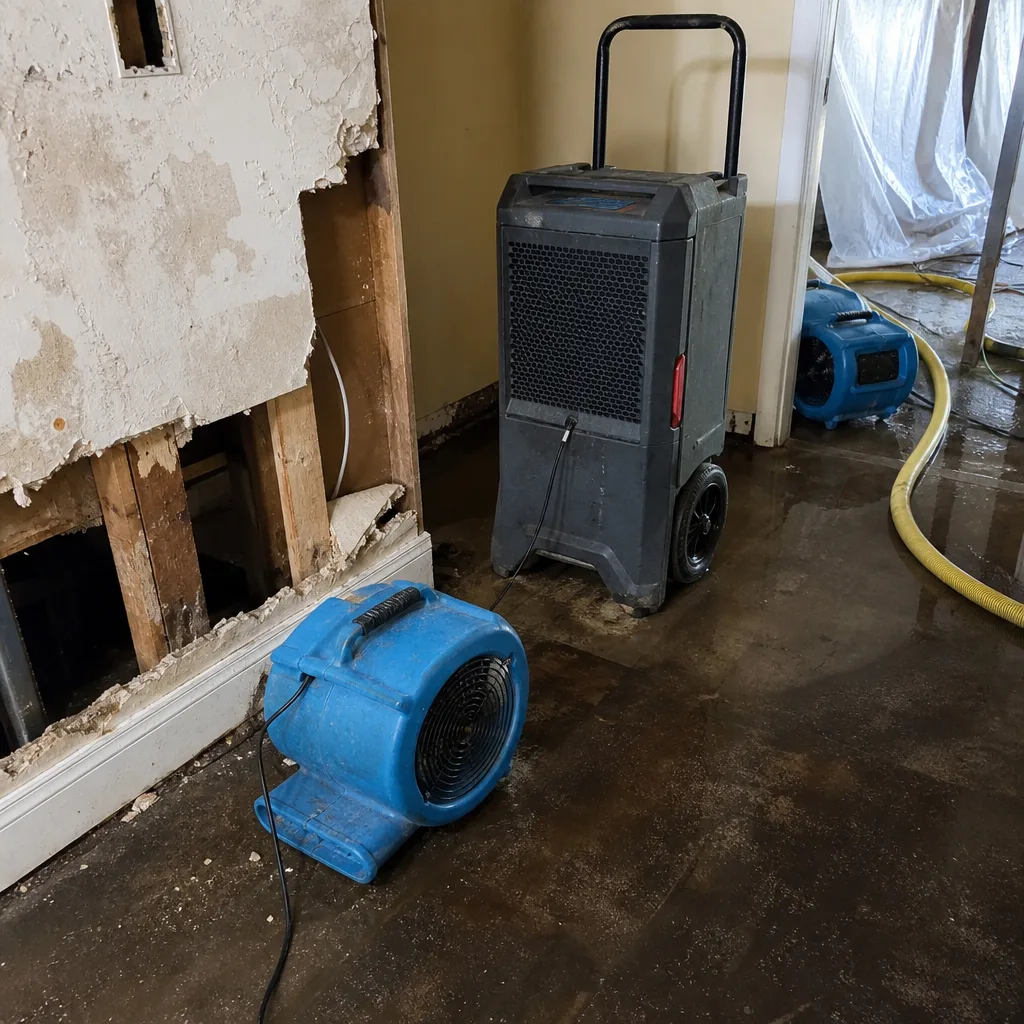 Before
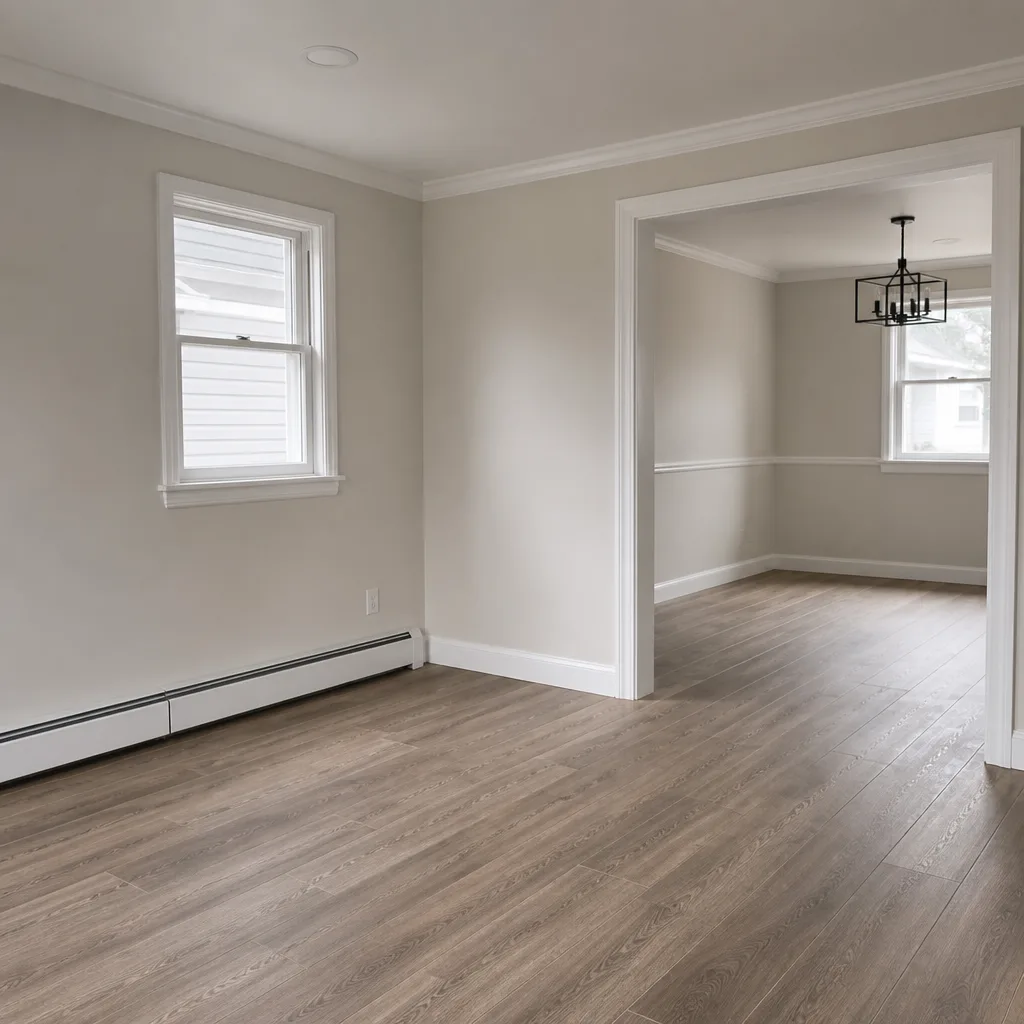 After
After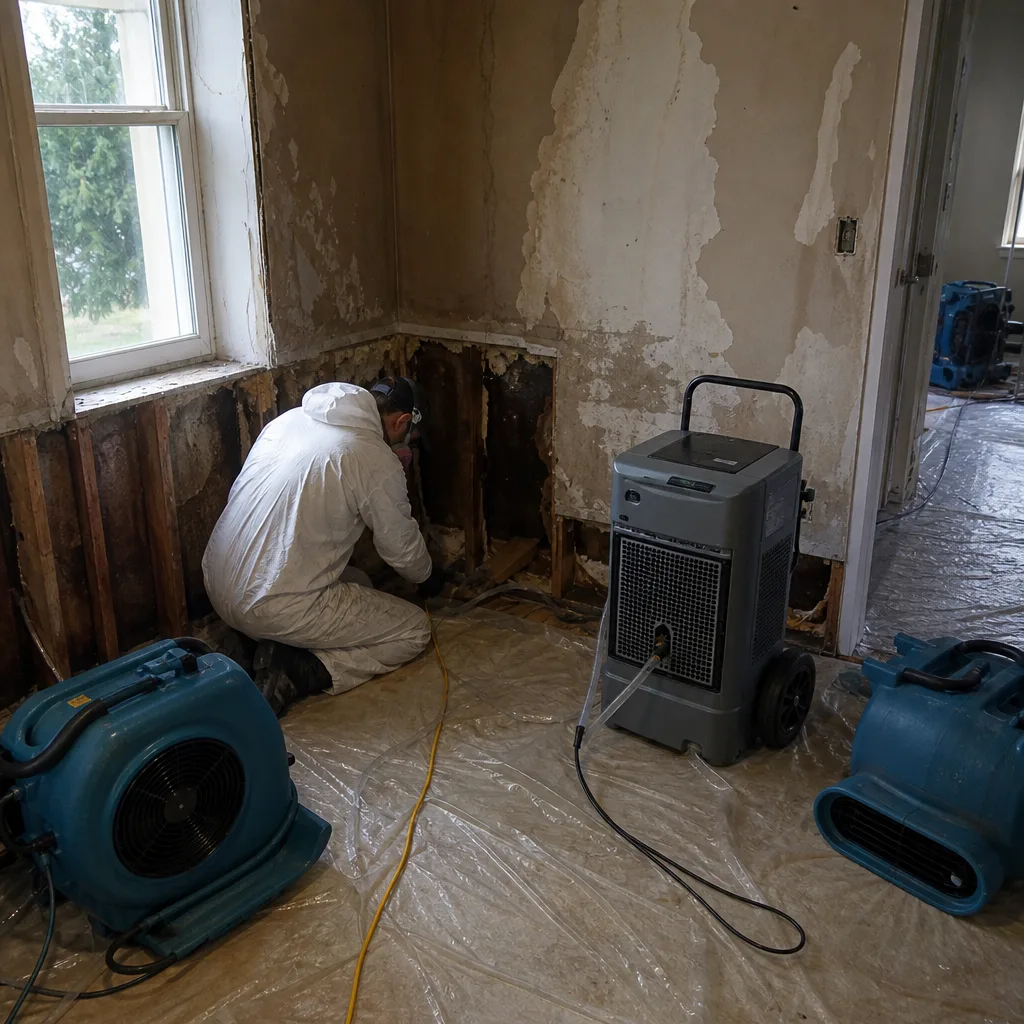 Before
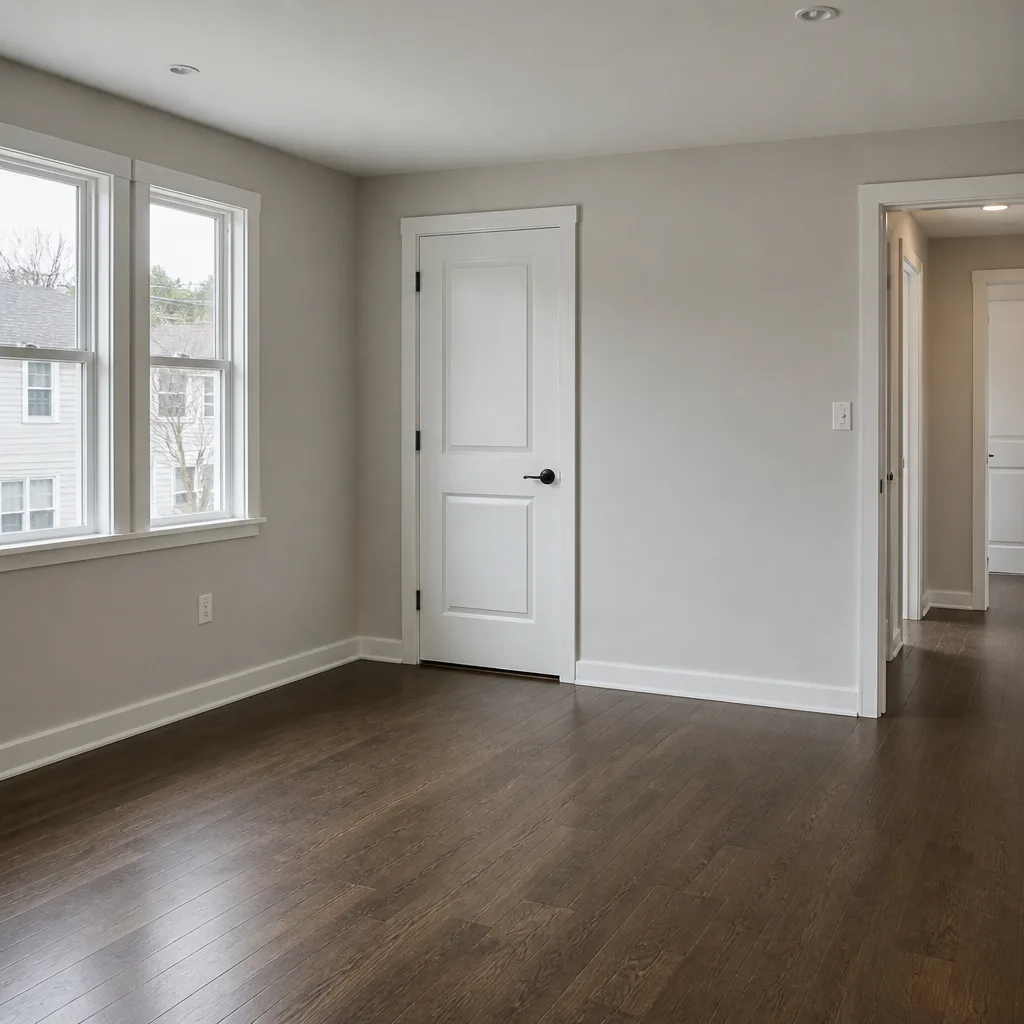 After
After24/7 Emergency Commercial Restoration in Springfield Gardens
Commercial restoration in Springfield Gardens starts with one phone call to (518) 627-5878, answered by a live dispatcher at any hour, including 2 a.m. during a nor’easter. A certified Floodline Restoration Co. crew reaches most Springfield Gardens addresses within 45 minutes of that call, and extraction equipment is usually running the same visit. The first hour matters in this neighborhood more than most: Springfield Gardens sits on filled-in wetland with a high water table, so water that enters a commercial basement does not just sit there. It presses up through the slab, wicks into 1920s masonry, and if the municipal combined sewer has backed up, it arrives already contaminated. That makes the first hour a Category classification decision, not just a cleanup start. We perform a free visual inspection on every emergency call, and we document from the first minute because insurance claims in this neighborhood depend on it.
Understanding Commercial Restoration Severity in Springfield Gardens Properties
Severity in Springfield Gardens commercial restoration is not a simple matter of how many inches of water are standing. It is a question of water category, building age, and what the ground underneath has been doing for the last century. Category 1 water is clean supply-line water: a burst pipe, a failed water heater. Category 2 carries significant contamination: dishwasher discharge, sump pump overflow that has sat. Category 3 is black water: sewage, combined-sewer backflow, or groundwater that has mixed with whatever the municipal system pushed back through the drain lines. In Springfield Gardens, where much of the commercial stock was built between 1920 and 1950 on filled-in wetland, heavy rain frequently converts a Category 1 or 2 event into Category 3 within hours. The overtaxed combined sewer system backs up, cast-iron drain lines from the original construction crack under decades of settling, and the water table sits close enough to the surface that basement slabs pass groundwater year-round. Our crews carry moisture mapping equipment on every job because visual dryness on a Springfield Gardens basement floor tells you almost nothing about what is moving through the slab or behind the cove joint. We classify water, map the moisture trail, and only then does a scope of work get written.
Why Springfield Gardens Property Owners Choose Floodline Restoration Co.
- 45-minute response commitment for Springfield Gardens addresses. Our New York City dispatch coordinates crews serving the neighborhood locally, so a certified team reaches your property fast, not hours from now.
- A live person answers 24/7, every day. No automated phone tree, no “leave a message.” A dispatcher picks up and starts the response immediately.
- IICRC-certified crews with WRT, FSRT, and AMRT credentials. Background-checked, uniformed technicians trained to handle Category 3 black water, fire residue, and microbial contamination.
- Free visual inspection before any work begins. We assess the loss, classify the water, and give you a written scope of work. No pressure, no upsell.
- Direct insurance billing. We communicate with your adjuster, provide line-item estimates, and bill the carrier directly so you are not stuck playing messenger.
- One team from first extraction to finished rebuild. The crew that maps the moisture on day one handles the drying, the antimicrobial treatment, and the reconstruction. No handoff, no inherited crew.
Our Commercial Restoration Process
Inspection & Assessment
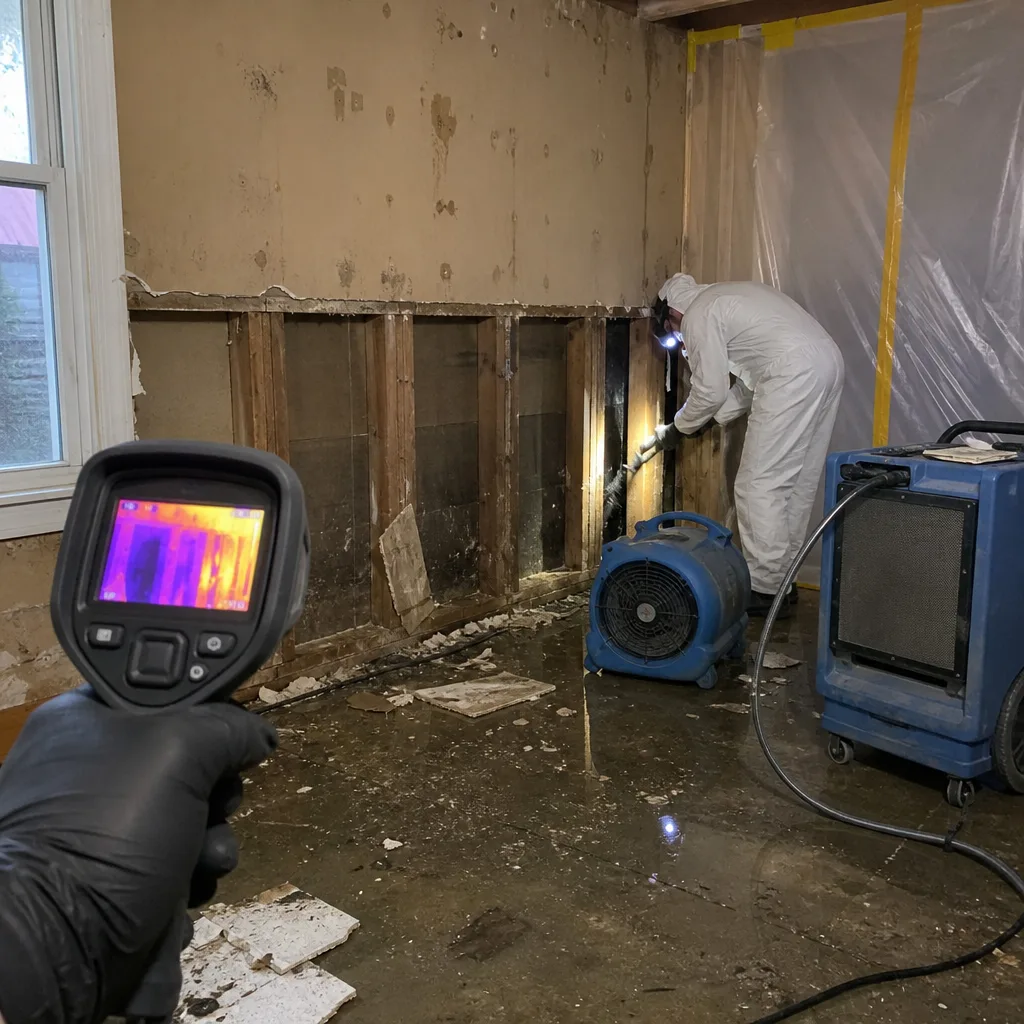
We document the loss from the first hour: thermal imaging to find hidden water, moisture mapping of slabs and studs, and a written Category classification specific to Springfield Gardens flood conditions. This becomes the basis for your insurance claim.
Extraction & Stabilization
Professional-grade extraction removes standing water and sewage. We set containment on any Category 3 job to stop contaminated material from spreading through your building’s air system.
Drying & Dehumidification
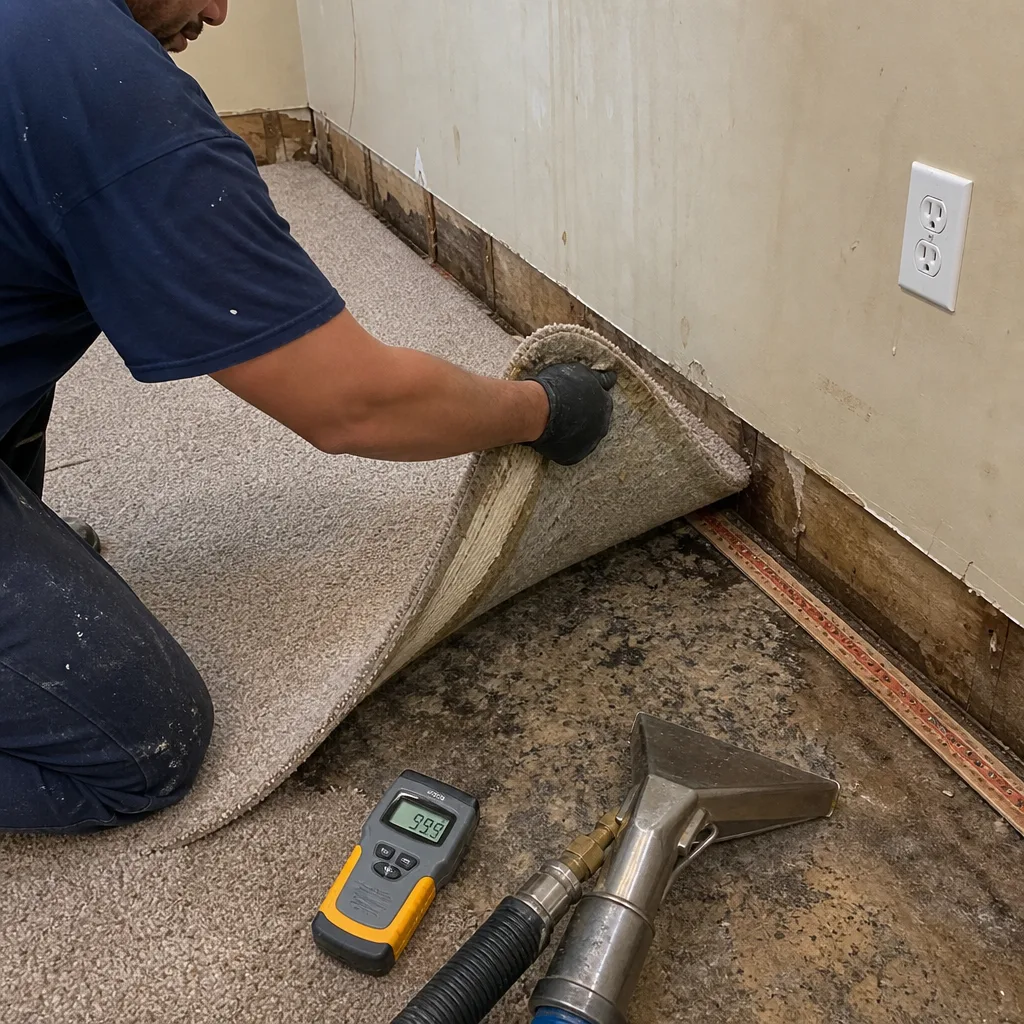
Dri-Eaz and Phoenix dehumidifiers, XPOWER air movers, and Injectidry systems run continuously. Daily moisture readings are logged until the dry standard is met, especially through concrete basement slabs on old filled-wetland lots.
Cleaning & Sanitization
Antimicrobial treatment on concrete and wood studs, HEPA air scrubbing, and disposal of non-salvageable materials. This step is non-negotiable for any Springfield Gardens sewer-backflow event.
Specialty Treatment: Document & Inventory Recovery
For commercial clients, we pack out salvageable inventory, freeze-dry or stabilize documents, and coordinate content cleaning. A storefront’s business records or a home-based business’s inventory often matters as much as the drywall.
Repairs & Restoration
The same crew rebuilds what needs rebuilding: drywall, flooring, cabinetry, and structural repairs. Every job is backed by the 90-Day Done Right Promise, in writing.
Need Emergency Commercial Restoration in Springfield Gardens Now?
Crews minutes away, answering live 24 hours a day. The sooner we start, the less it costs.
Working With Your Insurance Company
Most commercial restoration work in Springfield Gardens involves an insurance claim, often a repeated one on the same property. That repetition is exactly why documentation matters from the first hour. We photograph every affected area room by room before demolition begins. We run moisture readings and keep drying logs that show the dry standard was met. We write a line-item scope of work in industry-standard estimating language that adjusters recognize. And we talk to your carrier directly, so you do not have to spend your week negotiating coverage instead of running your business. Curt Bowman built Floodline Restoration Co. around the idea that a restoration contractor should handle the insurer, not hand the policyholder a stack of paper and walk away. That principle holds for every commercial job we take in Springfield Gardens.
What We Provide Your Insurer
- Thorough documentation of the loss
- Photos of all damage, room by room
- Moisture readings and drying logs
- A detailed, line-item scope of work
- Direct coordination with your carrier
Built for Springfield Gardens’s Loss Calendar
Commercial restoration in Springfield Gardens follows a seasonal pattern driven by the neighborhood’s position between Jamaica Bay and the city’s combined sewer system. January and February bring deep freezes that crack supply lines in unheated commercial basements and fire suppression risers in older buildings. March and April thaw the ground, and groundwater rises with it, pushing through basement slabs on low-lying lots along the FEMA AE and X flood zones. Summer thunderstorms overwhelm the combined sewer, sending sewage backflow through aging cast-iron drain lines and turning a nuisance flood into a Category 3 event within hours. Nor’easters in the fall and winter push storm surge inland from Jamaica Bay, and every one of them tests sump pumps that may have been installed decades ago. Property owners in Springfield Gardens do not get to pick when their building floods. We plan our equipment staging and crew availability around this calendar, so when the call comes, response is measured in minutes, not days.
Commercial Restoration Across Springfield Gardens’s Neighborhoods
The commercial and mixed-use buildings of Springfield Gardens cluster along a few corridors, and each one presents its own restoration profile. Along Springfield Boulevard, storefronts sit with retail space at grade and storage or mechanical rooms below grade, meaning a flooded basement takes out inventory and utility systems in the same event. The brick bungalow commercial conversions near 145th Road and 146th Avenue are 1930s and 1940s structures with original cast-iron drain lines and concrete slabs poured directly on filled-in wetland. Those slabs pass water year-round, not just during storms. On the blocks between Merrick Boulevard and the Belt Parkway, semi-detached commercial buildings share party walls, so water migration across the property line is routine and containment becomes a question of protecting the neighboring unit too. In the residential-commercial mix around Bedell Street and Farmers Boulevard, basement apartments and home-based businesses add a layer of content recovery and document salvage to any structural drying job. Each of these areas responds to flooding differently, and our crews know which profile they are walking into before the first dehumidifier gets unloaded.
Specialized Commercial Restoration Services We Offer in Springfield Gardens
Large-Loss Response
When a nor’easter floods an entire block of Springfield Gardens storefronts, or a single building loses every mechanical system to a sewer backflow, standard restoration response is not enough. We stage equipment, multiple crews, and a project manager who stays on site until the job moves from mitigation to reconstruction. Large-loss work on filled-wetland lots requires continuous moisture monitoring because groundwater does not stop moving just because the surface is dry.
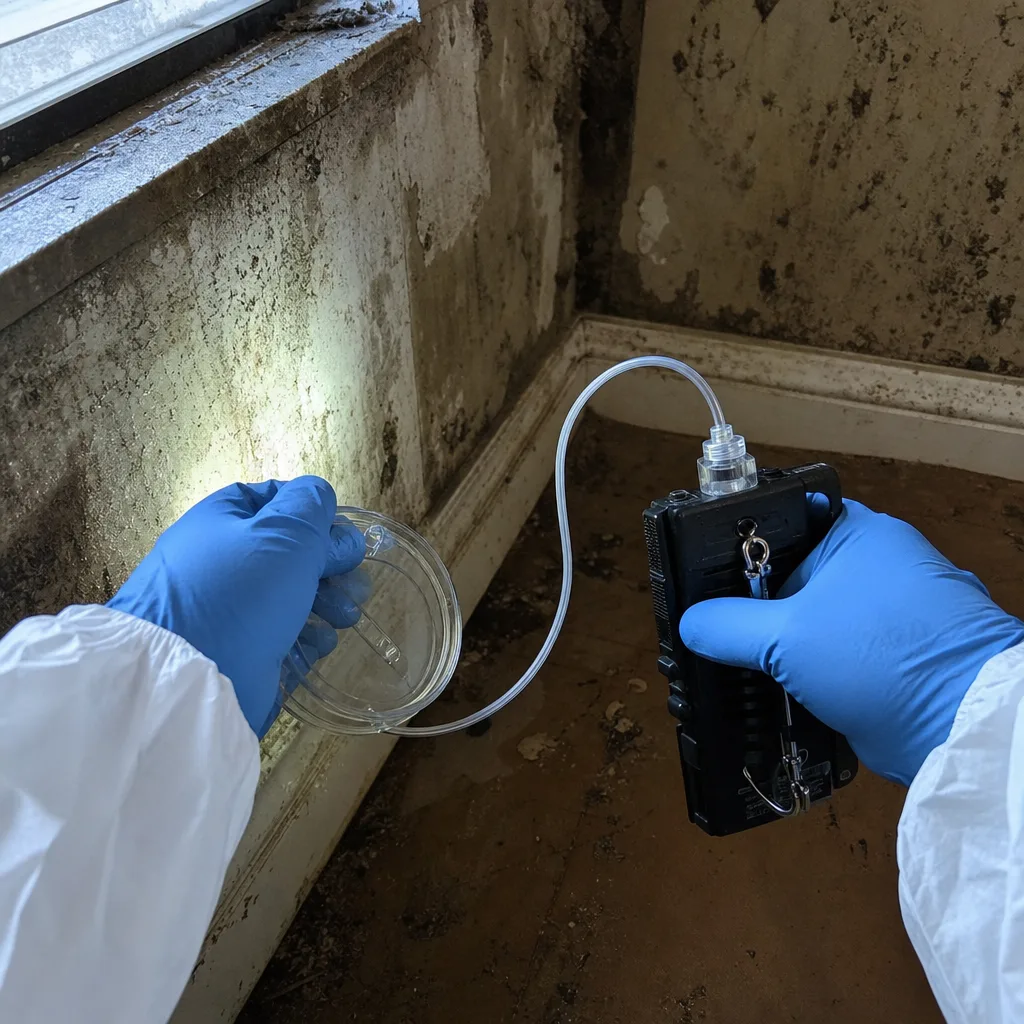
Business Interruption Minimization
Every day a Springfield Gardens business is closed costs revenue that insurance may or may not fully cover. We sequence work so that safe areas can reopen while mitigation continues in sealed-off sections. For a storefront on Springfield Boulevard, that can mean cleaning and restoring the retail floor while the basement undergoes Category 3 demolition and treatment behind containment barriers. We schedule around your hours, not ours.
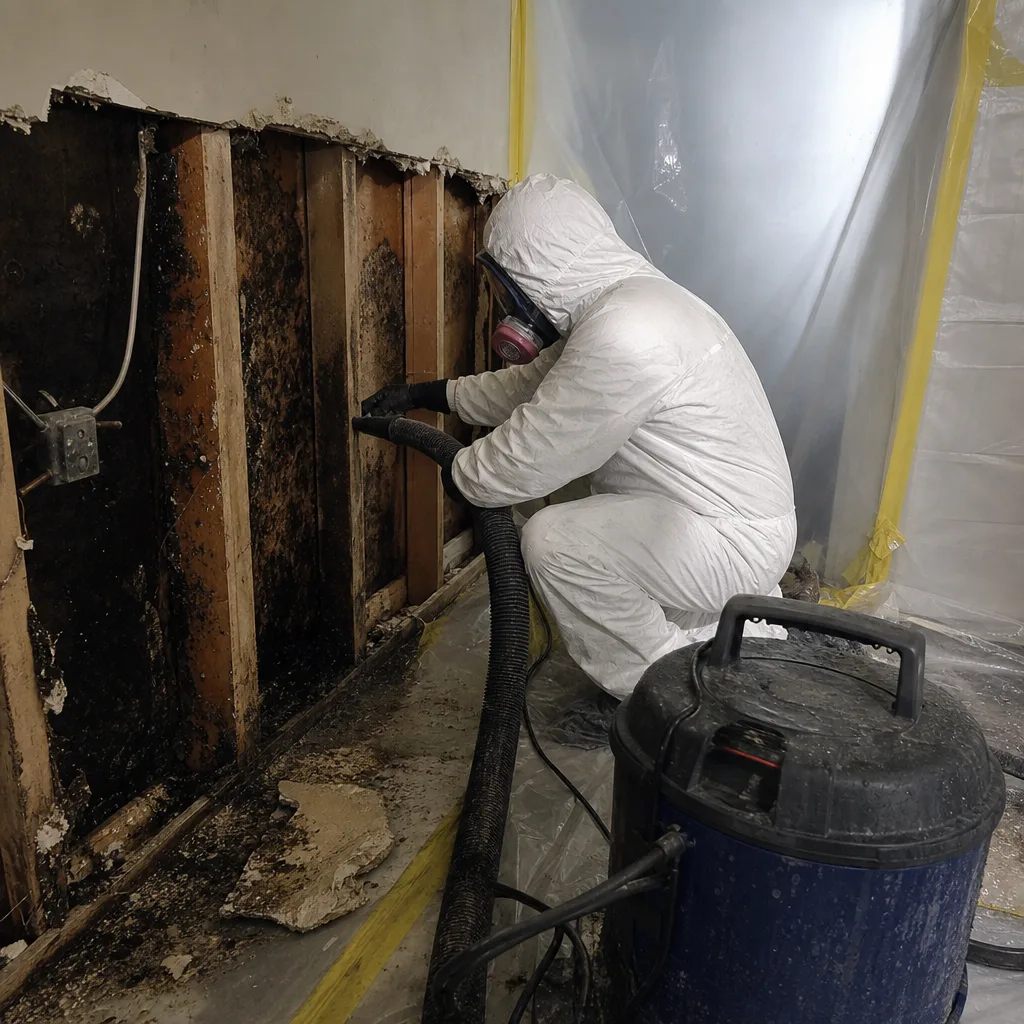
Document & Inventory Recovery
Commercial floods in Springfield Gardens do not just ruin drywall. They soak business records, tax documents, and inventory. We pack out salvageable materials the same day, stabilize documents through professional drying and freezing where appropriate, and coordinate cleaning for inventory items that can be restored. For a home-based business in a 1950s bungalow basement on 145th Road, that inventory is often the entire livelihood.
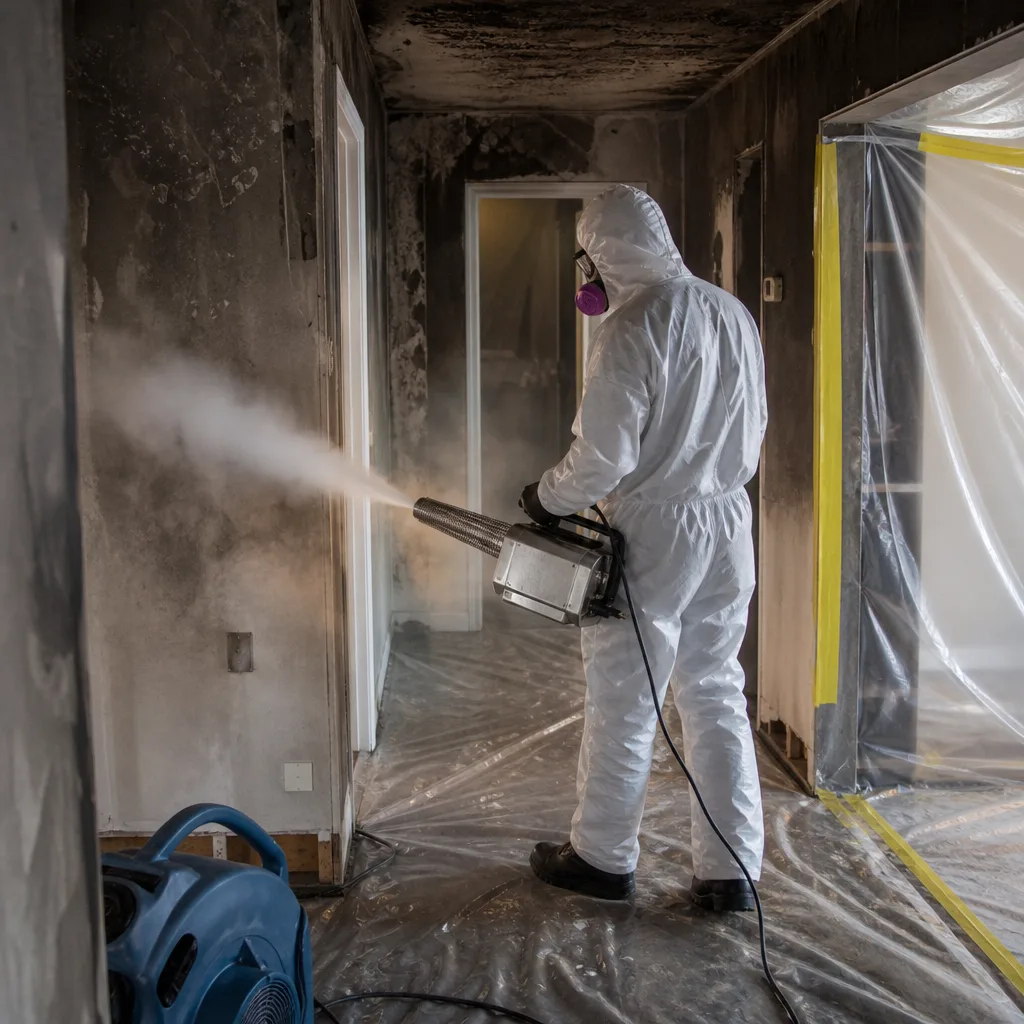
Office & Retail Restoration
Office buildings and retail spaces in Springfield Gardens range from 1920s mixed-use storefronts to post-war commercial conversions. We handle Category 1 supply-line breaks and Category 3 sewer backflow with the same standard: written classification, containment, documented drying, and a rebuild that matches the original construction. No corner-cutting on older masonry, no shortcuts on cast-iron plumbing that may have caused the loss in the first place.
Multi-Unit & HOA Restoration
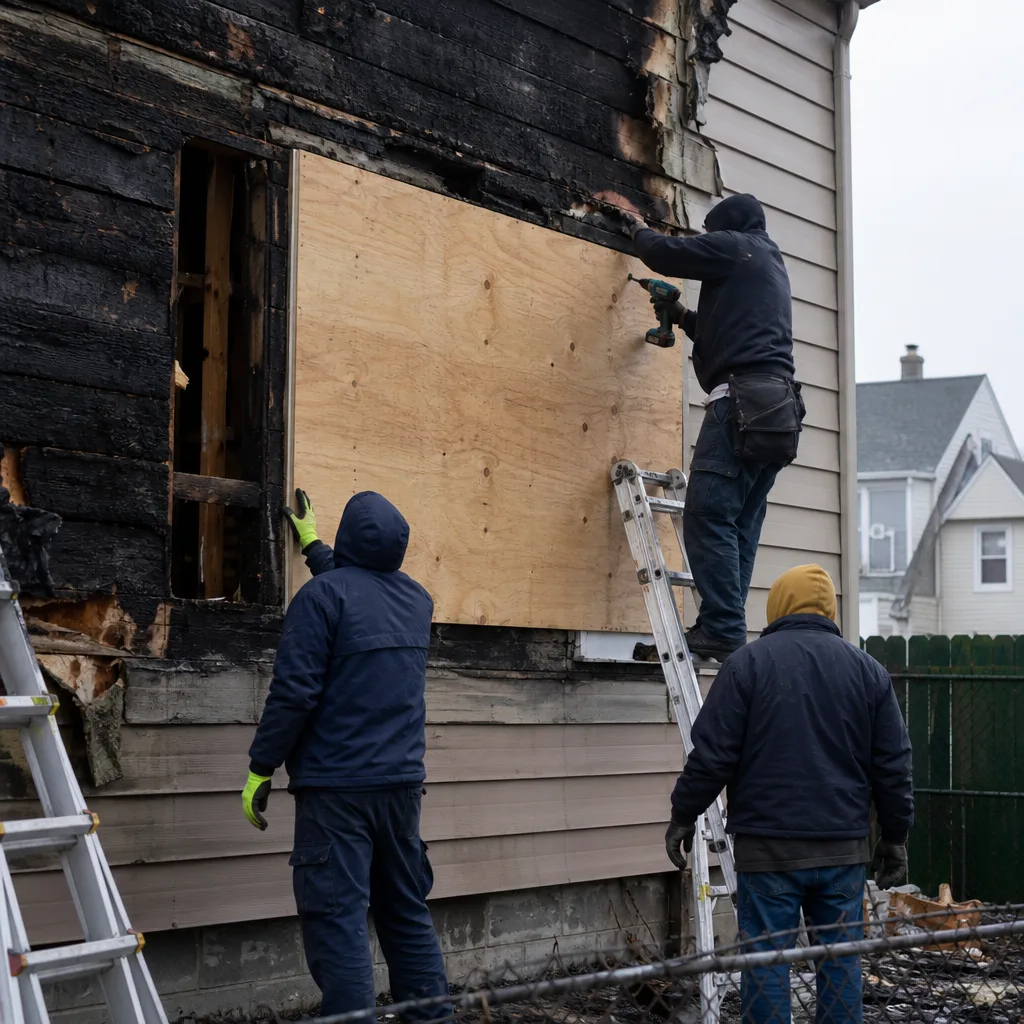
Row houses, semi-attached commercial units, and HOA-managed properties in Springfield Gardens require coordination beyond a single address. We communicate with property managers, board members, and individual tenants, and we document moisture migration across shared walls so one unit’s flood does not become the neighbor’s mold problem. Party-wall containment and shared utility shutdowns are built into the scope from day one.
Industrial Facility Cleanup
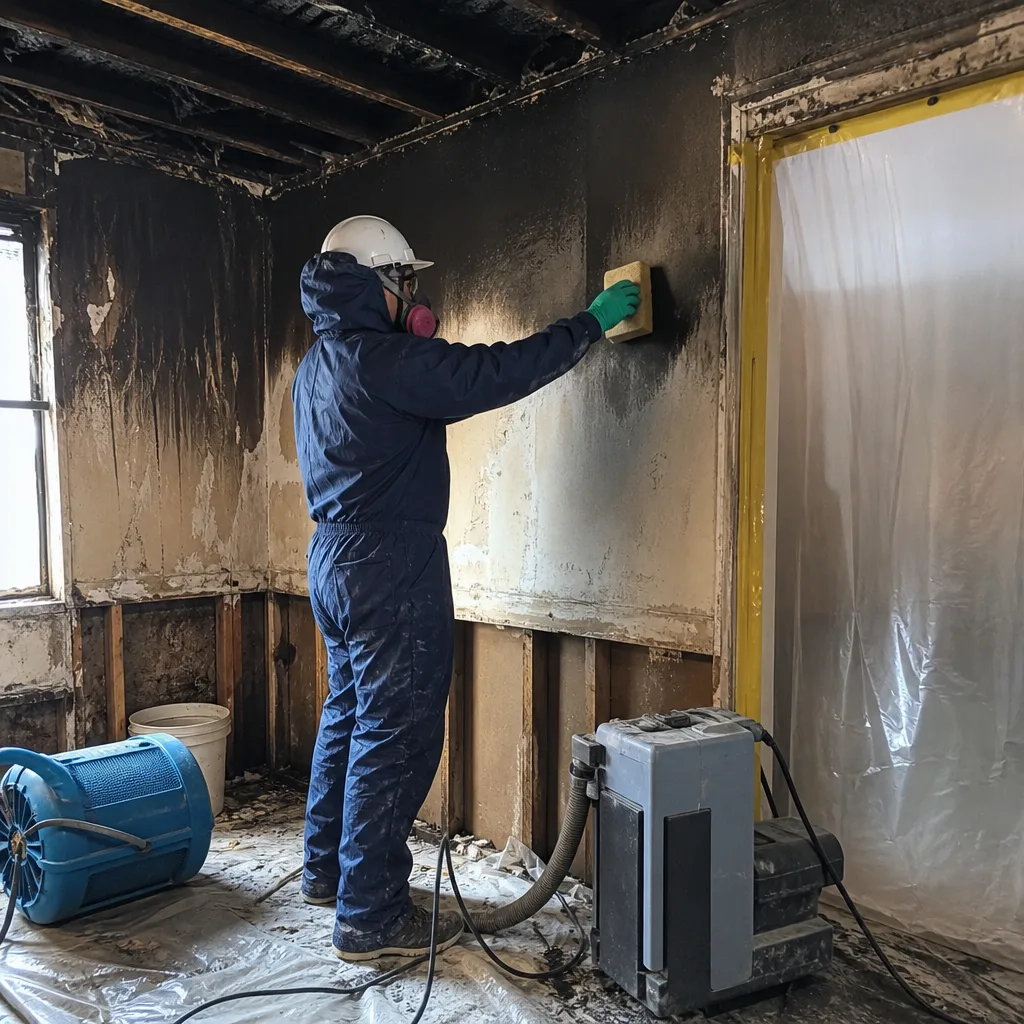
Industrial and warehouse spaces near the Belt Parkway and the Conduit face the same groundwater and sewer backflow risks as residential Springfield Gardens, with more square footage at stake. We bring high-volume extraction, industrial dehumidification, and large-scale containment. If the loss involves chemicals, fuels, or unknown substances, we assess and coordinate with environmental specialists before any cleanup proceeds.
What happens when you call
- 1
A real person answersNo phone trees - you reach a local pro.
- 2
You get an upfront price rangeHonest numbers before anyone is dispatched.
- 3
A background-checked tech heads outLicensed & insured, dispatched right away.
- 4
You approve before work beginsNothing starts until you say go.
Commercial Restoration Costs in Springfield Gardens, NY
A commercial water extraction and drying job in Springfield Gardens typically runs $3,500 to $9,000 for a standard basement flood under 1,000 square feet with Category 1 water. A Category 3 sewer backflow event in the same space adds antimicrobial treatment, content disposal, and containment, pushing the range to $8,000 to $21,000. Full basement demolition and rebuild after repeated flood events commonly lands between $18,000 and $45,000 depending on finishes and square footage. Large-loss commercial work across multiple units or industrial space starts at $40,000 and scales with the building. What moves the price most in Springfield Gardens specifically is the water category and whether the slab needs to be broken out for groundwater drainage corrections. Insurance covers most covered perils, and we bill your carrier directly. The free visual inspection is the fastest path to a firm, written scope. Call (518) 627-5878 to schedule one.
We Also Serve Cities Near Springfield Gardens
Our crews respond across southeastern Queens. We serve commercial clients in Rosedale, Cambria Heights, South Ozone Park, and Hollis with the same 45-minute commitment and live dispatch. If your property sits near the Springfield Gardens border, call us and we will confirm which response route reaches you fastest.
Serving Springfield Gardens, NY - Our Local Coverage Area
We’re based in the Springfield Gardens area and know this community well. Use the map below to see our service coverage - if you’re nearby, we can almost certainly help.
Springfield Gardens Commercial Restoration Questions, Answered
Why do commercial properties in Springfield Gardens often need Category 3 black-water cleanup after a rainstorm, not just water extraction?
Because Springfield Gardens sits on filled-in wetland with a high water table, and heavy rain frequently overwhelms the city’s combined sewer system. When that happens, sewage backflow pushes up through aging cast-iron drain lines and basement floor drains, turning what looks like rainwater into Category 3 black water. That classification requires full content disposal, antimicrobial treatment, and containment, not just extraction and drying. Call (518) 627-5878 if you suspect backflow; we classify the water before any cleanup proceeds.
How do you minimize business interruption for a storefront on Springfield Boulevard when a flood requires full basement demolition?
We sequence the work so demolition and drying happen behind containment while the retail floor stays operational wherever possible. That can mean sealing the basement with plastic barriers and negative air pressure, running drying equipment through existing openings, and scheduling noisy demolition outside business hours. The scope is written with your operating hours in mind from the first inspection.
What is the risk of mold growth in a Springfield Gardens commercial basement if flooding happened 48 hours ago?
Mold growth can begin within 24 to 48 hours of water intrusion, and Springfield Gardens’s high humidity and warm seasons accelerate it. A basement that flooded two days ago and has not been dried by a professional is very likely already growing mold behind drywall, under flooring, and inside the slab’s capillary system. We use moisture mapping and HEPA air scrubbing to locate and treat it, not just wipe what is visible.
Can aging cast-iron drain lines in a 1930s commercial building make restoration scope more complicated?
Yes. Original cast-iron drain lines from the 1920s and 1930s corrode internally over decades and often crack under floor slabs. When a sewer line collapses or cracks, every rain event can push groundwater and sewage into the building through the break. Restoration then requires pipe scoping, possible pipe replacement, and slab repair on top of the water mitigation, expanding the scope significantly.
How do you handle repeated flood claims on the same Springfield Gardens commercial property so insurance doesn’t deny coverage?
We document pre-loss condition and prior moisture damage every single time, with photography, moisture readings, and a written chronology of events. Repetitive flood claims on Springfield Gardens properties are common because of the geography, but adjusters need to see that each loss is a distinct event with a documented scope. We provide that paper trail and communicate directly with your carrier so the claim does not get bogged down by assumptions.
How quickly can a crew reach a commercial property in Springfield Gardens?
Our standard commitment is 45 minutes to most Springfield Gardens addresses from the time you call (518) 627-5878. During major storm events when many properties flood at once, we prioritize Category 3 black-water events and buildings with active business interruption.
Is Floodline Restoration Co. certified for commercial restoration work?
Yes. Our technicians hold IICRC certifications including WRT (Water Restoration Technician), FSRT (Fire & Smoke Restoration Technician), and AMRT (Applied Microbial Remediation Technician). They are background-checked, uniformed, and trained to RIA and IFA standards. Curt Bowman founded this company in 2010 and has built every crew around those credentials.
What should I do in the first 30 minutes after discovering a commercial flood in Springfield Gardens?
Shut off power to the affected area if you can do so safely, move salvageable documents and inventory to higher ground, and call (518) 627-5878. Do not wade through standing water, especially if a drain may have backed up from the sewer system. Take photos from a safe distance if you are able. Then let our crew handle classification, extraction, and documentation from there.
Written by Curt Bowman, Owner at Floodline Restoration Co., serving Springfield Gardens and surrounding Queens communities.