
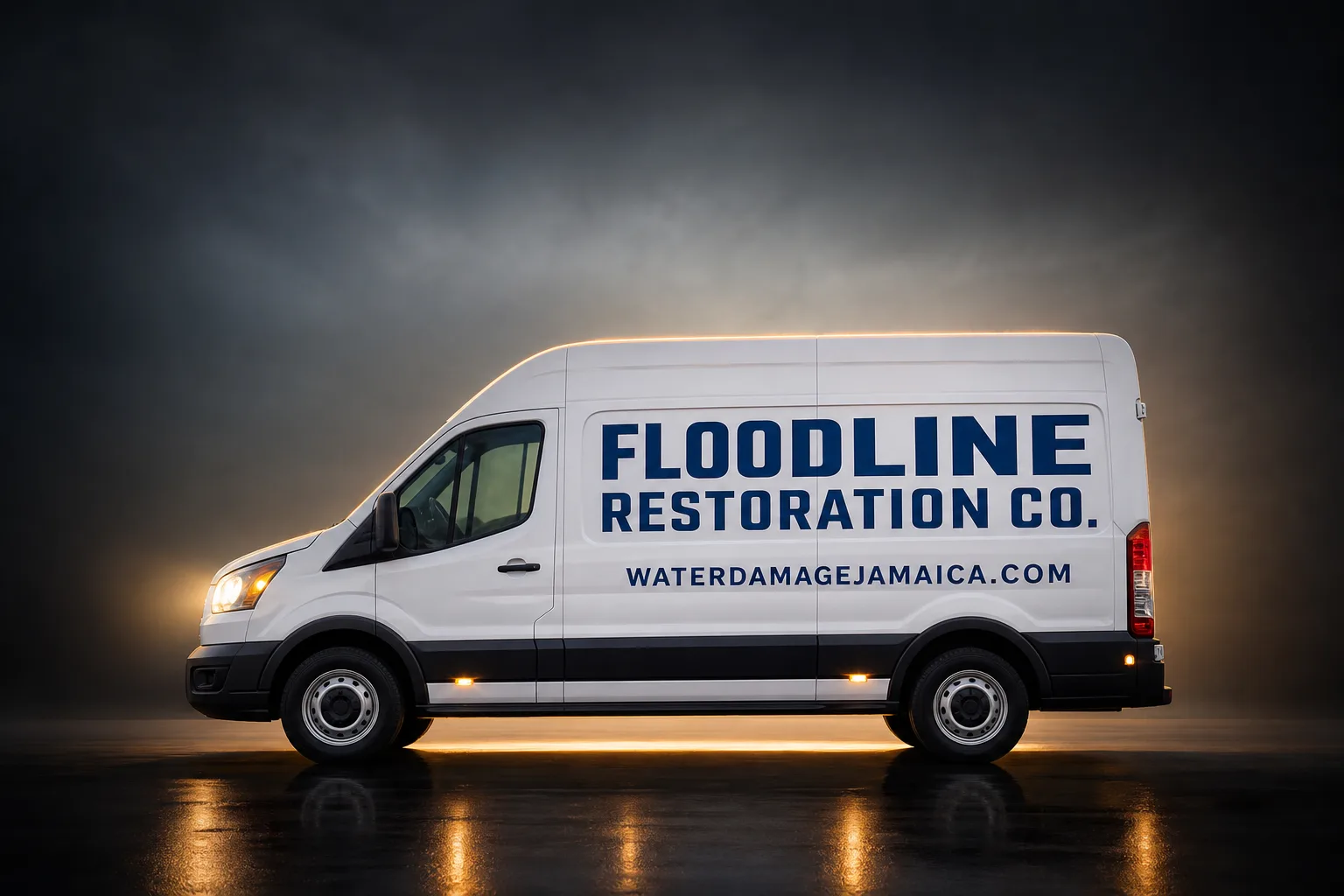
Free visual inspection and a written scope of work before any mitigation begins - photos, moisture readings, and drying logs go in your claim file
The scope we write is the scope we bill. Anything new gets shown to you, in writing, before we touch it.
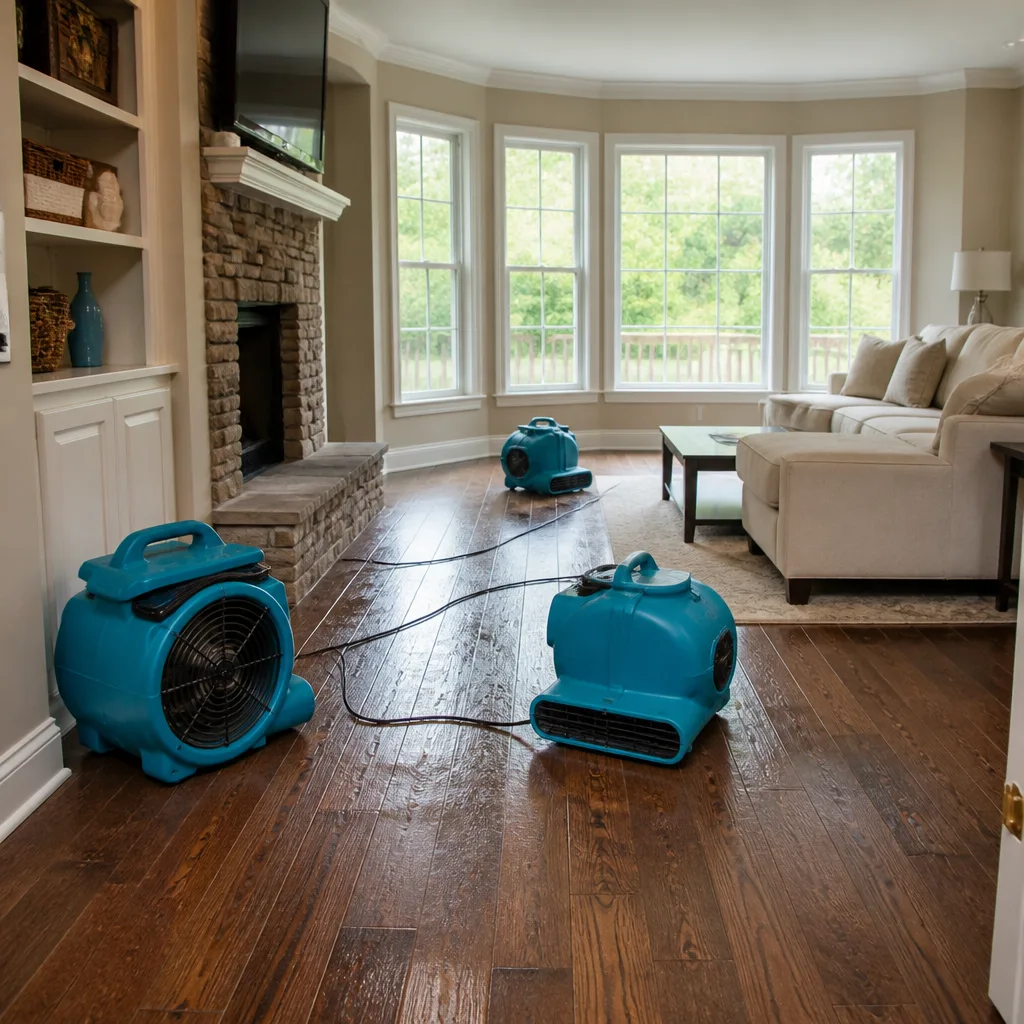

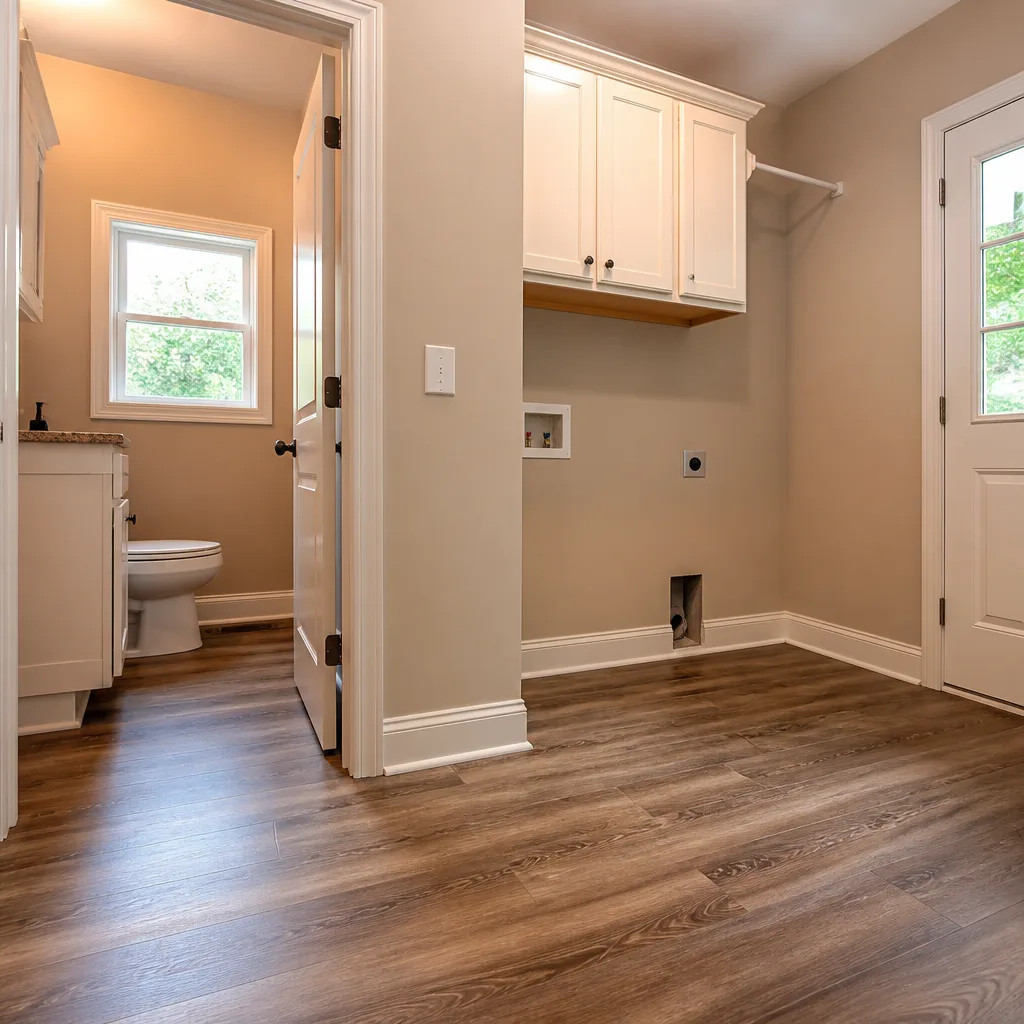
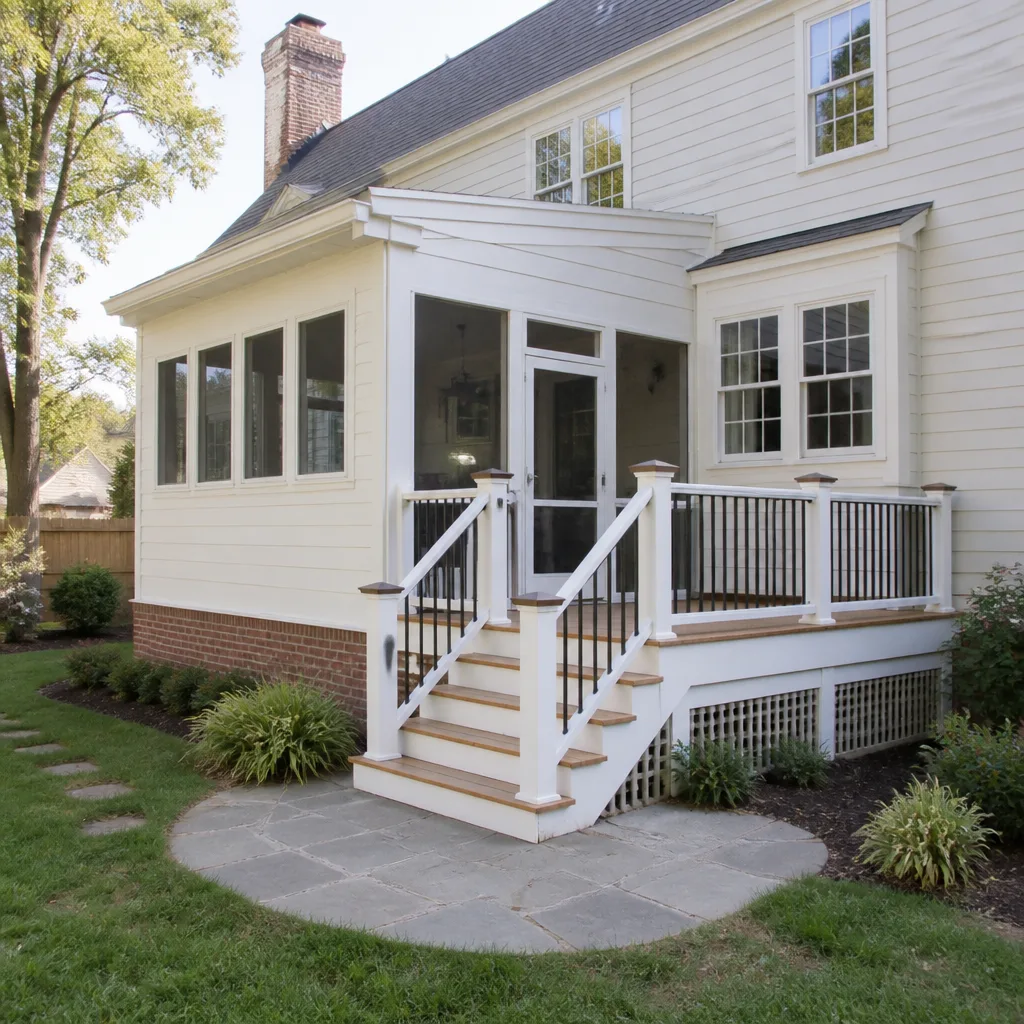
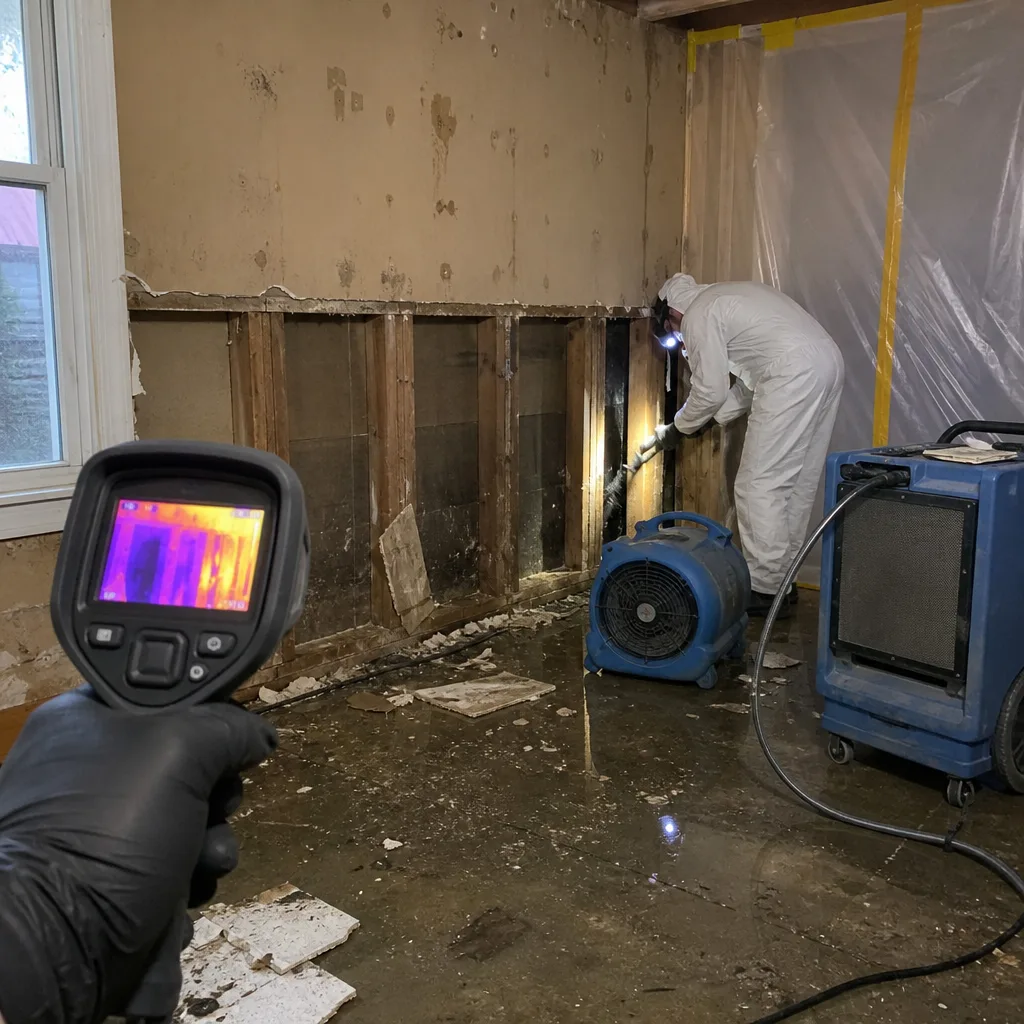 Before
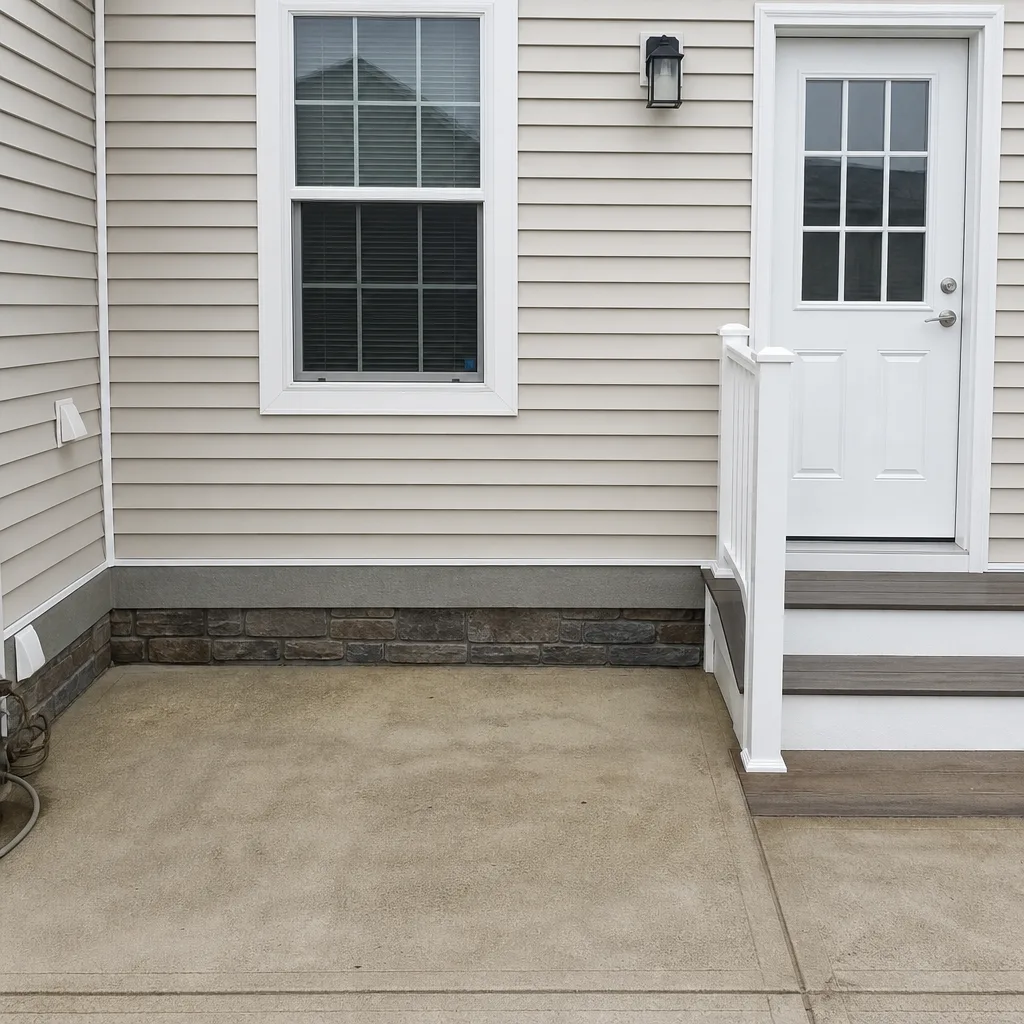 After
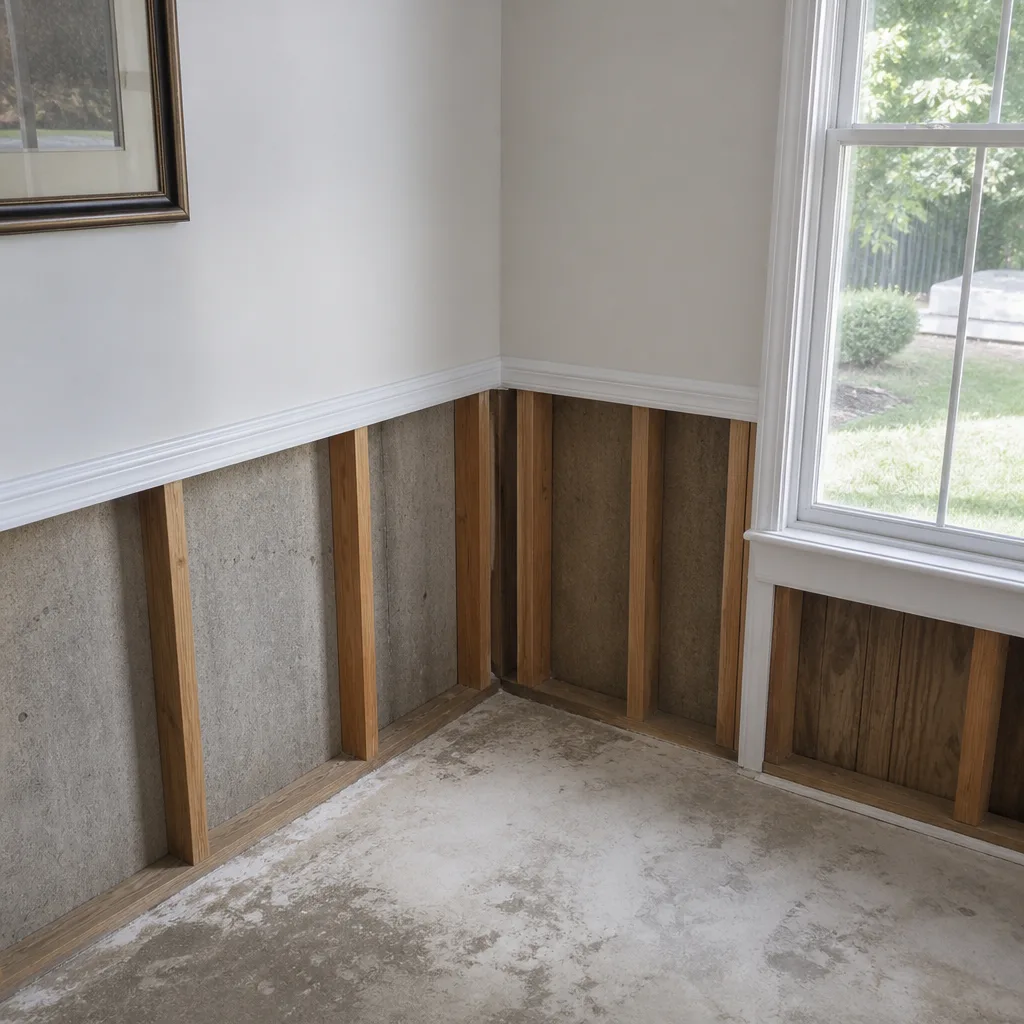
After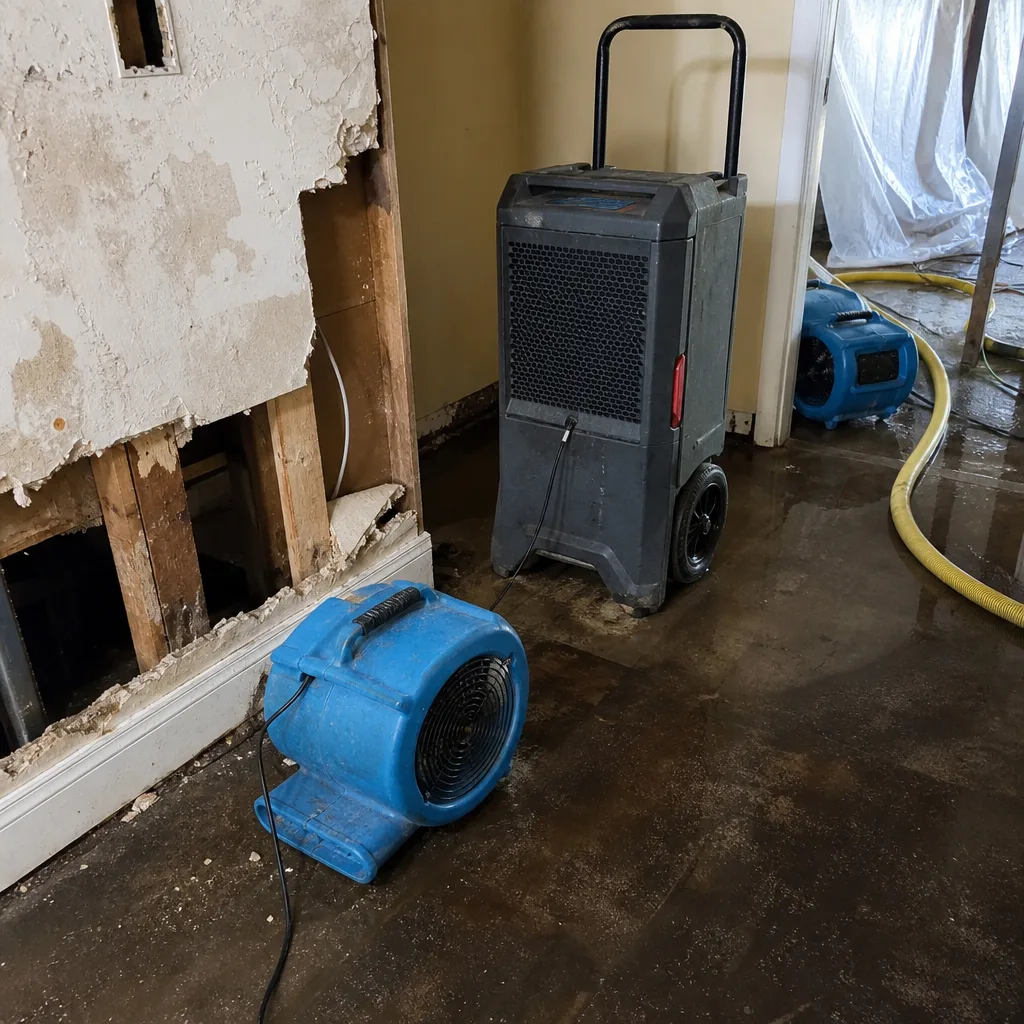 Before
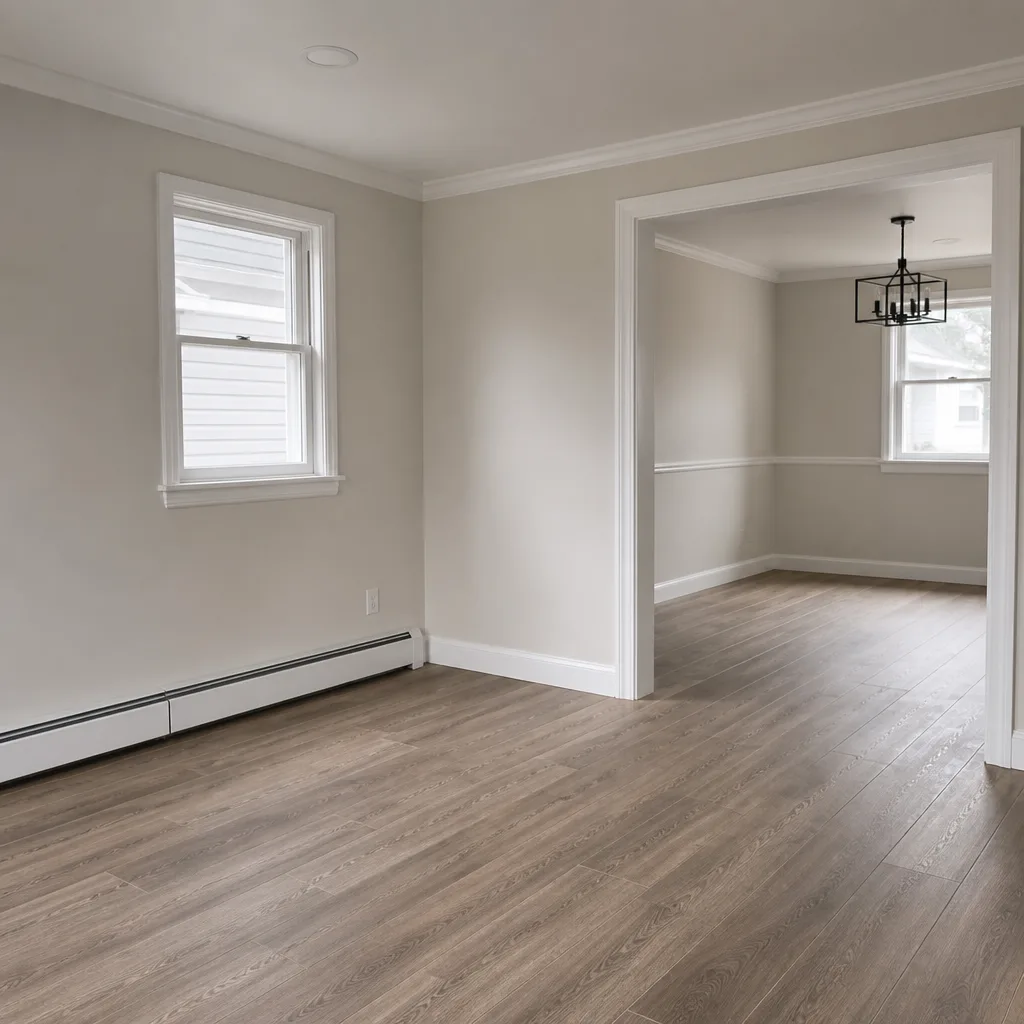 After
After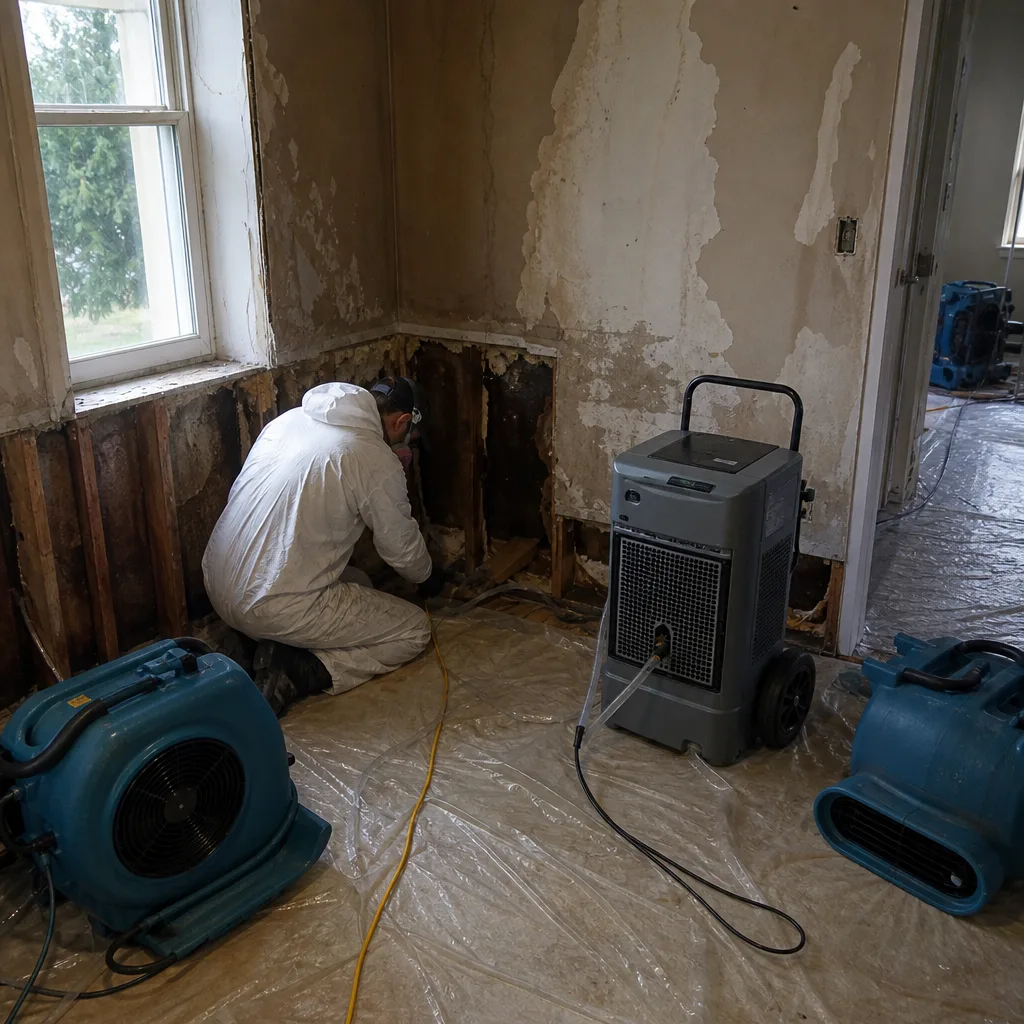 Before
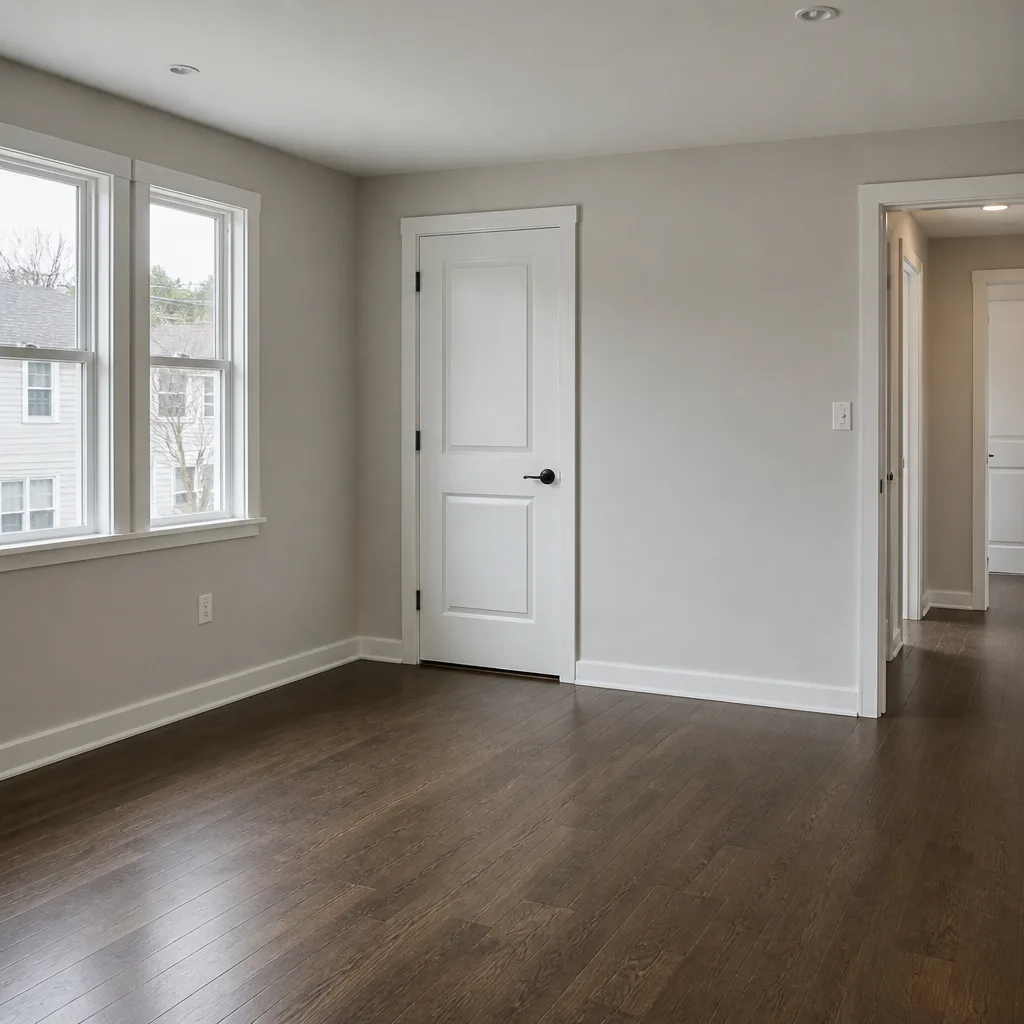 After
After24/7 Emergency Storm & Disaster Restoration in Springfield Gardens
Storm & Disaster Restoration in Springfield Gardens means answering the phone when the power is out, the basement is filling, and nobody else is picking up. Our live dispatchers in Springfield Gardens answer 24 hours a day, every day of the year, and a certified crew is dispatched into the neighborhood right away; call (518) 627-5878 now. The first hour after a storm determines how much of your home can be saved versus replaced. We arrive fast, assess the damage with a free visual inspection, and get extraction and board-up running before mold, sewage, and structural damage spread through your Springfield Gardens home. When a nor’easter knocks out power and the sump pump gives out at 2 a.m., you get a live person on the phone, not a recording.
Understanding Storm & Disaster Restoration Severity in Springfield Gardens Properties
Storm damage in Springfield Gardens rarely behaves like a clean water spill. Most homes here were built between the 1920s and 1950s as detached or semi-detached capes, brick bungalows, and wood-frame colonials with basements that sit nearly level with the local water table. When a storm hits, surface water mixes with water pushed up through the slab and into aging cast-iron drain lines that can’t handle combined-sewer backflow. The result is Category 3 black water, a contamination level that requires full antimicrobial treatment, content disposal where porous materials are involved, and containment before drying can begin. We moisture-map every flood event in these older homes, because water travels through 70-year-old framing, behind plaster, and under vinyl tile in ways that an extraction-only company misses. We don’t guess where the water went; we measure every reading, log it daily, and hold drying in place until the structure meets the dry standard, not just the surface.
Why Springfield Gardens Property Owners Choose Floodline Restoration Co.
- 45-minute response commitment. When you call about a storm emergency in Springfield Gardens, we commit to having a crew at your door within 45 minutes of our first live phone conversation.
- 24/7 live answer, every time. A real person in our dispatch office answers at 2 a.m., on holidays, and during widespread outages when you can’t reach anyone else. No automated phone tree, no callback promise.
- IICRC-certified crews. Our technicians hold WRT, FSRT, and AMRT certifications. They’re background-checked, uniformed, and trained on the same professional standards hospitals and municipalities require.
- Free visual inspection. Before any work begins, we inspect the full loss in your Springfield Gardens home and give you a clear scope in writing. No pressure, no hidden agenda.
- Direct insurance billing. We work directly with your adjuster, submit photos and moisture logs, and bill your carrier so you’re not playing messenger between two parties.
- One team from extraction to reconstruction. The same Floodline Restoration Co. crew that extracts the water, dries the structure, and treats the Category 3 contamination is the crew that rebuilds. Your project never gets handed to strangers.
Our Storm & Disaster Restoration Process
1. Inspection & Assessment
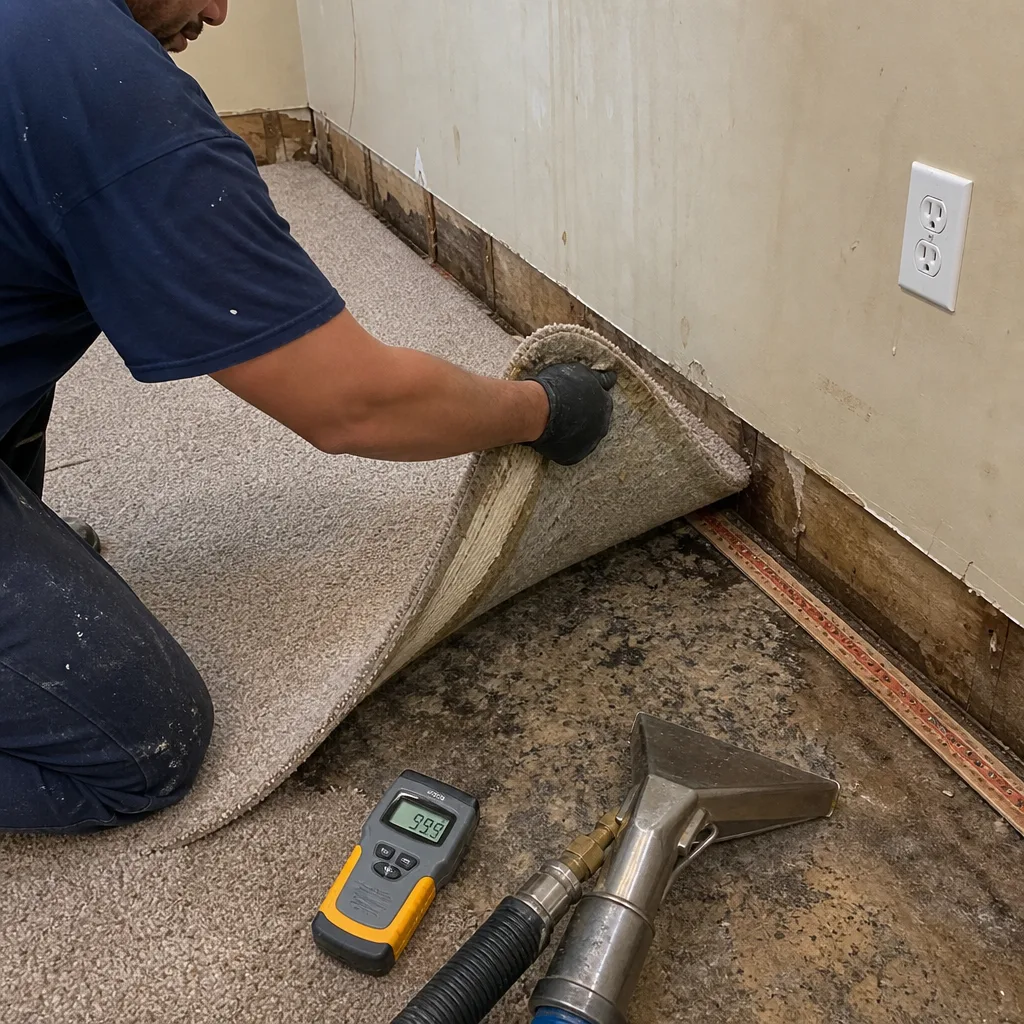
Our crew arrives at your Springfield Gardens home, walks the entire loss with you, and uses thermal imaging and moisture-mapping hygrometers to document where water has traveled behind walls, under flooring, and into structural framing. We classify the water category correctly, which matters for your insurance claim and your family’s safety.
2. Extraction/Stabilization
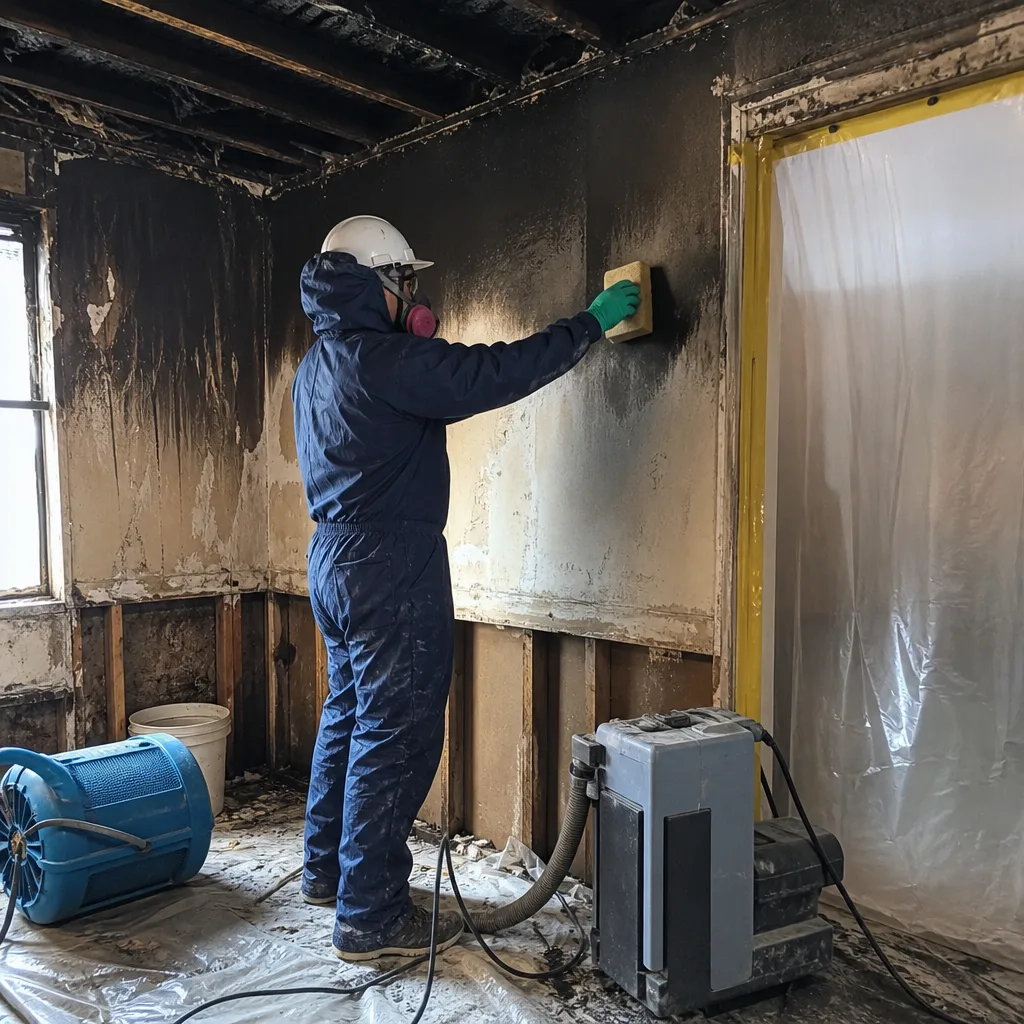
For storm and flood events, we stabilize the home first: board-up broken windows, tarp over roof damage, and extract standing water with professional-grade extraction units. For Category 3 sewage backflow, we set containment and begin antimicrobial treatment before drying, because trapped sewage water creates an immediate health hazard.
3. Drying & Dehumidification
We position Dri-Eaz and Phoenix dehumidifiers and XPOWER air movers based on the moisture map, not guesswork, and return daily to take readings and adjust equipment. In Springfield Gardens’ older homes, this step often takes longer than newer construction because original framing absorbs water more aggressively.
4. Cleaning & Sanitization
Every affected surface gets cleaned and sanitized. On Category 3 events, we perform full antimicrobial treatment, HEPA air scrubbing, and disposal of contaminated porous materials like carpet, drywall, and upholstery that cannot be safely restored.
5. Specialty Treatment & Repairs
After drying and sanitization, we address the specific damage a Springfield Gardens storm caused: re-grading exterior drainage on filled-wetland lots, replacing failed sump pumps, repairing sewage backflow damage, and restoring wind-damaged doors, windows, and trim.
6. Structural Repairs & Reconstruction
Our in-house reconstruction team replaces drywall, insulation, flooring, cabinetry, and any structural framing that absorbed water. Because the same crew handled the extraction and drying, there’s no gap between “dry” and “done,” and no second crew has to guess what happened inside your walls.
Need Emergency Storm & Disaster Restoration in Springfield Gardens Now?
Crews minutes away, answering live 24 hours a day. The sooner we start, the less it costs.
Working With Your Insurance Company
Storm and flood claims in Springfield Gardens are complicated, because many properties here have filed multiple damage claims over the years, and carriers scrutinize each one closely. We take that weight off your plate. From the first hour, we document the loss with photos, moisture readings, and a written scope that matches the carrier’s expected format. Our team communicates directly with your adjuster, answers their questions with the technical detail they need, and handles direct insurance billing when your policy allows. You’re not responsible for translating between a restoration company and an insurance carrier, and you’re never surprised by a bill you didn’t agree to in writing. That’s the square deal we’ve built Floodline Restoration Co. around for more than 42 years.
What We Provide Your Insurer
- Thorough documentation of the loss
- Photos of all damage, room by room
- Moisture readings and drying logs
- A detailed, line-item scope of work
- Direct coordination with your carrier
Built for Springfield Gardens’s Loss Calendar
Springfield Gardens doesn’t have a single storm season; it has a year-round calendar of threats that rotate with the weather. January and February bring deep freezes that burst supply lines in 1920s and 1930s homes where insulation is thin and pipes run through unheated basements. Spring thaws push groundwater up through basement slabs, especially on the filled-wetland lots that dominate southeastern Queens. Summer thunderstorms dump heavy rain faster than the combined sewer system can handle, sending sewage backflow into basements across the neighborhood. Fall nor’easters and hurricane remnants drive storm surge inland from Jamaica Bay and into low-lying residential streets. Every one of these events requires the same disciplined response: assess the water category correctly, extract, map the moisture, dry to the standard, treat for contaminants, and repair the structural damage. In Springfield Gardens, that’s not a seasonal business; that’s the job.
Storm & Disaster Restoration Across Springfield Gardens’s Neighborhoods
Springfield Gardens is a patchwork of distinct residential blocks, and each one presents its own storm-restoration profile. Homes along 147th Avenue and around Springfield Boulevard sit particularly low, closer to the water table than properties on higher ground near Rockaway Boulevard. The brick bungalows and wood-frame capes west of Guy R. Brewer Boulevard were mostly built before 1935, and many still have original cast-iron drain lines that fail during combined-sewer overload. Around the Brookville Park edge, where the terrain flattens toward the old wetland, we see a lot of finished basements with reversed exterior drainage, which sends storm water toward the foundation instead of away from it. Near 218th Street and the Springfield Gardens border with Rosedale, semi-detached homes often share a party wall, which means a flood that starts in one finished basement can migrate through the common wall into the neighboring property. When we respond to a Springfield Gardens address, we already understand the building type, the drainage pattern, and the likely water path before the truck stops.
Specialized Storm & Disaster Restoration Services We Offer in Springfield Gardens
Storm Damage Cleanup
After a nor’easter or a heavy thunderstorm, Springfield Gardens homes get hit with downed branches, shattered glass, soaked household contents, and wind-driven debris. We remove the debris, secure the home, extract water, and start the drying process, all in the same visit. Then we walk the property with you and build the written scope for any structural repairs or content restoration that follows.
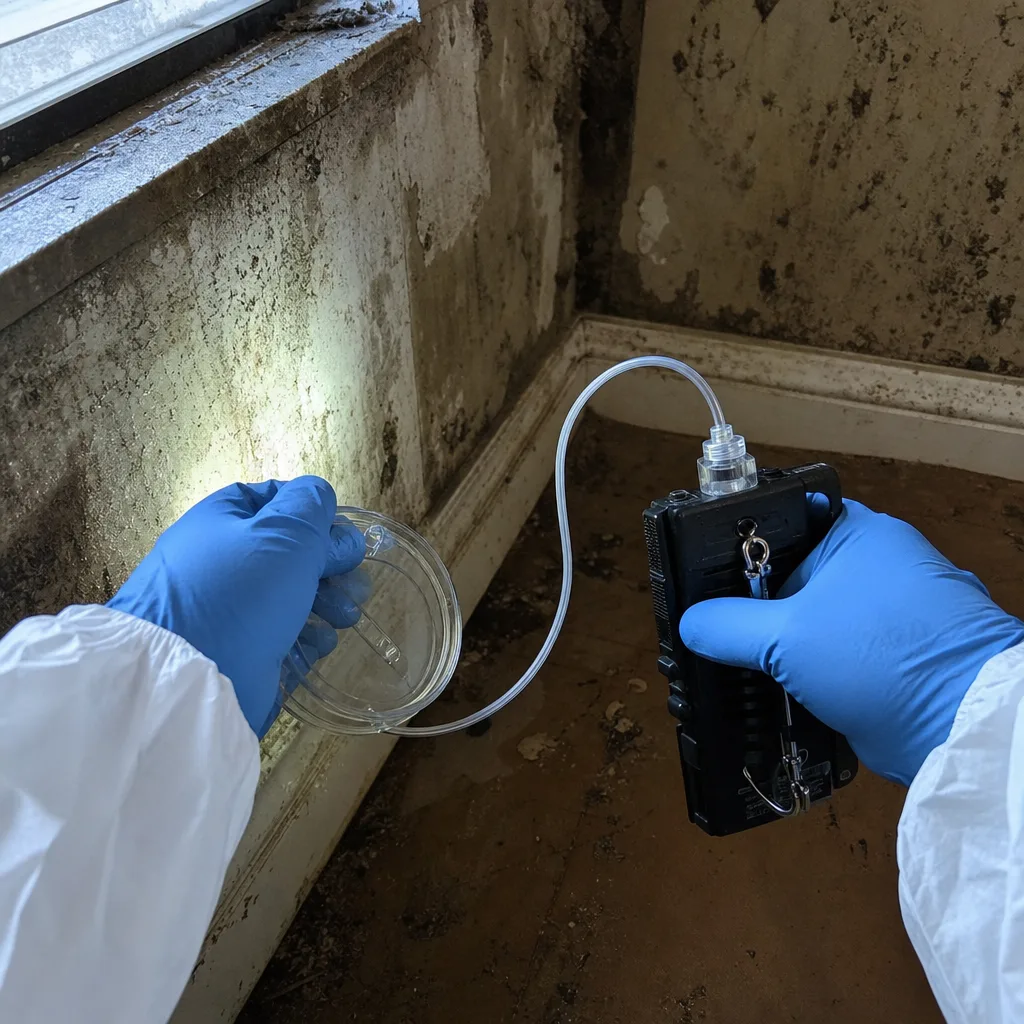
Flood Damage Restoration
Flooding in Springfield Gardens often comes with combined-sewer backflow, which means the water is not just wet, it’s contaminated. We classify the water category in front of you, set containment where Category 3 is present, and perform antimicrobial treatment before drying begins. On older homes where framing absorbed water for hours before the call, we monitor daily moisture readings until every reading meets the dry standard.
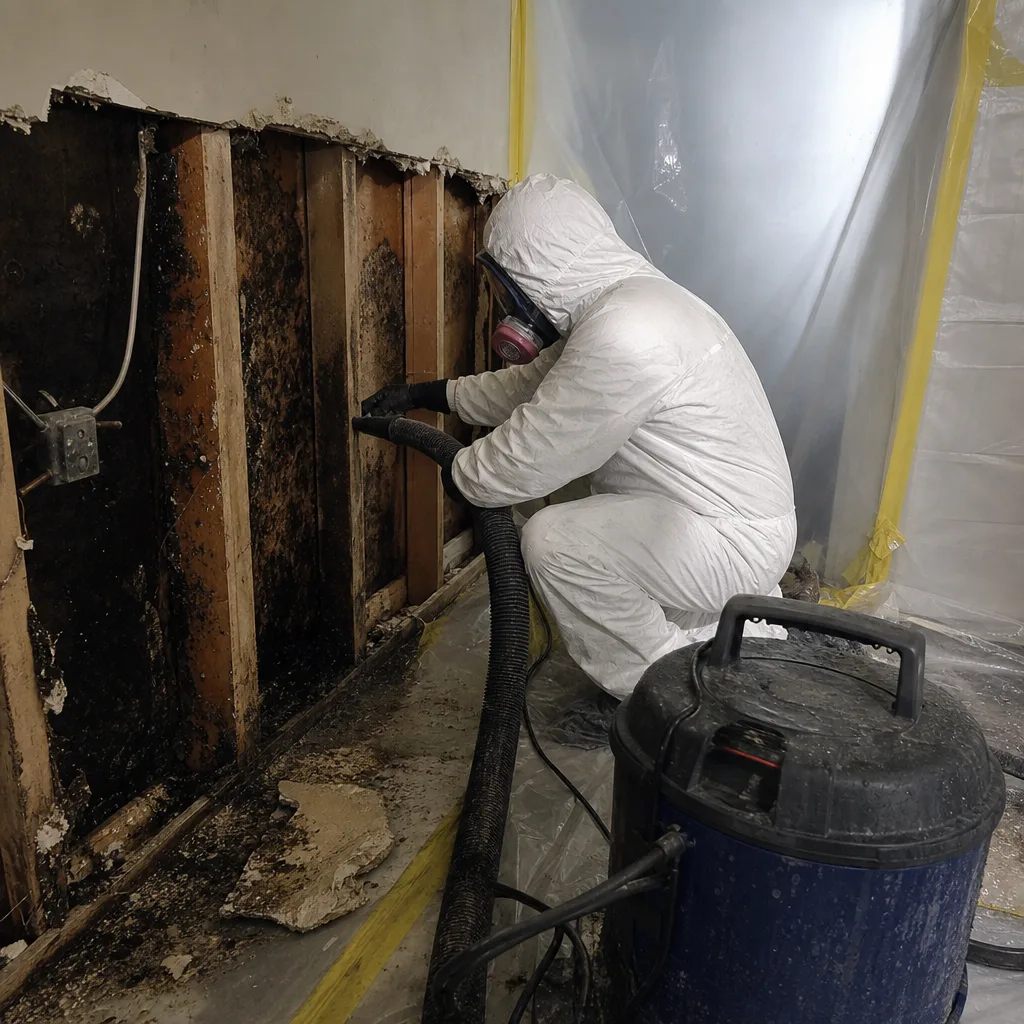
Emergency Board-Up
When a storm breaks a window, blows in a door, or tears off a section of roof, your Springfield Gardens home is open to weather, animals, and anyone who walks by. Emergency board-up is not a temporary patch; it’s structural stabilization that keeps the house enclosed and secure until full repair. We arrive with the right materials on the truck and get the opening closed the same visit.
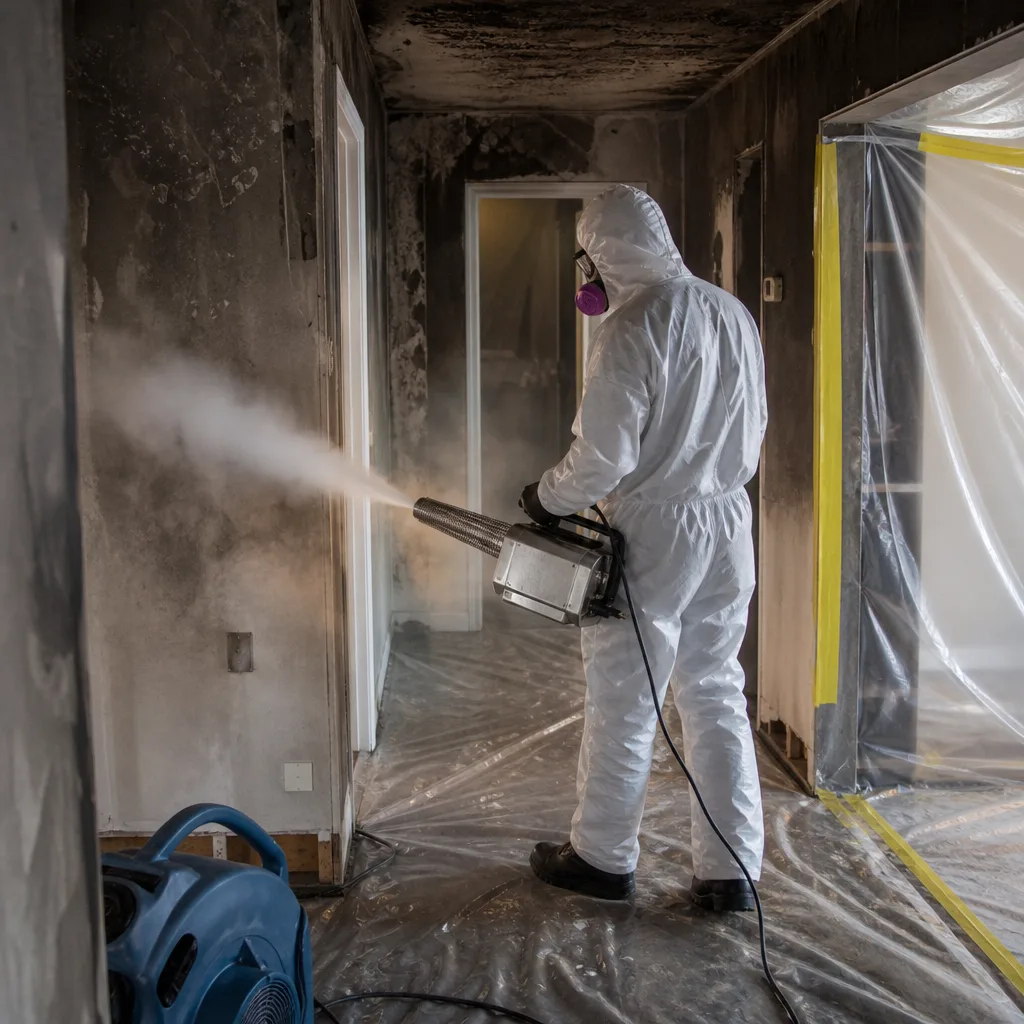
Roof Tarping
Wind damage on Springfield Gardens roofs often looks small from the ground but hides missing shingles, broken flashing, and lifted decking that lets rain into the attic and walls. We tarp the roof, seal the penetrations, and document everything for your carrier. The tarp is a temporary measure; the real fix is a roof repair done to code, and our reconstruction team handles that in-house.
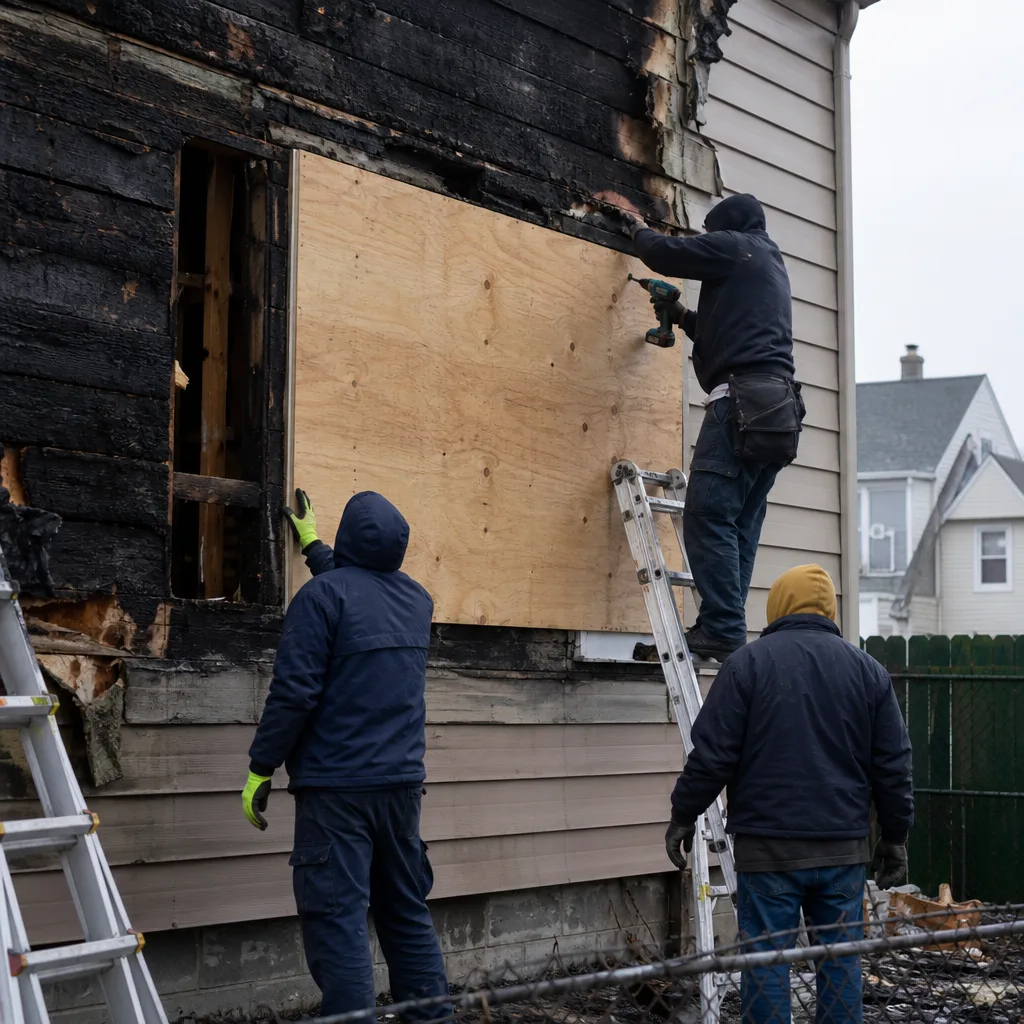
Debris Removal
Storm debris in Springfield Gardens can include tree limbs, soaked drywall, ruined carpet, and contaminated contents that carry sewage or mold. We remove it all, dispose of it properly, and log the contents for your insurance claim. No Springfield Gardens homeowner should be hauling Category 3 waste to the curb in contractor bags.
Wind Damage Repair
Wind-rated doors and impact-resistant windows are not just code upgrades in this ZIP code; they’re what keeps the house standing when the next storm hits. We repair and, where needed, replace storm-damaged doors, frames, siding, and roof components, and we can discuss wind-rating upgrades that make sense for your specific exposure. In a FEMA-designated flood zone, that conversation can also affect your flood insurance premium.
What happens when you call
- 1
A real person answersNo phone trees - you reach a local pro.
- 2
You get an upfront price rangeHonest numbers before anyone is dispatched.
- 3
A background-checked tech heads outLicensed & insured, dispatched right away.
- 4
You approve before work beginsNothing starts until you say go.
Storm & Disaster Restoration Costs in Springfield Gardens, NY
Storm restoration pricing in Springfield Gardens depends heavily on the water category, the square footage affected, and whether structural drying or rebuild work is required. A straightforward storm water extraction with drying from a Category 1 roof leak typically runs $1,200 to $3,600. A Category 2 event with some contamination, like a washing machine overflow that soaked through the floor, often lands between $2,800 and $6,500. A Category 3 sewage-backflow flood in a finished basement, which is the most common storm scenario in this neighborhood, usually runs $4,500 to $12,000 when it includes antimicrobial treatment, content disposal, and full structural drying. Emergency board-up with tarping typically falls in the $500 to $1,500 range, and wind damage repair starts around $800 and moves up with the scope. If you have flood insurance through NFIP or a private carrier, much of this cost is typically covered. We give you a free visual inspection and a written scope before any work starts, so you know exactly what the number is and what your carrier is being billed. Call (518) 627-5878 for a free inspection and a straight answer on what your Springfield Gardens storm restoration will cost.
We Also Serve Cities Near Springfield Gardens
Our crews respond to storm and disaster emergencies throughout southeastern Queens. We serve property owners in Rosedale, Cambria Heights, South Ozone Park, and Hollis, with the same live 24/7 dispatch, certified technicians, and written scope of work we provide in Springfield Gardens. If you’re in one of these neighboring communities and need storm restoration now, call (518) 627-5878.
Springfield Gardens Storm & Disaster Restoration Questions, Answered
How do I know if my Springfield Gardens basement flood is Category 1, 2, or 3 water?
Category 1 is clean water from a supply line or rainwater that hasn’t touched contaminants; Category 2 has some contamination, like a washing machine overflow or a sump pump that backed up with clear groundwater; Category 3 carries sewage, storm sewer backflow, or any water that has been in contact with human waste or harmful bacteria. In Springfield Gardens, storm-driven combined-sewer backflow is Category 3 by definition, because the municipal system mixes stormwater with sewage. If you’re not certain, treat it as contaminated and call (518) 627-5878 for a professional classification before touching the water.
Why do so many Springfield Gardens homes flood even when it’s not a hurricane?
Springfield Gardens was built on filled-in wetland, and many lots now have reversed drainage that pitches water toward the foundation rather than away from it. Add a high water table, an aging combined sewer system, and 1920s-era slab construction, and you get nuisance flooding during heavy rainstorms, even without coastal surge. The water pushes up through the slab, the sump pump fails, and the basement fills. This is the most common flood pattern we see in the neighborhood, and it’s why we always re-grade exterior soil and correct drainage after every sump pump replacement. Call (518) 627-5878 for a free inspection.
How quickly can mold start after a storm floods my Springfield Gardens basement?
Mold can begin growing within 24 to 48 hours after water intrusion, especially in the humid, enclosed conditions of a Springfield Gardens basement. In older homes with original wood framing, mold moves faster because the framing absorbs water deeply and holds moisture behind plaster and paneling. That’s why we extract and start drying the same visit, and why we never skip the daily moisture readings on these older structures. If you’re already seeing mold or smelling must, call (518) 627-5878 and we’ll assess whether containment and remediation are needed.
Do I need a permit to repair wind damage or reinforce doors in Springfield Gardens?
Springfield Gardens is part of New York City, and the Department of Buildings generally requires permits for structural repairs, including roof decking, load-bearing framing, and door replacement when the opening size changes or the work involves structural components. A licensed contractor can pull the permit as part of the repair scope. Wind-rating upgrades for exterior doors may also require DOB approval depending on the building classification. We handle the permit paperwork on reconstruction work and make sure every repair meets current City wind-load and flood-zone requirements. Call (518) 627-5878 and we’ll tell you what your specific repair will require before work begins.
What does emergency board-up involve after a storm hits my Springfield Gardens home?
Emergency board-up means securing every opening a storm created: broken windows, blown-in doors, roof punctures, and damaged garage openings. We use plywood, structural fasteners, and tarps to close the openings, keep rain and animals out, and prevent further damage while you file a claim and we build the repair scope. Board-up is a same-visit service, not a next-day appointment. If your Springfield Gardens home is open to the weather, call (518) 627-5878 now and a crew will be dispatched immediately.
How fast can a crew actually get to my Springfield Gardens home?
We commit to a 45-minute response time from live phone call to crew arrival at your Springfield Gardens address, 24 hours a day. In severe widespread storm events, when every restoration company in the borough is at capacity, we still answer live and give you an honest time, not a voicemail. Our dispatch team coordinates crews from the neighborhood and surrounding southeastern Queens, so we’re never an hour and a half away when the basement is filling. Call (518) 627-5878 now if you’re in the middle of a storm emergency.
Will my insurance cover storm and flood restoration in Springfield Gardens?
Most standard homeowners policies in New York cover wind damage, rain intrusion through a wind-damaged opening, and sump pump failure, subject to your deductible and policy limits. Flood damage from rising water, storm surge, or combined-sewer backflow typically requires a separate flood insurance policy, through NFIP or a private carrier. Springfield Gardens sits in FEMA-designated flood zones, so many homeowners here already carry flood coverage. We document every loss from the first hour and coordinate directly with your adjuster, which makes the claim process materially smoother. Call (518) 627-5878 and we’ll help you understand what your policy covers before you make any decisions.
Can we stay in our Springfield Gardens home during storm restoration?
It depends on the scope. For a small Category 1 or Category 2 loss isolated to one room, you can usually stay in the unaffected parts of the house while drying equipment runs. For Category 3 sewage backflow or extensive wind damage, we often recommend temporary relocation until containment, antimicrobial treatment, and structural drying are complete, because the home is not safe or comfortable to live in during that phase. We’ll give you a clear recommendation in writing during the initial inspection, and your insurance policy may cover temporary housing costs. Call (518) 627-5878 and we’ll walk the loss with you and give you the straight answer.
Serving Springfield Gardens, NY - Our Local Coverage Area
We’re based in the Springfield Gardens area and know this community well. Use the map below to see our service coverage - if you’re nearby, we can almost certainly help.
Storm Restoration Done Right in Springfield Gardens
Springfield Gardens homes don’t get second chances when it comes to storm water. The older framing, the high water table, the combined-sewer backflow, and the chronic flood history of this neighborhood all mean that a rushed or under-scoped restoration will fail again, often within a year. We built Storm & Disaster Restoration at Floodline Restoration Co. to handle the full cycle: the emergency board-up, the Category 3 extraction, the antimicrobial treatment, the daily moisture readings, the drainage correction, and the rebuild. The line the water left on your wall is where we start, and we don’t walk away until it’s dry, treated, and rebuilt to code. If you own a home in Springfield Gardens and you’re facing storm damage right now, call (518) 627-5878. A live person answers, day or night, and our crew will be there within 45 minutes.
Written by Curt Bowman, Owner at Floodline Restoration Co., serving Springfield Gardens and southeastern Queens since 2010.